
This article is also featured on GPSmyCity. To download this article for offline reading or create a self-guided walking tour to visit the attractions highlighted in this article, go to Walking Tours and Articles in Carcassonne.
After the docent tour, I pay for a self-guided tour that will give me access to Carcassonne’s ramparts.
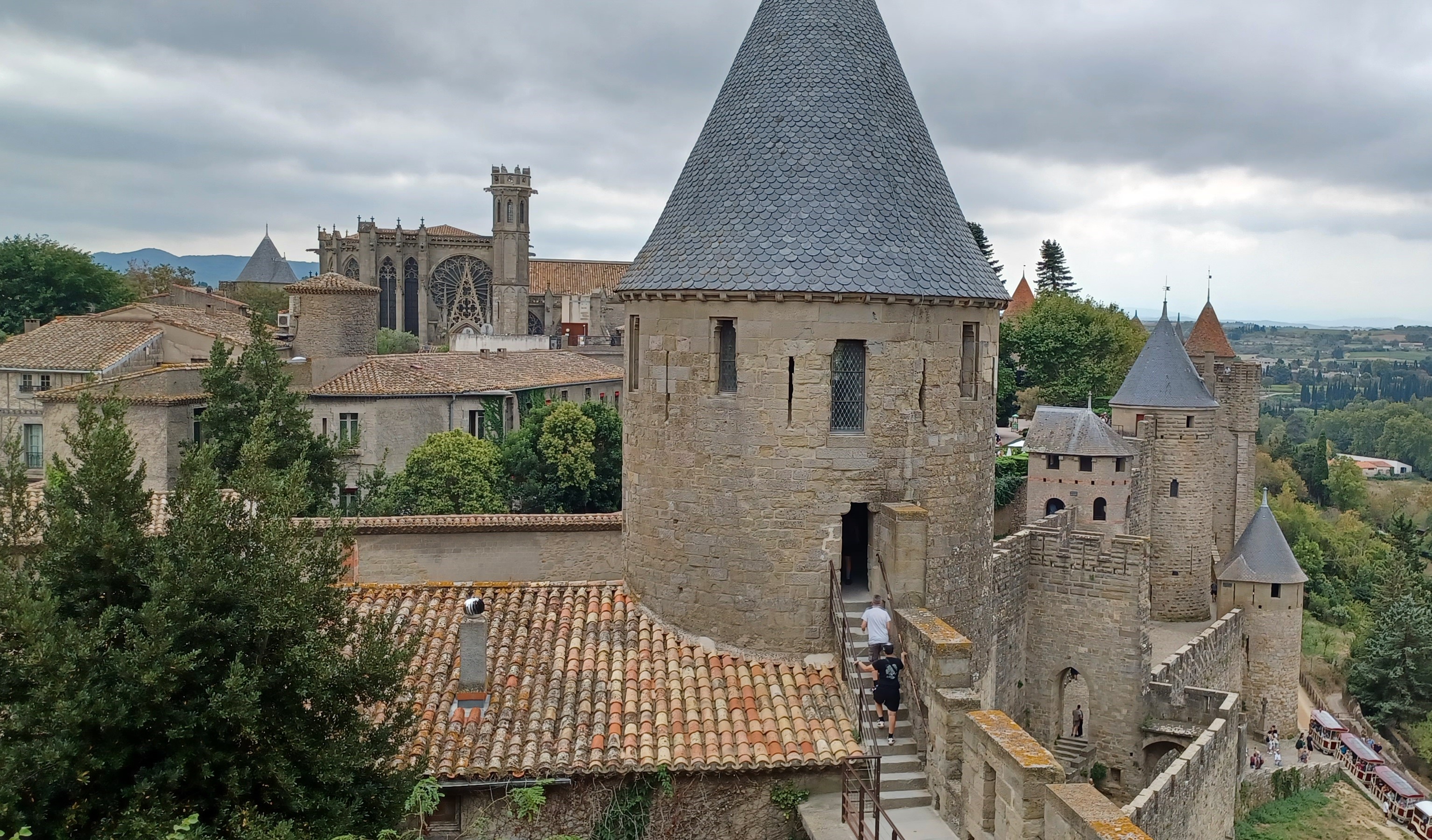
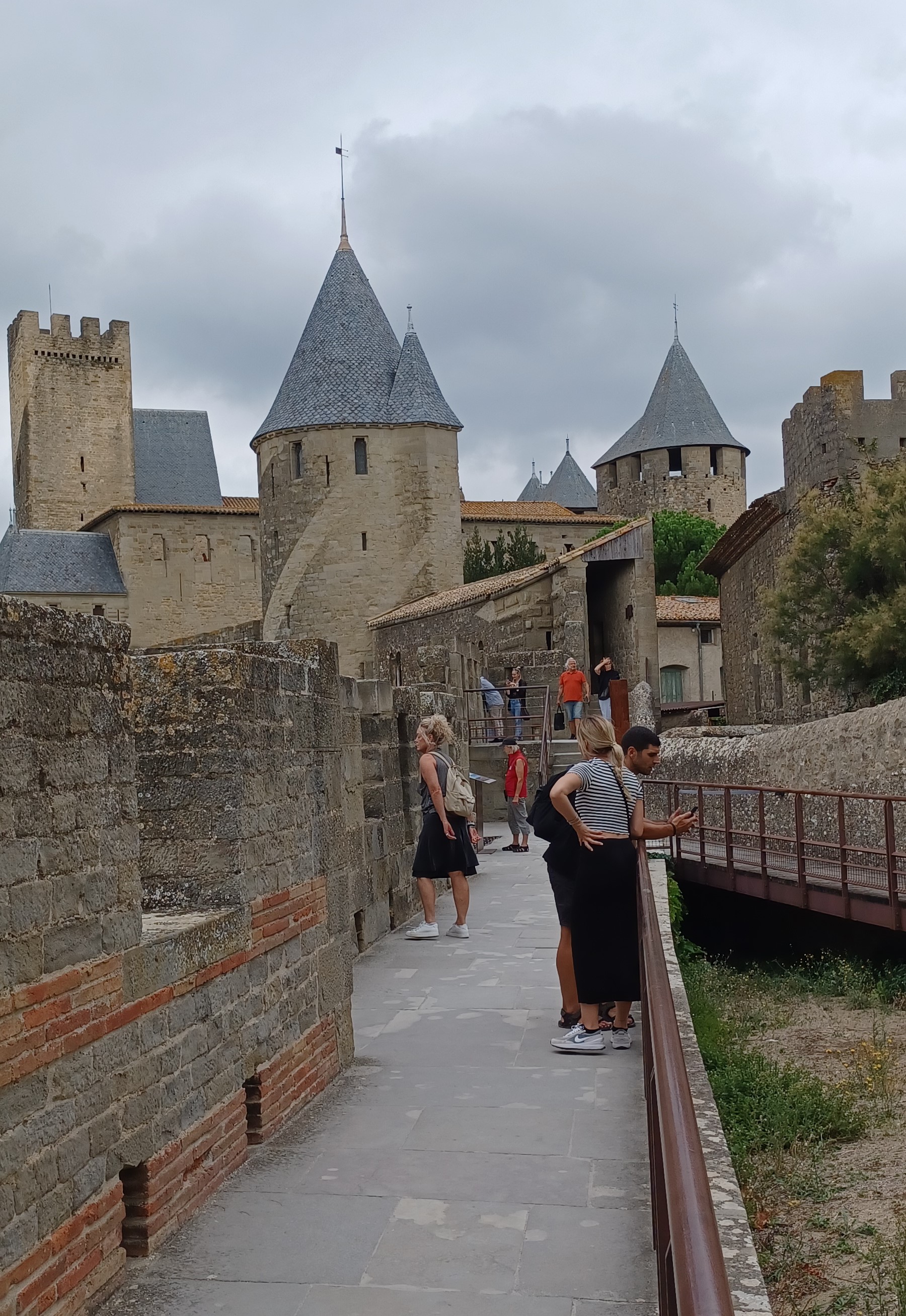
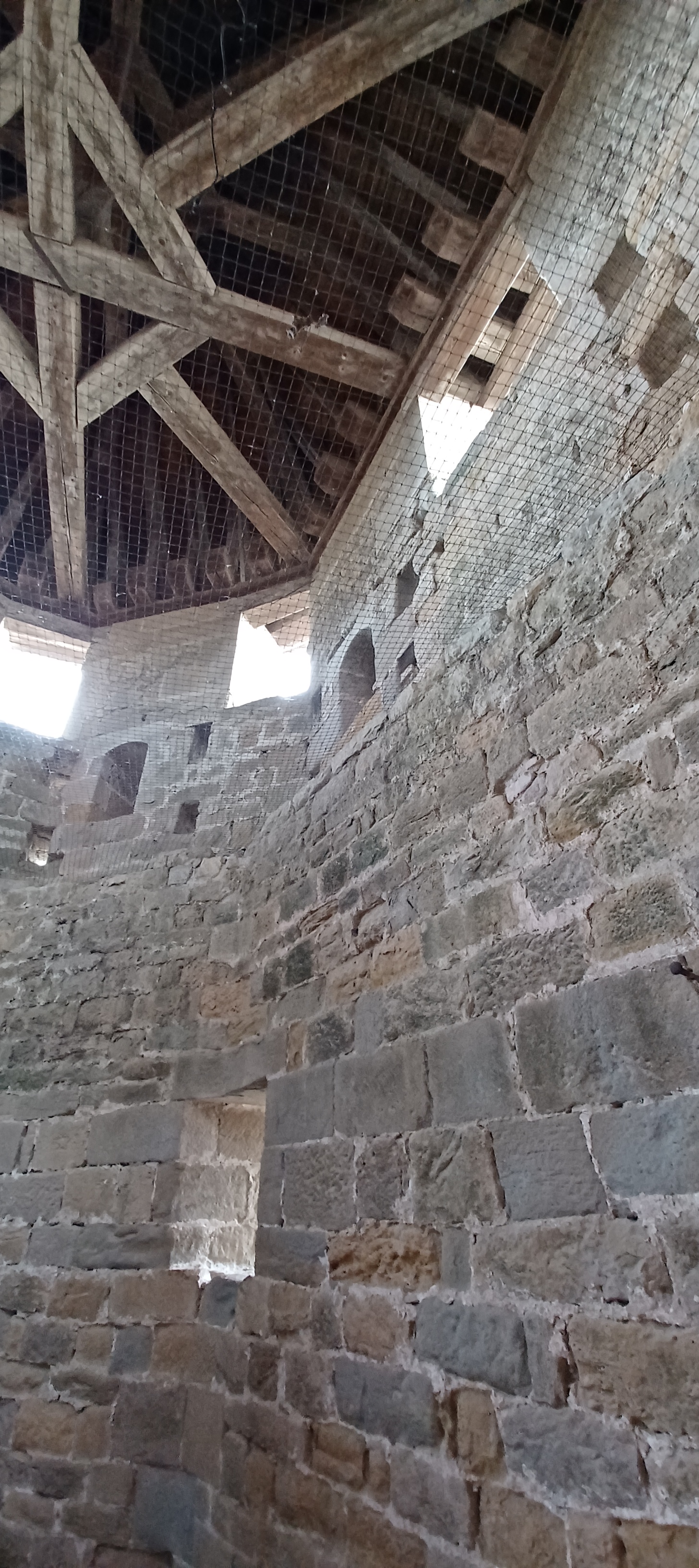
There are two walls – the inner wall built during the Roman era, and a taller outer wall built after the Albigensian Crusade of 1209. The two walls together include 52 towers and barbicans, placed at 15 meter intervals. It takes nearly two hours to circumnavigate the city, and a great many stairs are involved.
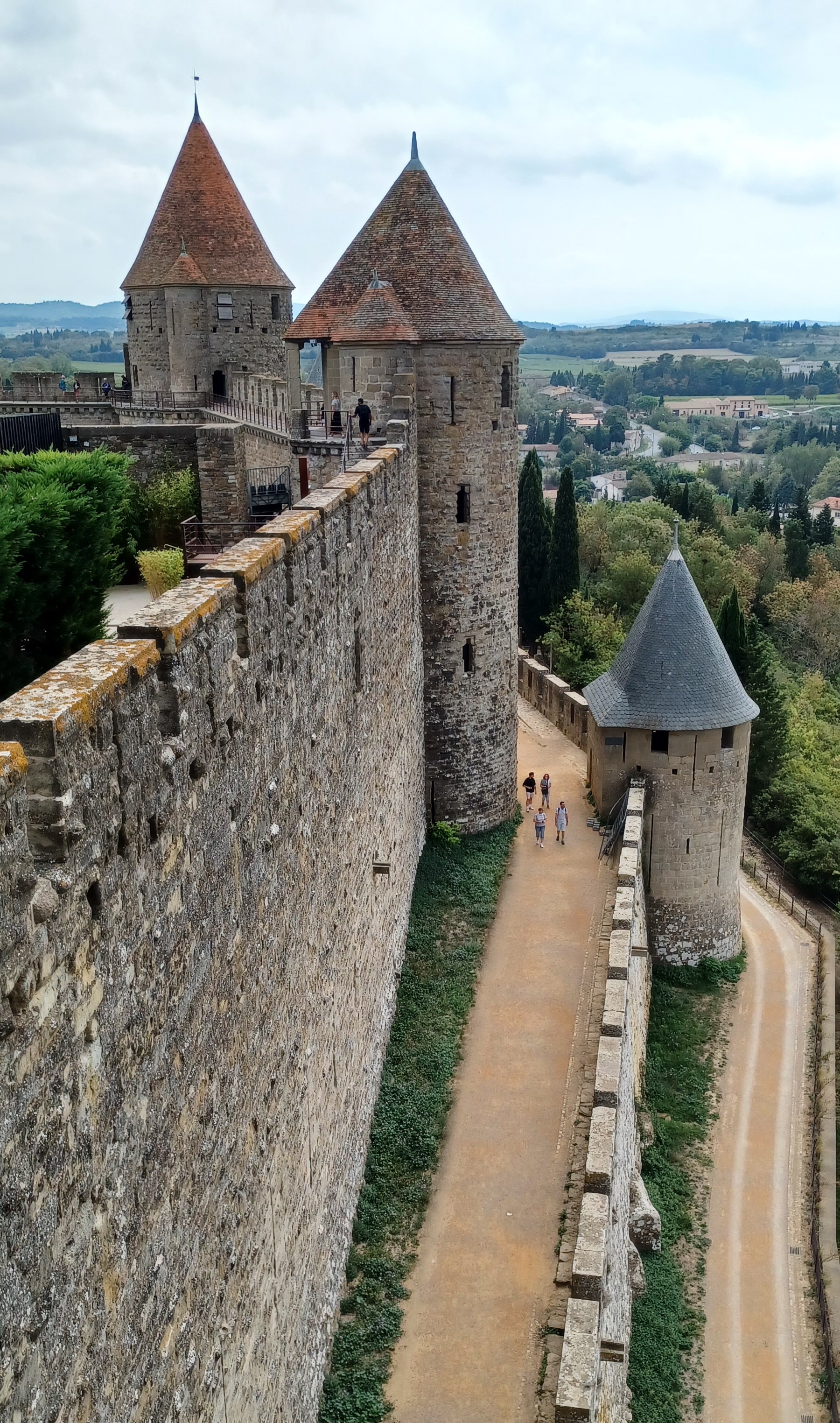
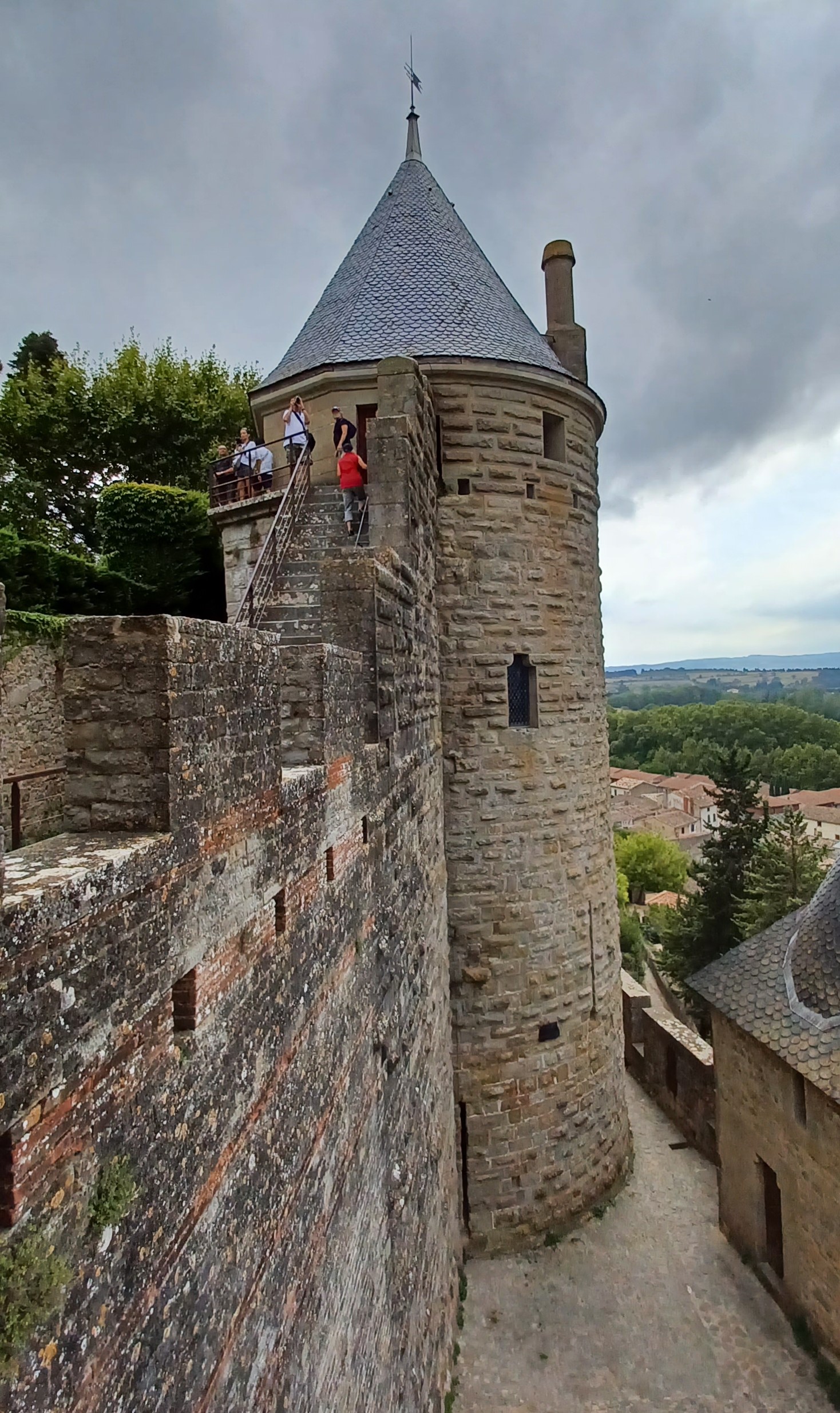
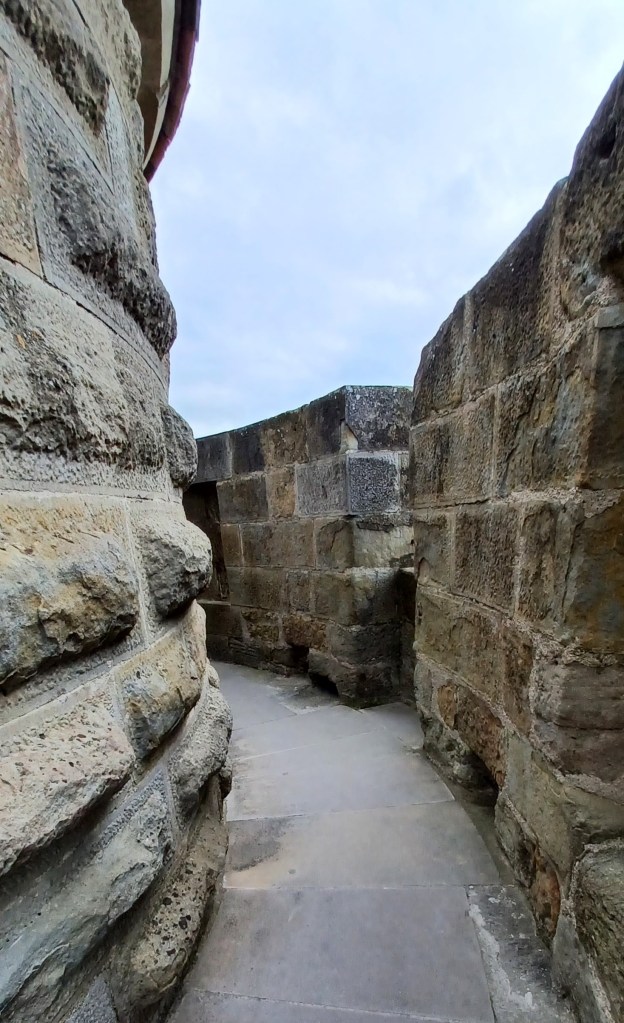
I find an example of the rounded stones that were designed to deflect arrows, as part of the defensive strategy in the outer wall and towers.
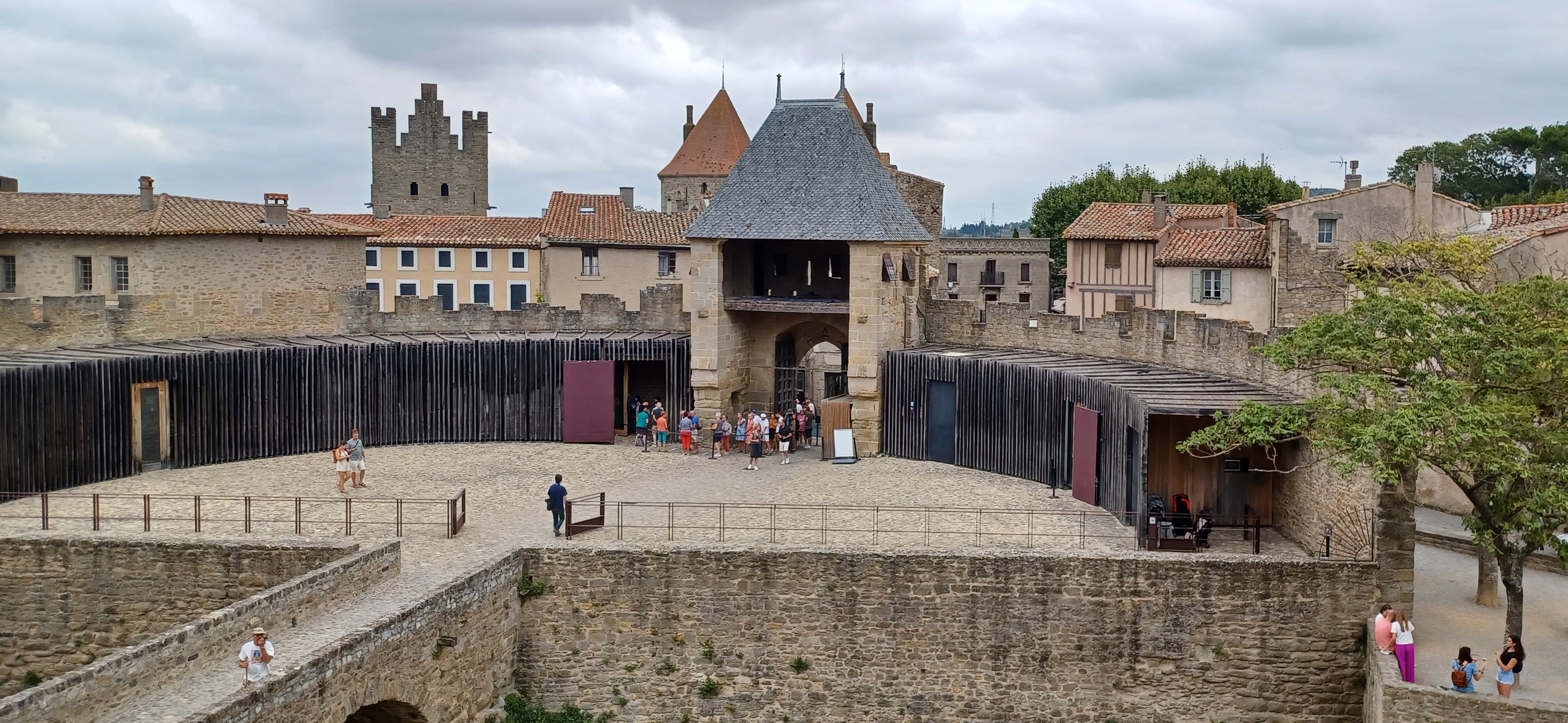
After Carcassonne became part of the royal estate in 1226, the city’s defenses were increased by the fortification of the outer wall. This open space was used to assemble troops. The tower was left open on the interior side, so if it was taken by enemy forces, the tower would not offer any protection from crossbow fire from the castle.
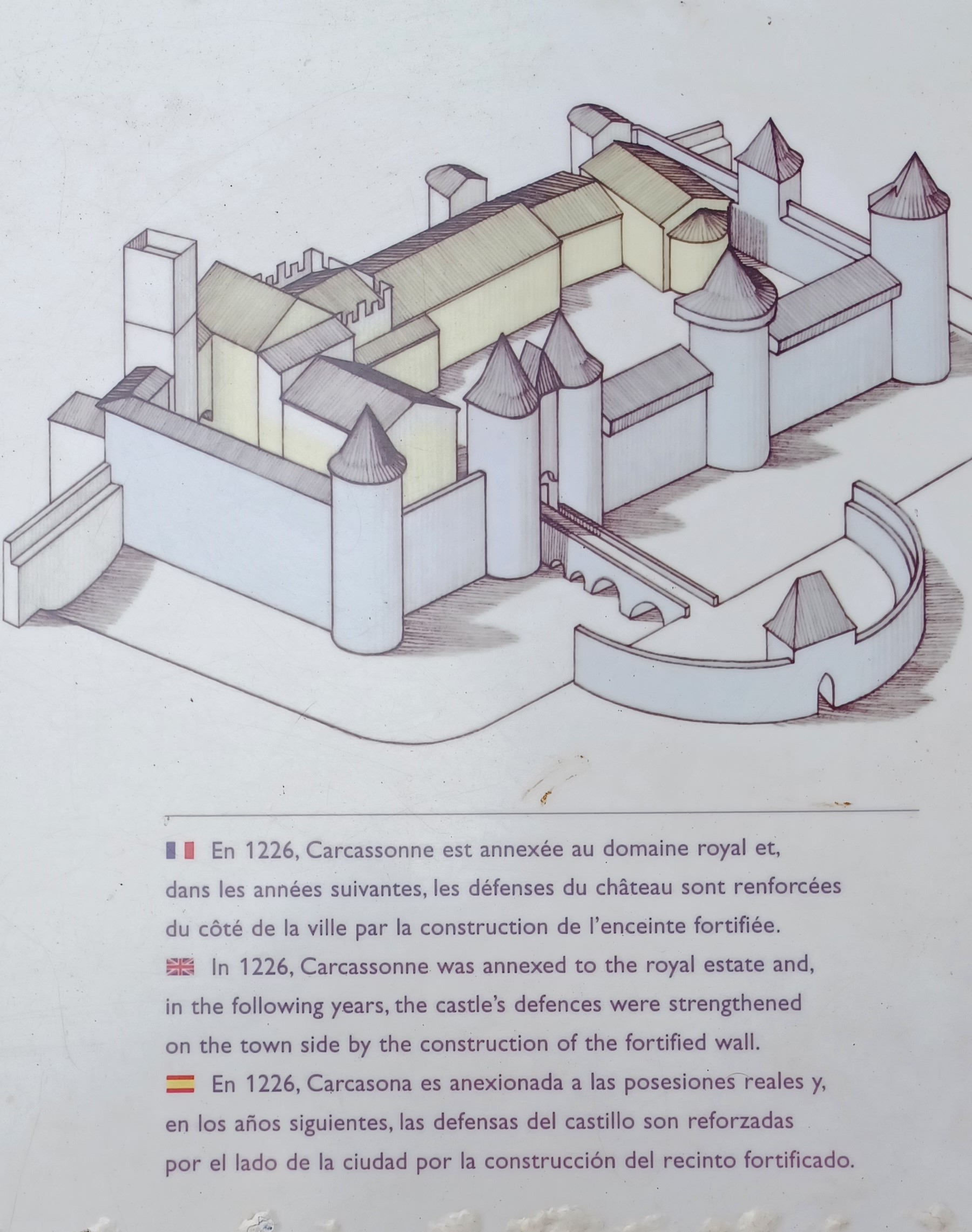
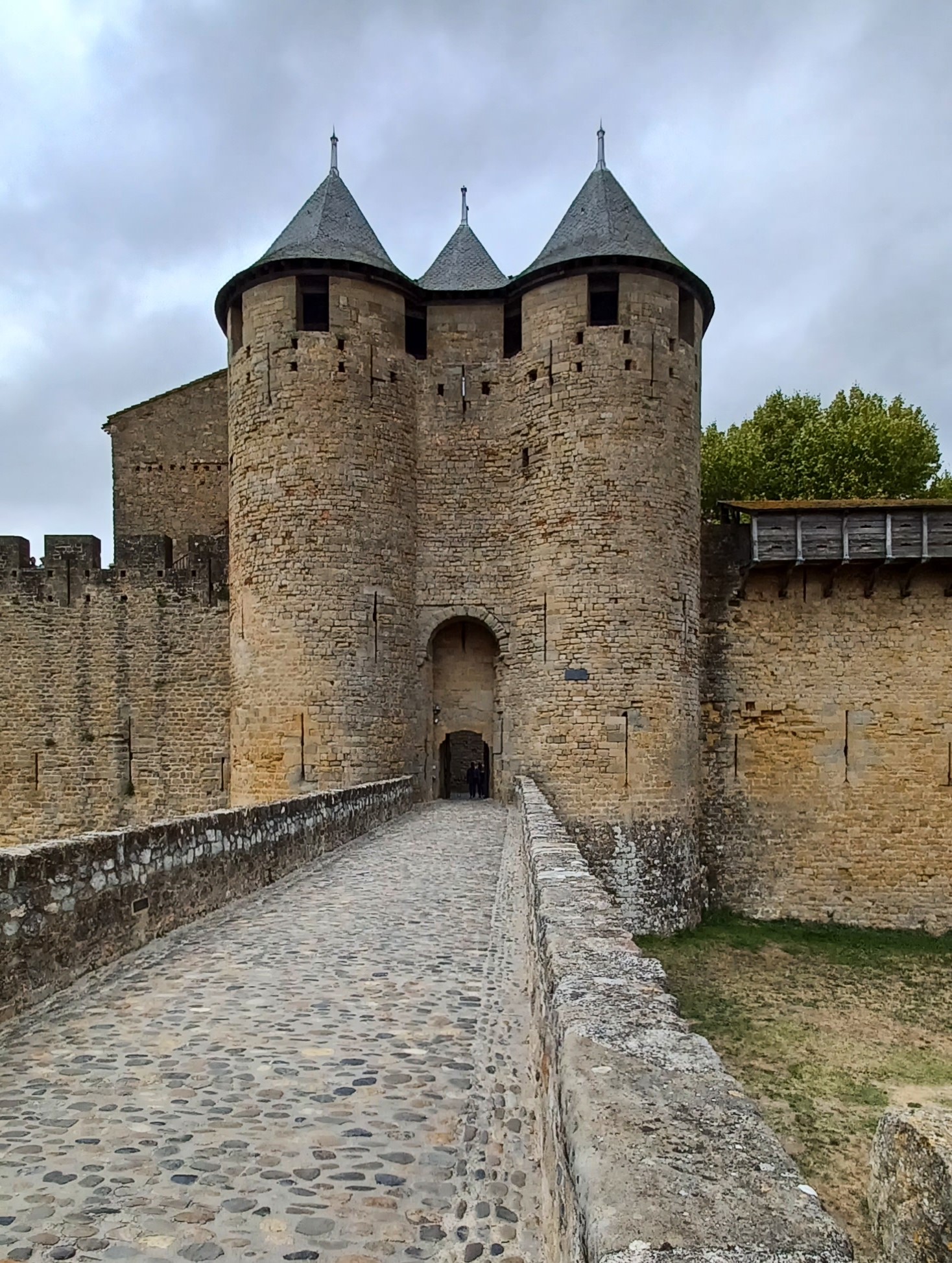
During the 12th century the Trencavel family built their castle here and started repairs on the inner Gallo-Roman wall. The castle is built on the highest point within the Gallo-Roman wall, and the furthest spot away from the drawbridge. It was surrounded by a dry moat and is marked by towers with wooden balconies called ‘hoardings’. Openings in the floor allowed the soldiers to shoot arrows and drop stones onto anyone attempting to scale the wall. The wooden walls were covered with wet animal skins to prevent them from being set on fire. Commonly used during the 12th-13th centuries, wooden hoardings were replaced by stone machicolations. These hoardings date to 1911 as part of the architect’s design during the city’s reconstruction.
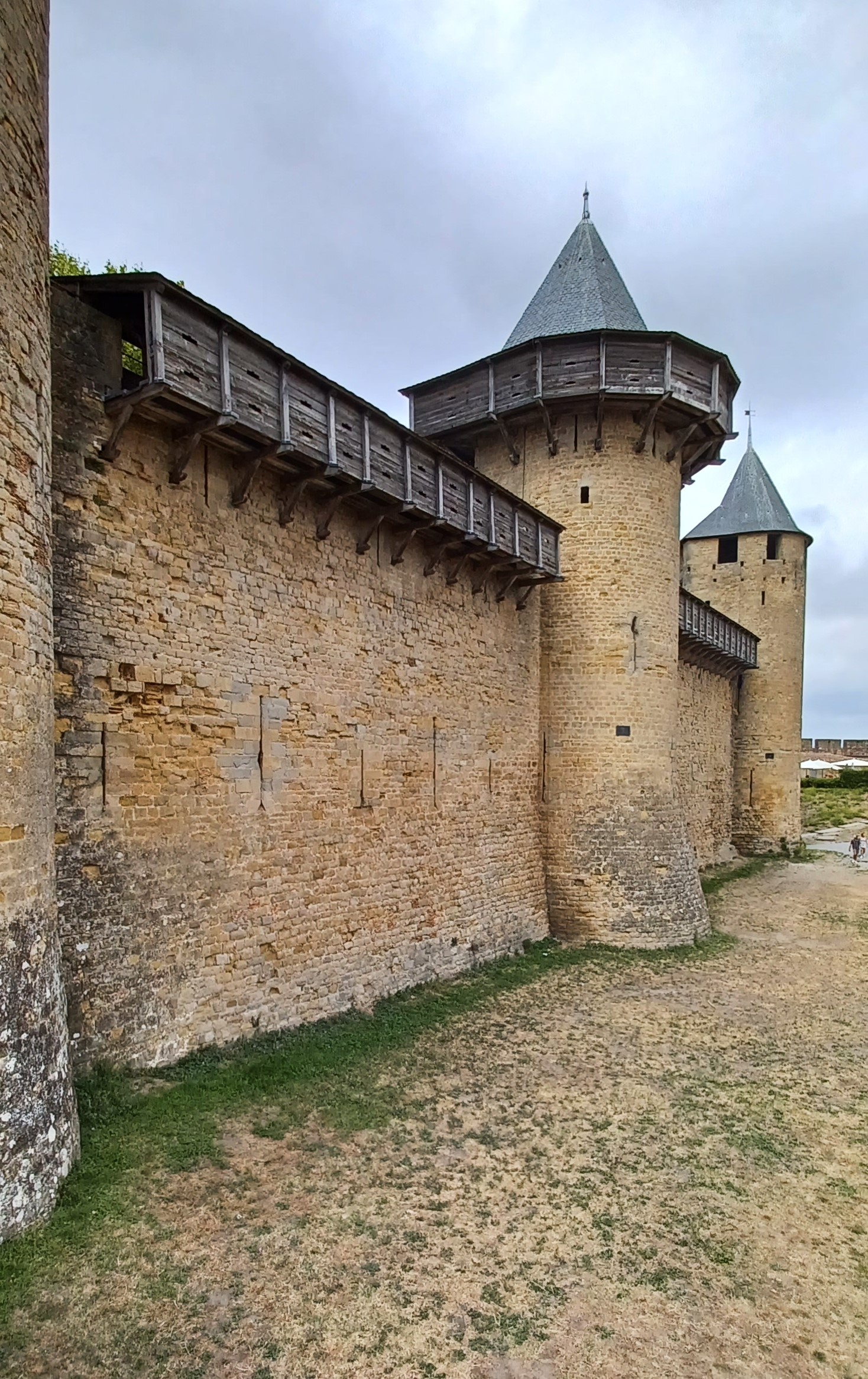
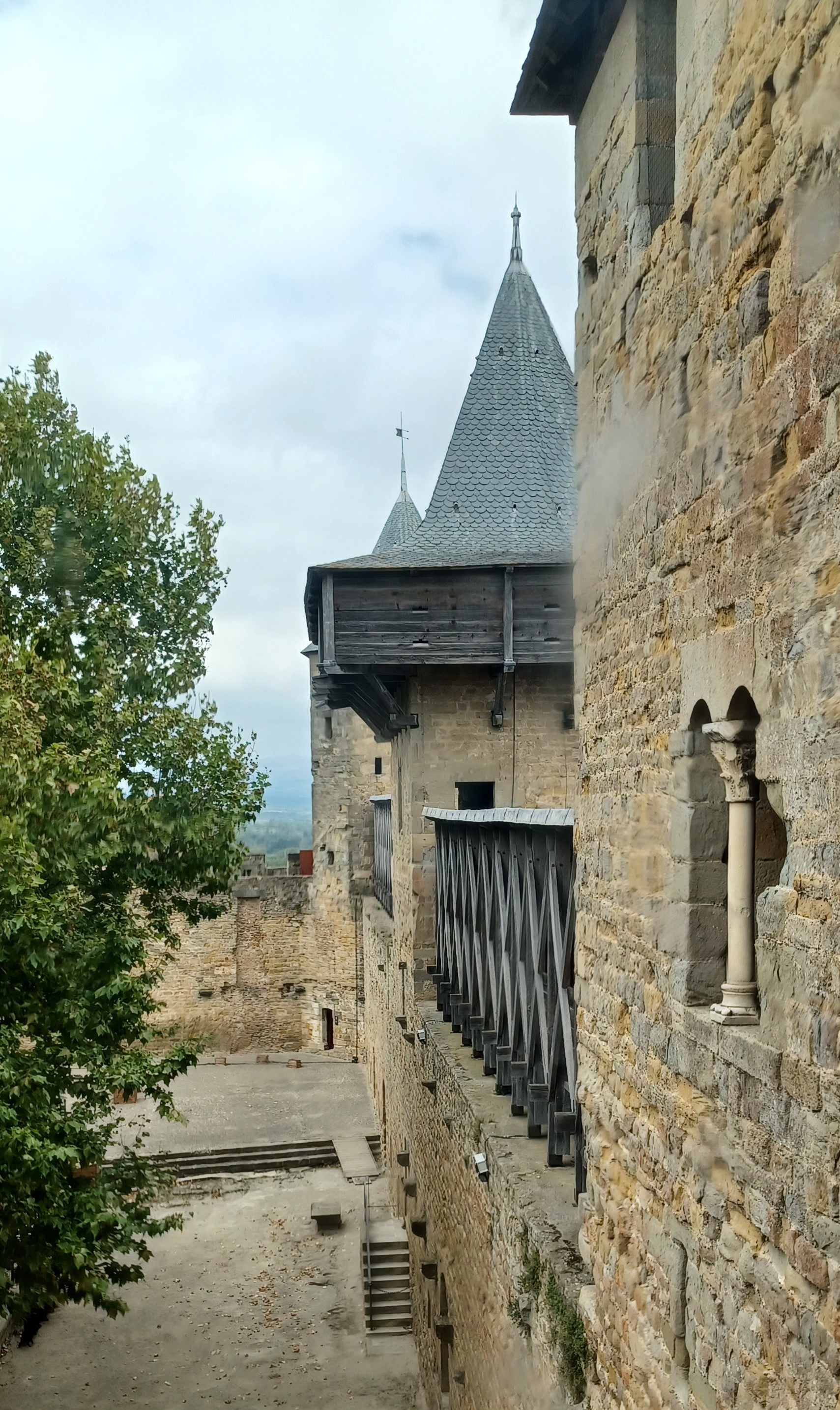
Here are a couple of architectural details I saw as I reached the courtyard.
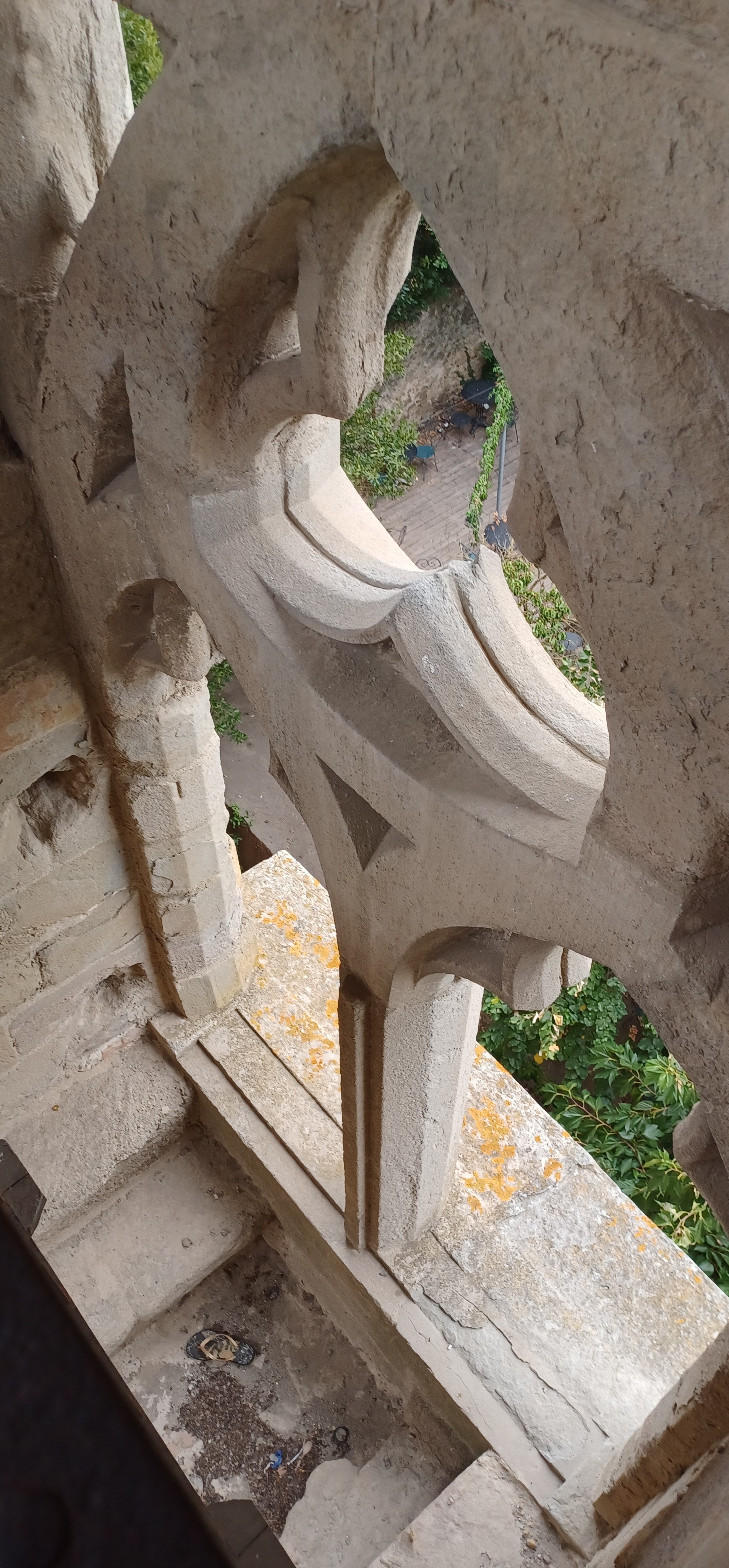
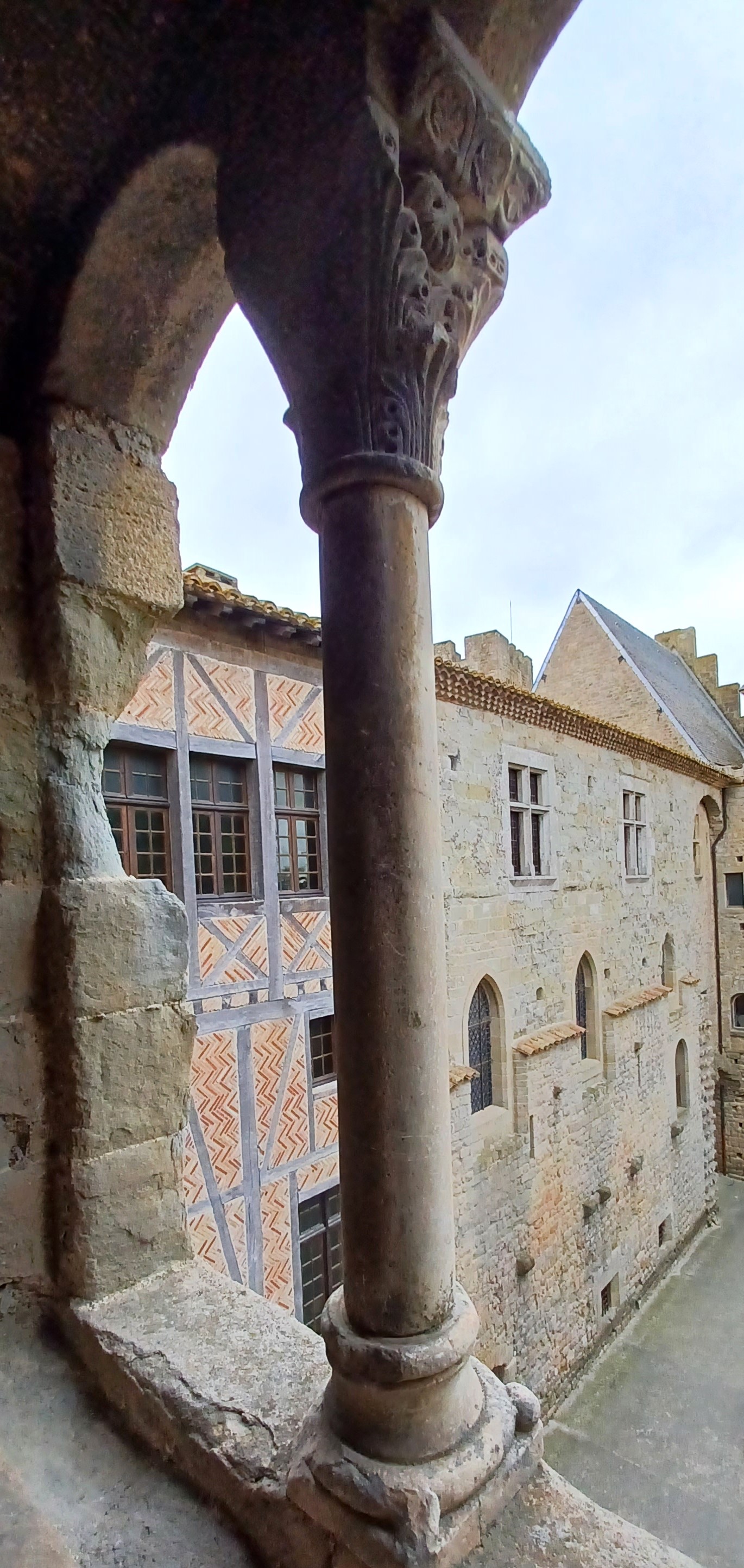
The courtyard of the castle would have originally been shaded by plane trees (plantanes), with an elm tree at the center – the secular symbol of nobility in this region. Of the nine towers in the wall surrounding the castle, the Tour du Paon is the oldest and tallest, and is the site where legend has it that Lady Carcas threw the pig that convinced the Frankish king Pepin to lift his siege in 759.
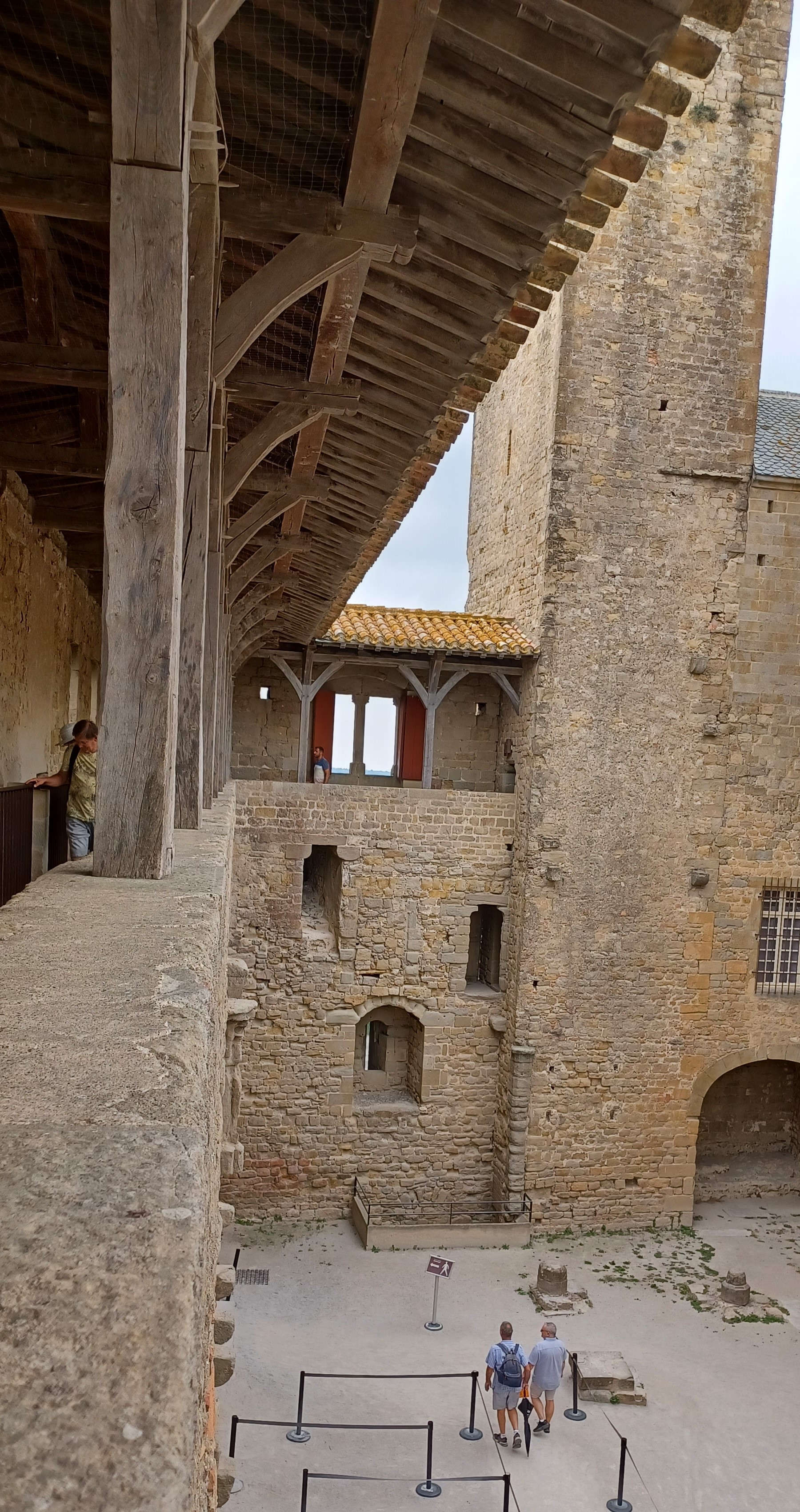

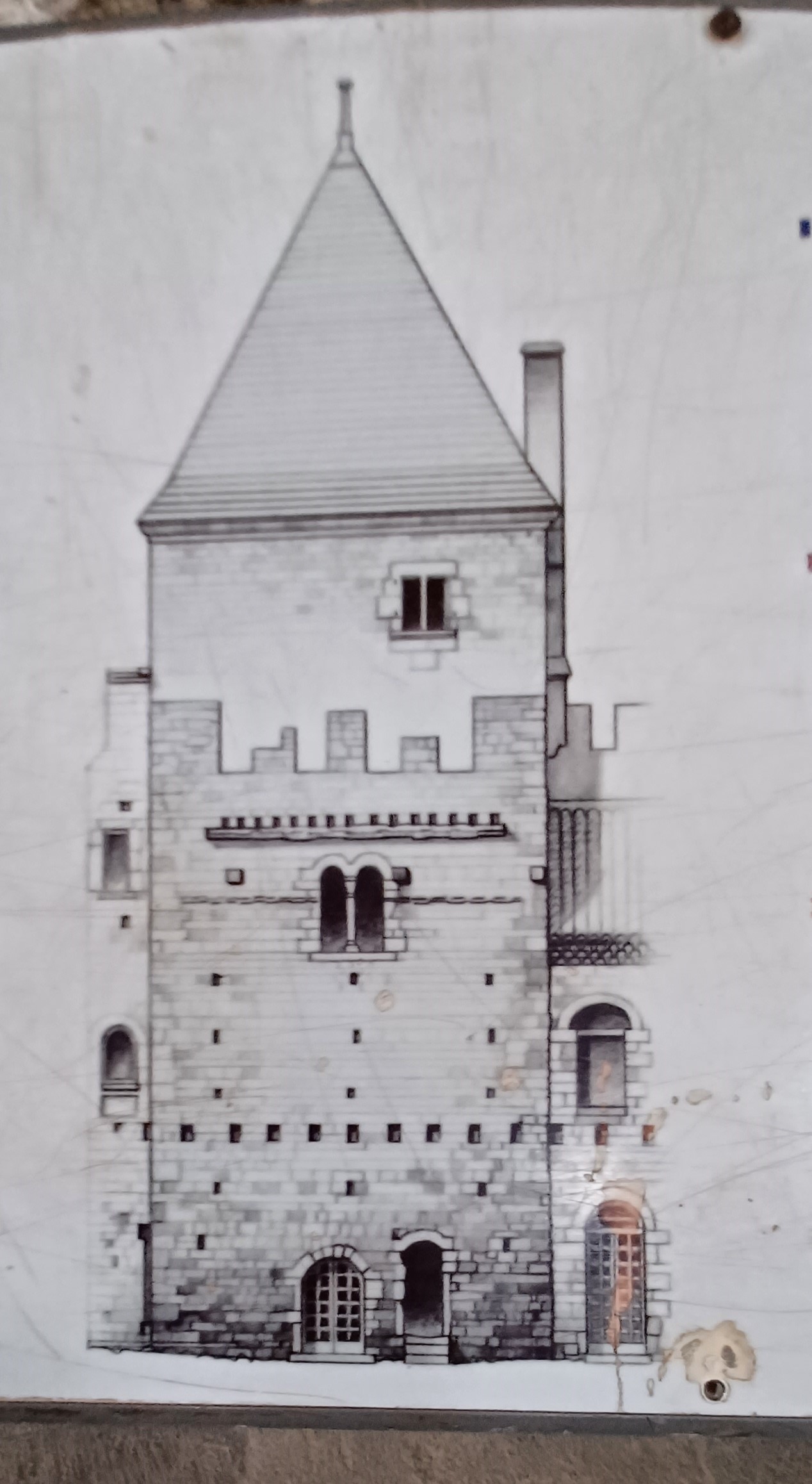
On the other side of the courtyard is the Keep, part of the Trencavel residence. Above the line of square holes (which I assume supported beams for a floor) are the outlines of the crenelations which were filled in during the 13th century to increase the height of the keep.

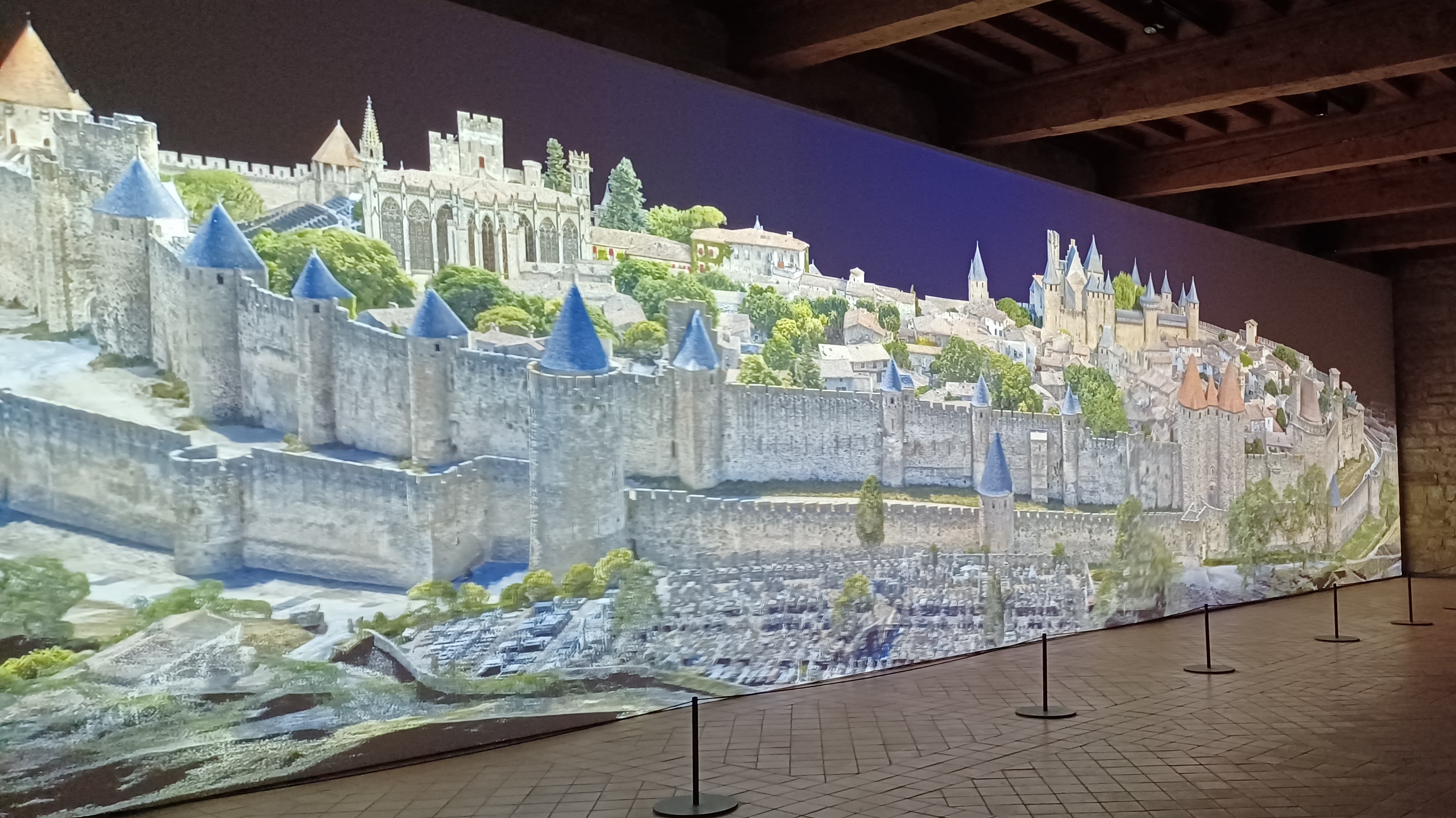
There’s a beautiful video taking up an entire wall in the Great Room between two of the towers, which gives me a birds eye view of the city, and of the detail in the glass in the cathedral.
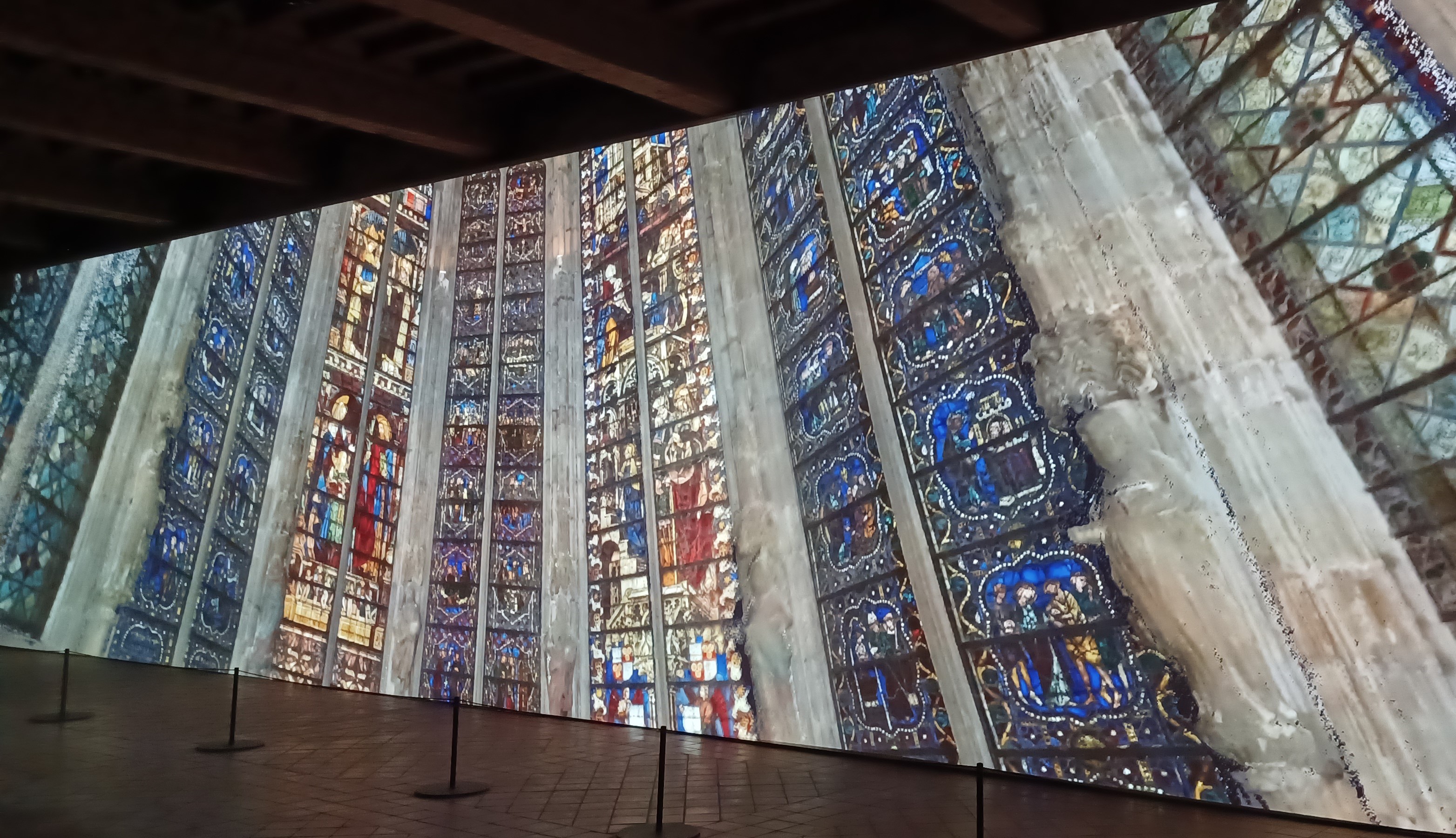
Walking through this great room brings me to the Count’s Chamber, housing sculptures that were salvaged during the 19th century restoration. I will cover that museum a separate post. After exiting those rooms, I stop to admire the view of the farms and orchards that stretch beyond the walls and watch towers.
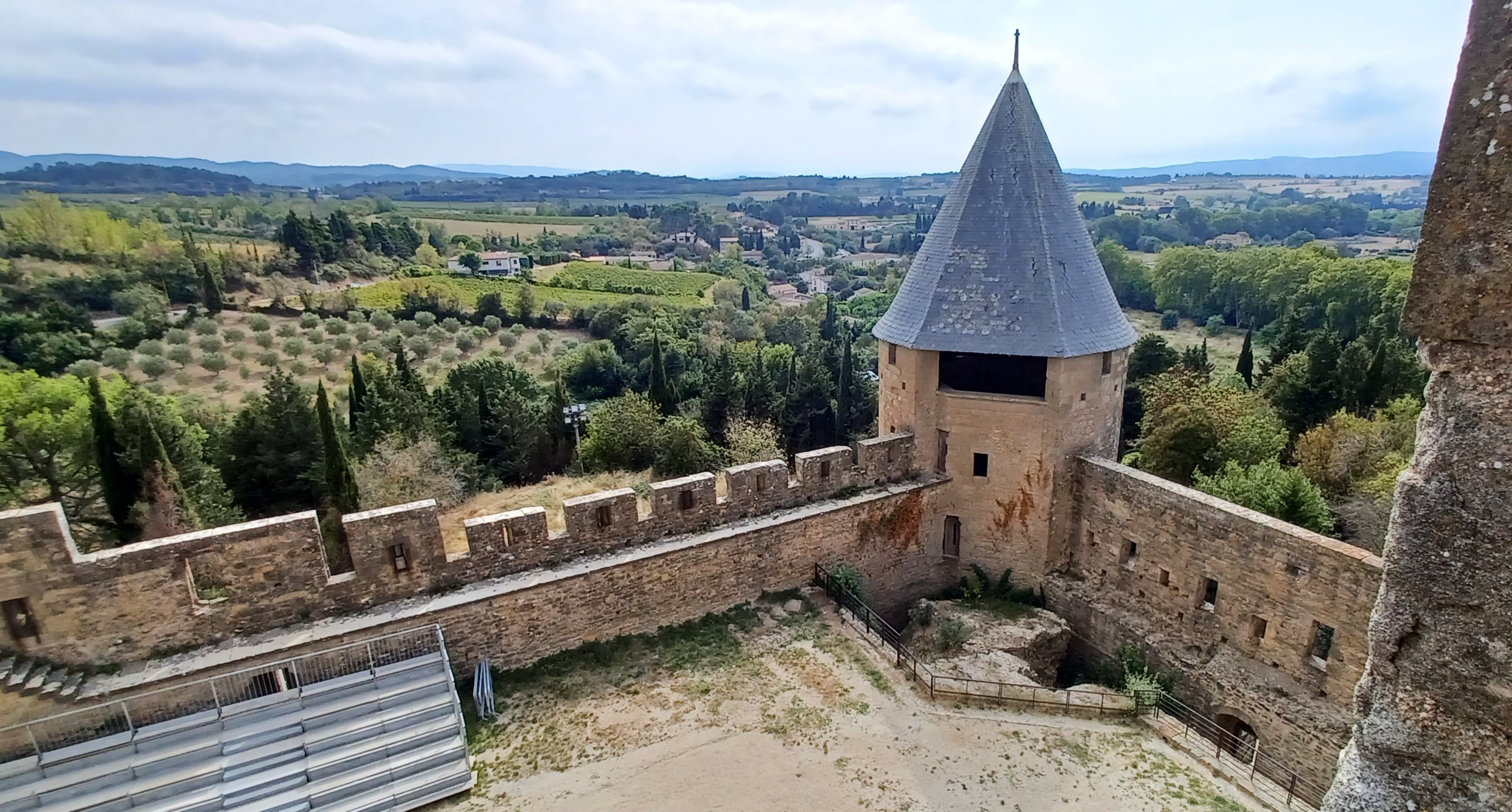
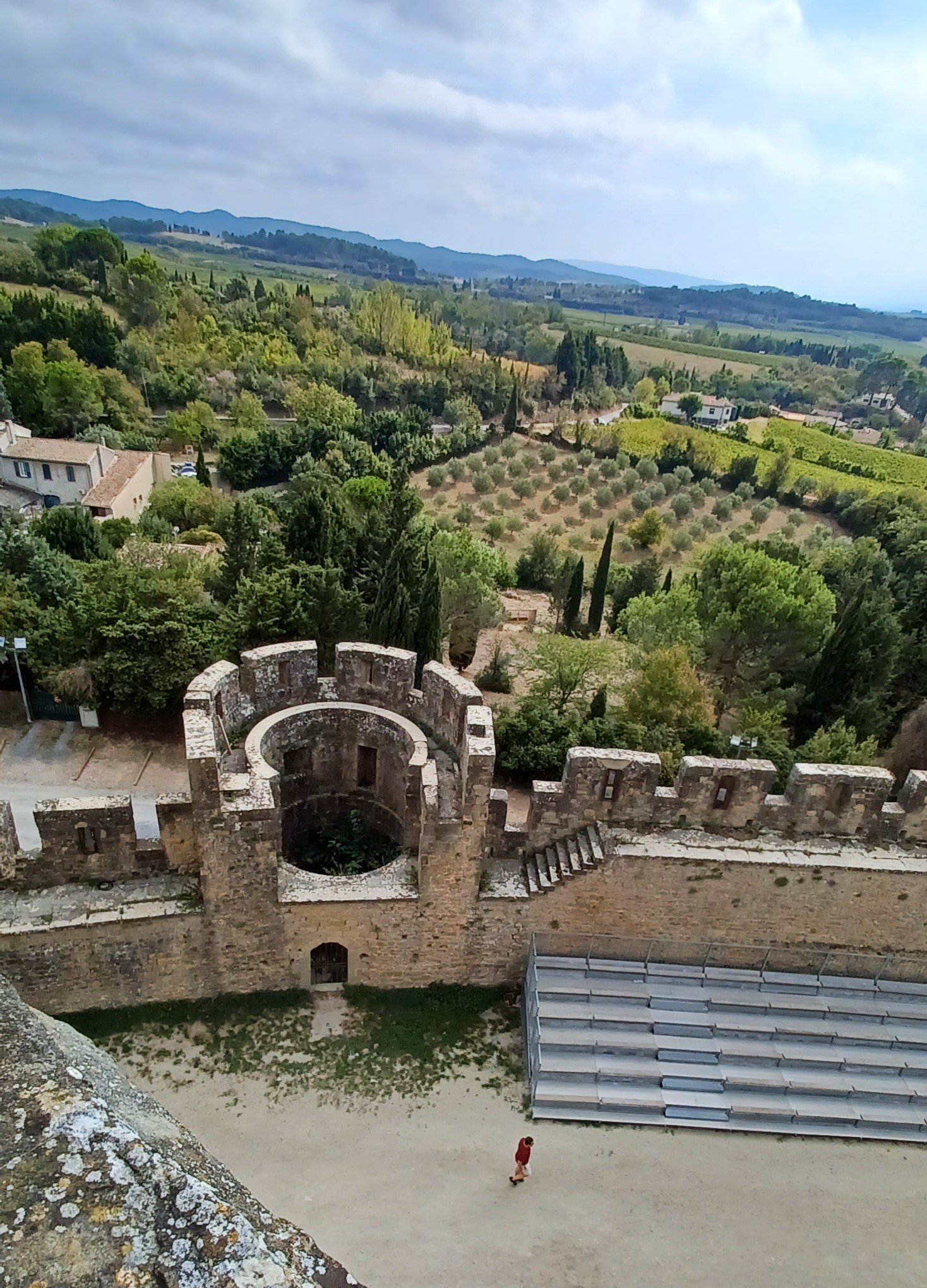
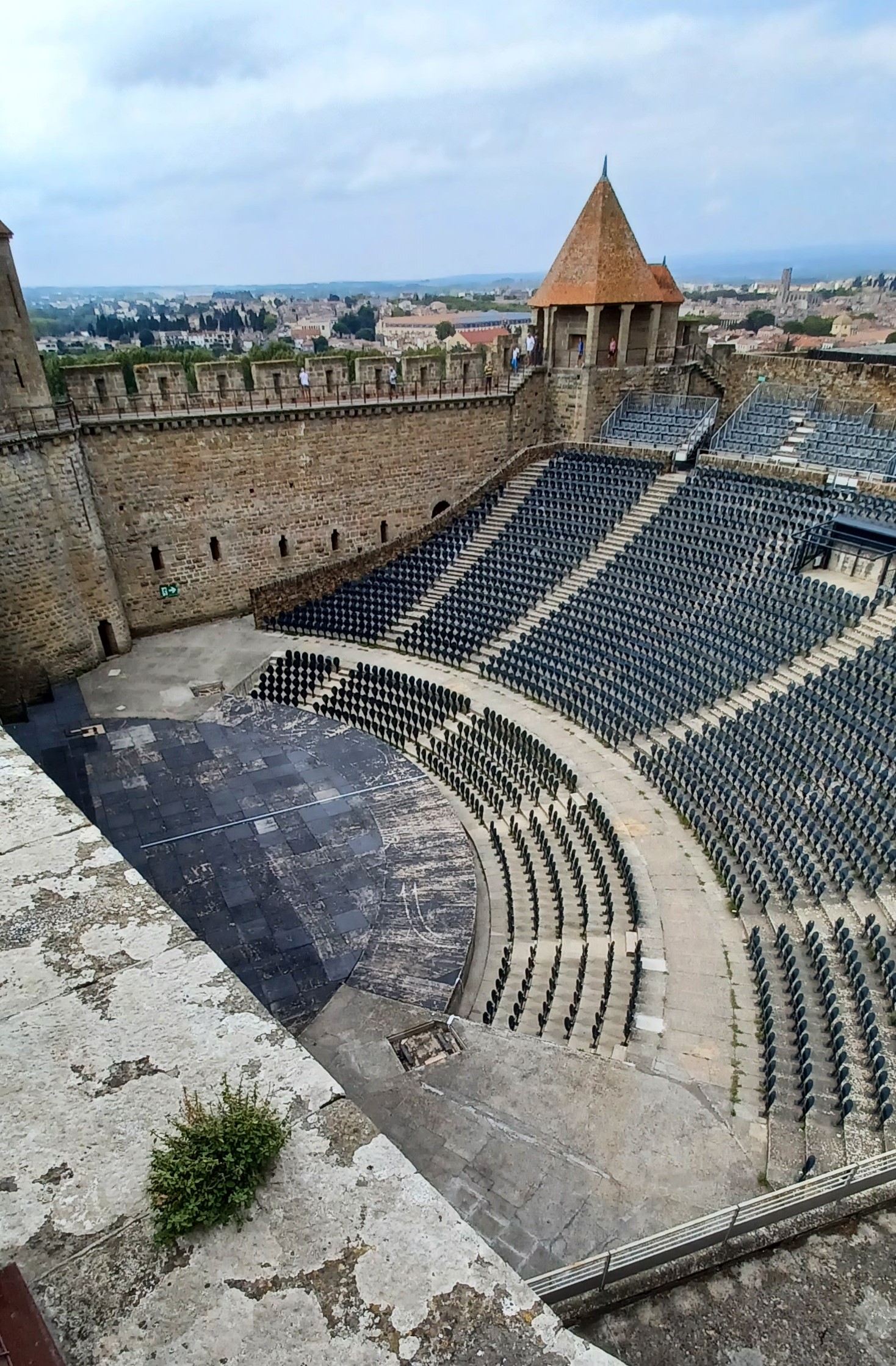
The back side of the ramparts provides a view of the amphitheater, built in 1908 on the site of the medieval cloister that was destroyed during the French Revolution. A theater festival was organized in 1956 by actor/director Jean Deschamps. The theater was renovated in 1973 and continues to host festivals every year in July.
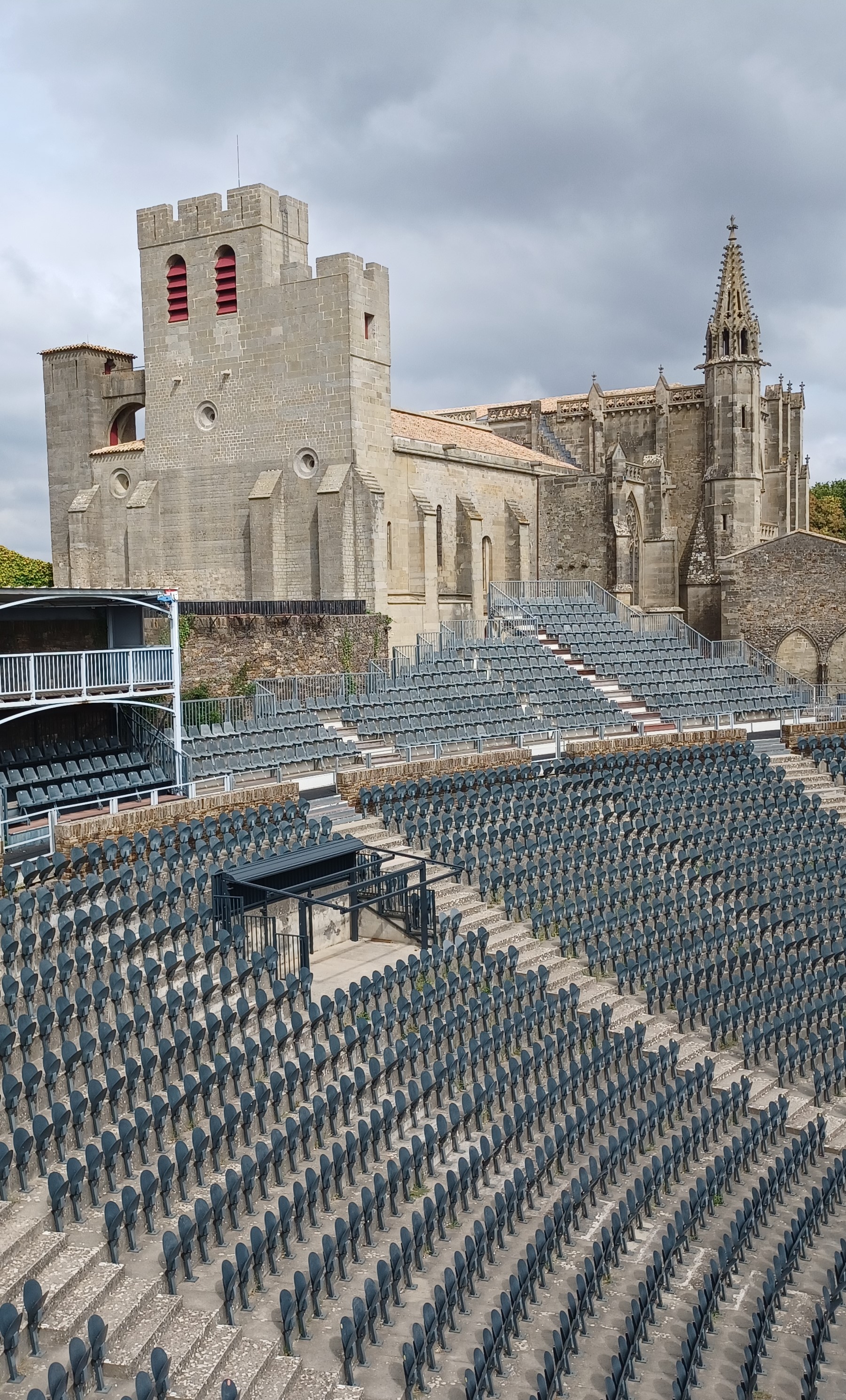
This side also gives me a new view of the cathedral, as well as the opportunity to get my obligatory arrow-slit shots, which I try to take in every fortification I visit…
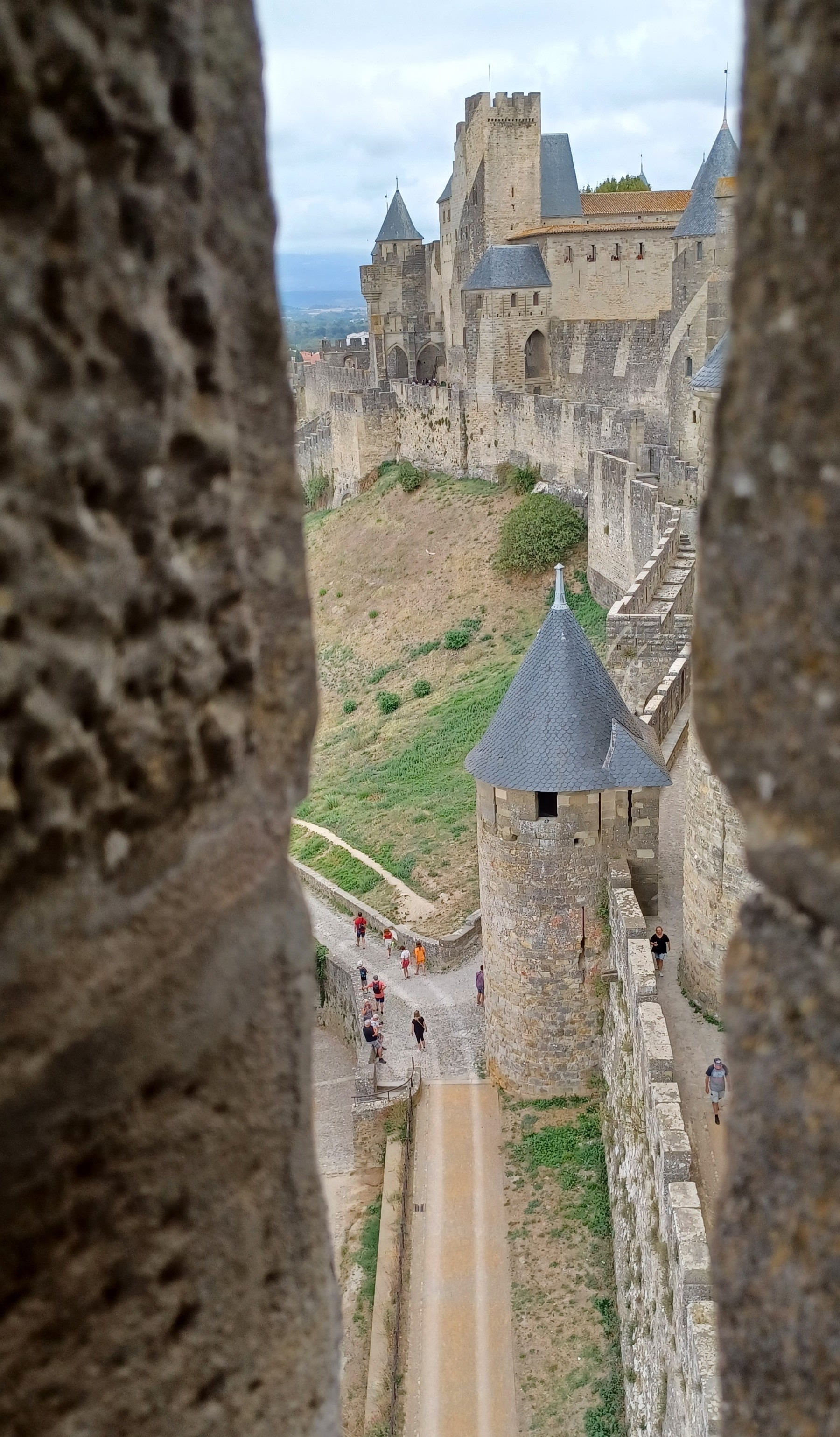
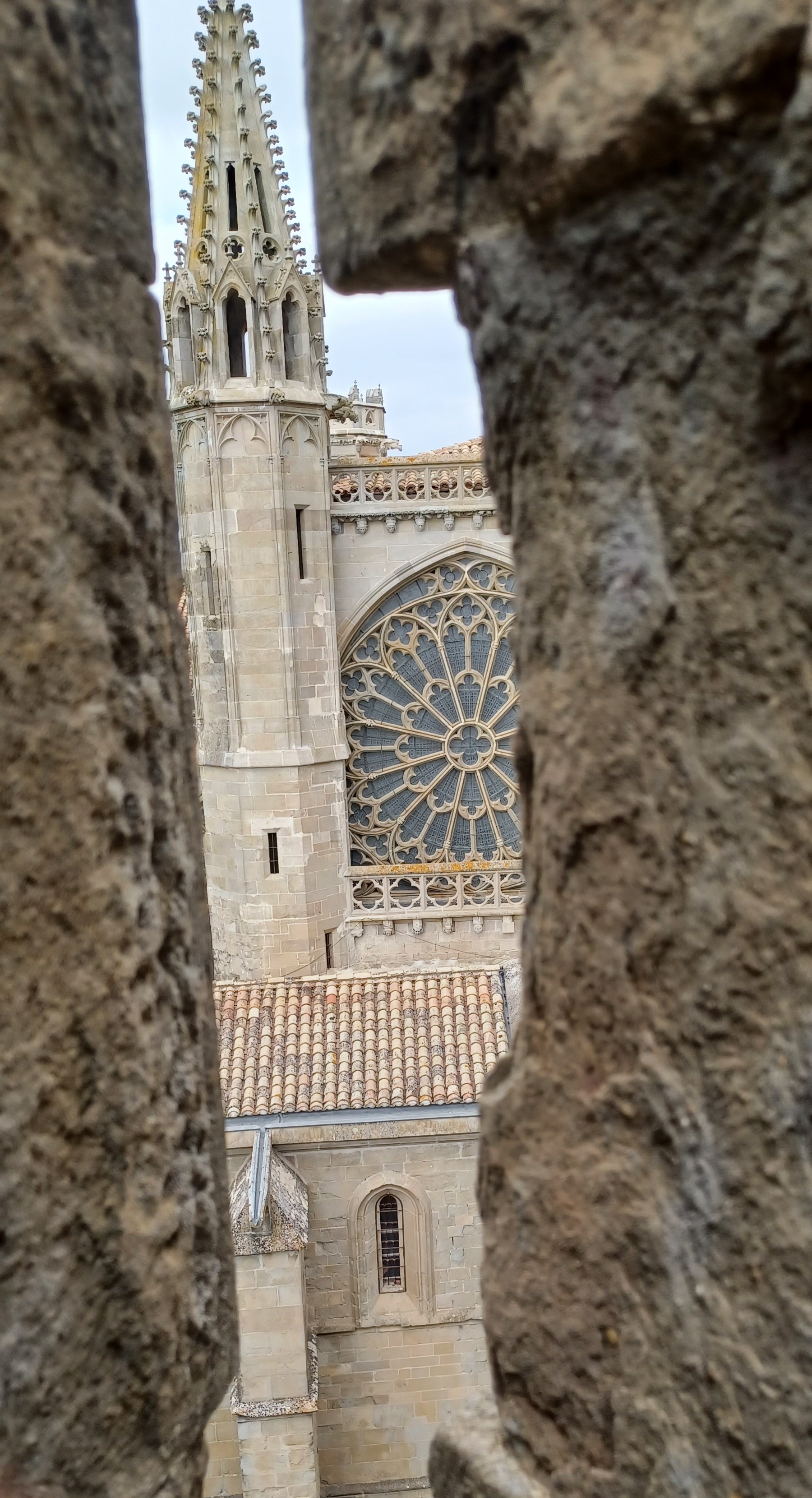

It’s a long and exhausting walk, but a very informative one. If you ever visit Carcassonne, I highly recommend this tour.
 Daveno Travels
I’m so pleased to tag along on your wonderful journeys. I’m not able to make the treks that you do, so your posts make me feels as though I had in truth. Thank you for being such an able historian and writer, I enjoy these very much.
LikeLike
You are welcome. Sharing is half the joy of traveling : )
LikeLike
I agree, wholeheartedly, with Natasha! This is splendid stuff! I am eating it up with a spoon!
LikeLiked by 1 person