
This article is also featured on GPSmyCity. To download this article for offline reading or create a self-guided walking tour to visit the attractions highlighted in this article, go to Walking Tours and Articles in Carcassonne.
I’m sitting on a second train after connecting in Toulouse. We’re not moving, and I’m trying to grab a clue from the French coming over the loud speaker. I ask the young woman sitting next to me if she speaks English. Yes, she says there’s an issue with the tracks ahead and we’ll have about an hour delay.
I arrive in Carcassonne after dark and an hour before the hotel closes. It’s not the most interesting hotel of the trip and the concierge does not speak English. But the room is adequate and it’s a 4 minute walk from the train station, which will make a smoother 6 AM departure on my final day here.
I wake up the next day exhausted, and my shoes and bag are breaking. I toss a repair kit into my day tote and drag myself out the door for my reserved spot on a docent-led tour of the walled city.
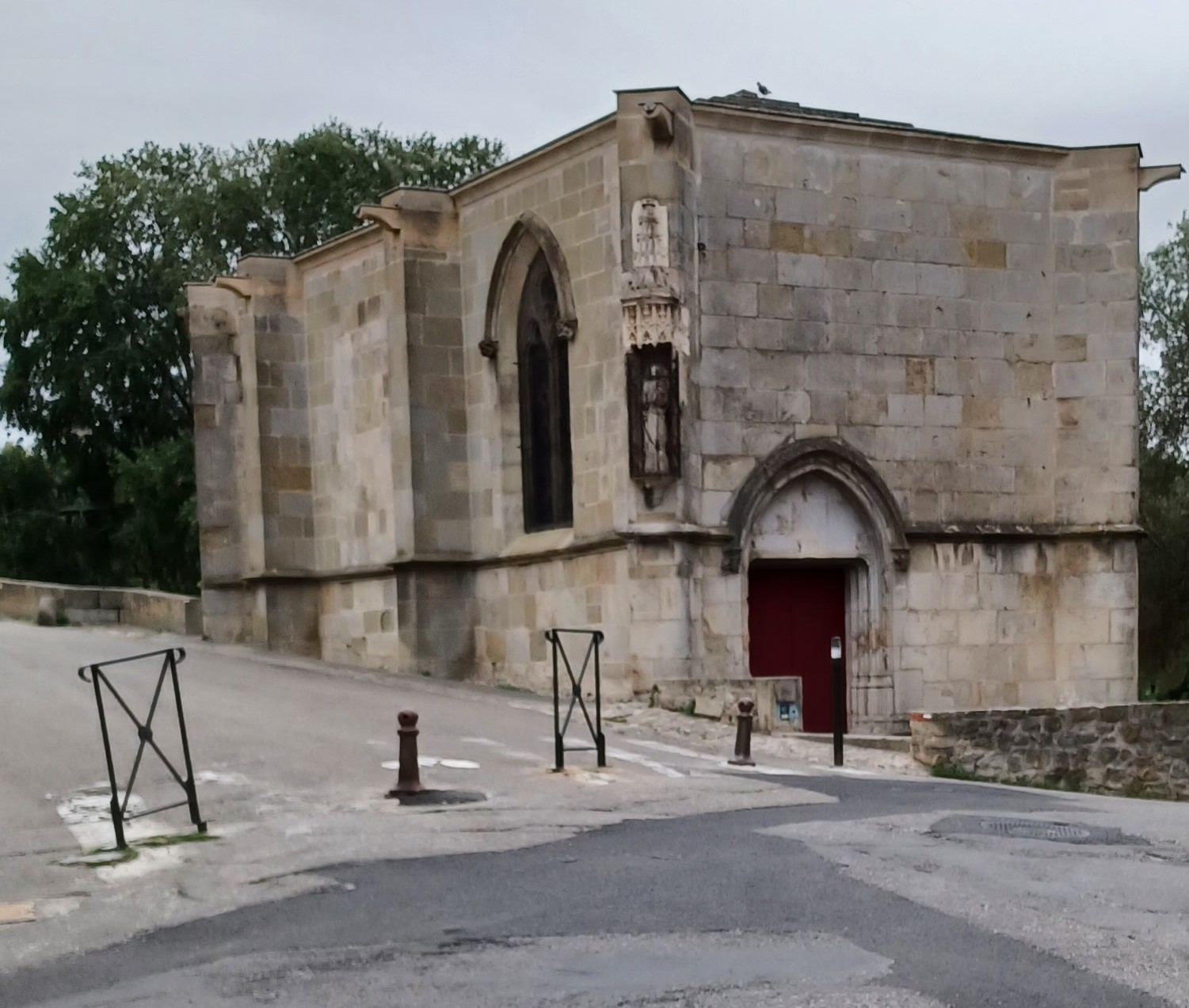
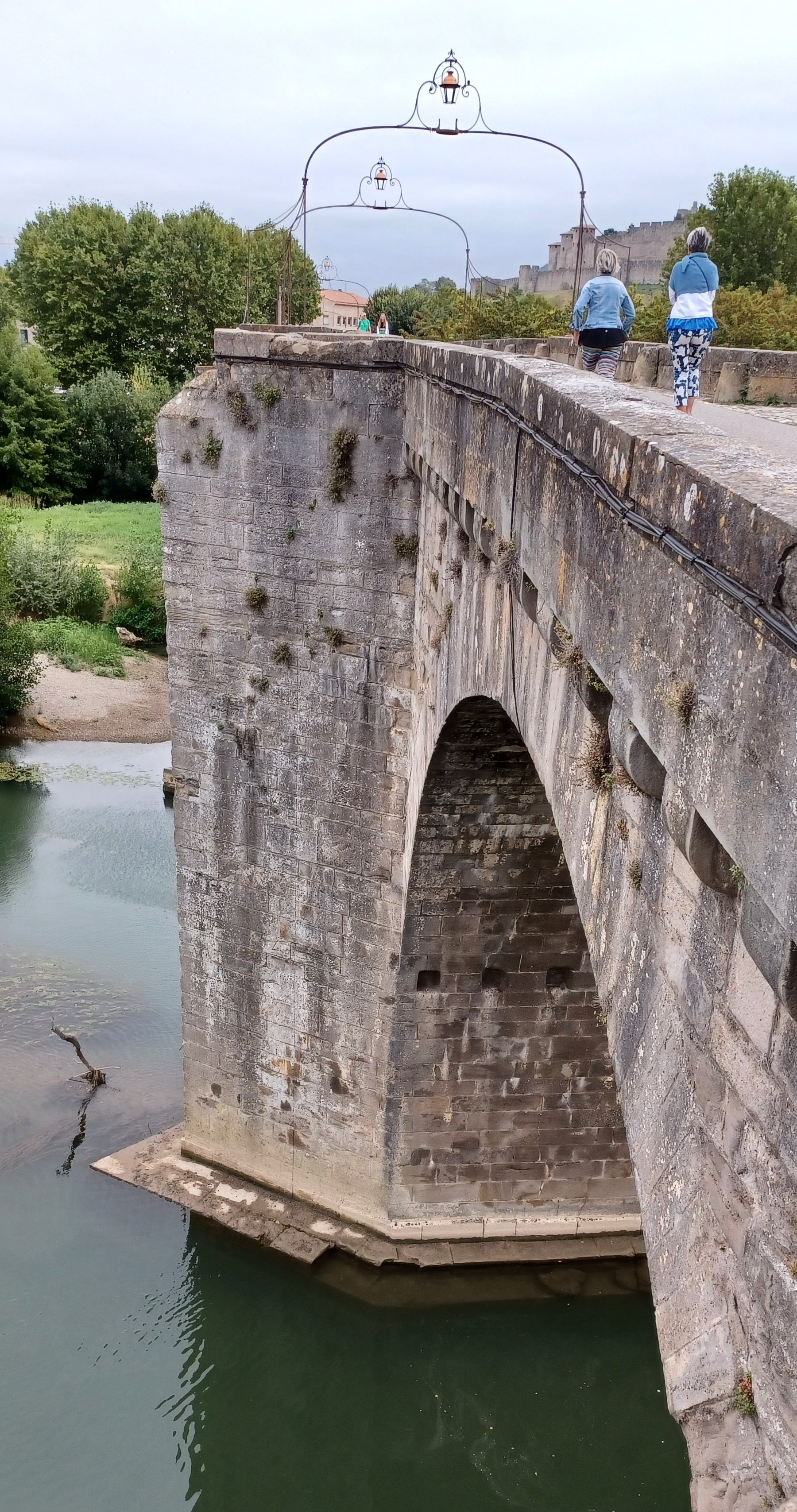
It’s about a 30 minute walk up the hill and over the Pont Vieux, the picturesque pedestrian bridge that crosses the Aude River. Built in 1320, it was the only link between the medieval walled city and the Bastide Saint Louis until the 19th century. At the foot of the bridge is a little chapel that is closed. The river looks low and is filled with algae; I spot a solitary swan swimming among the ducks.
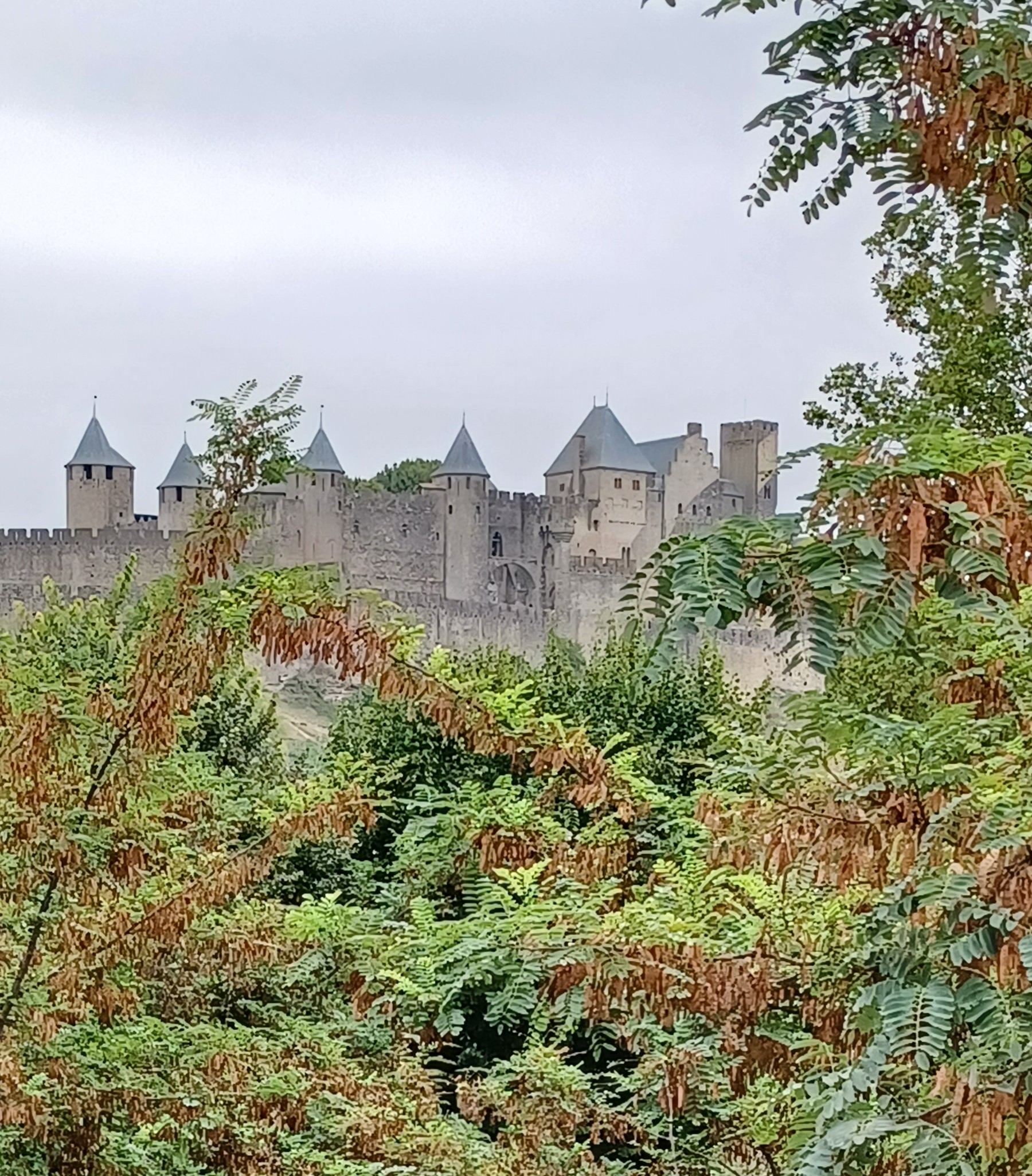
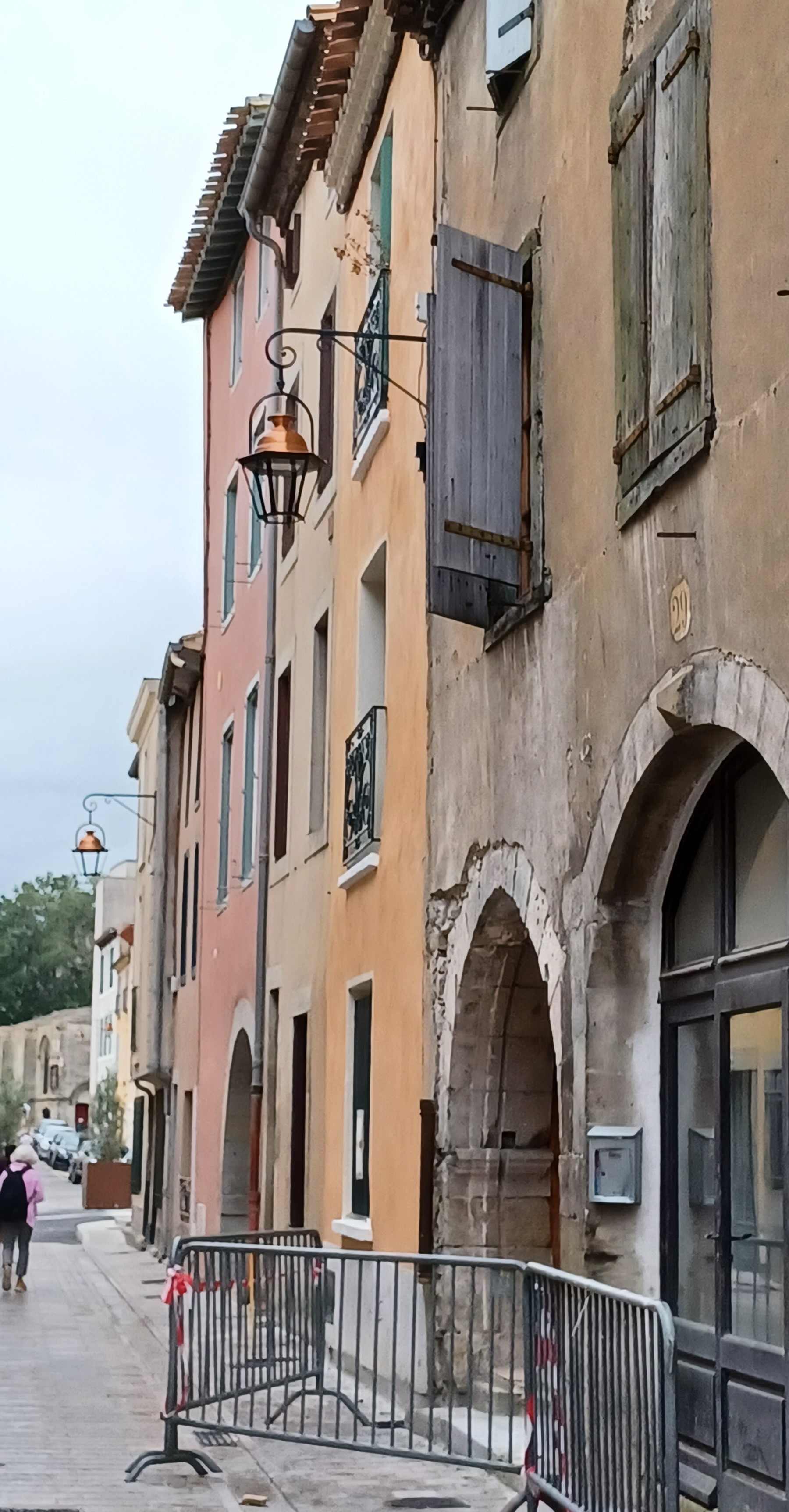
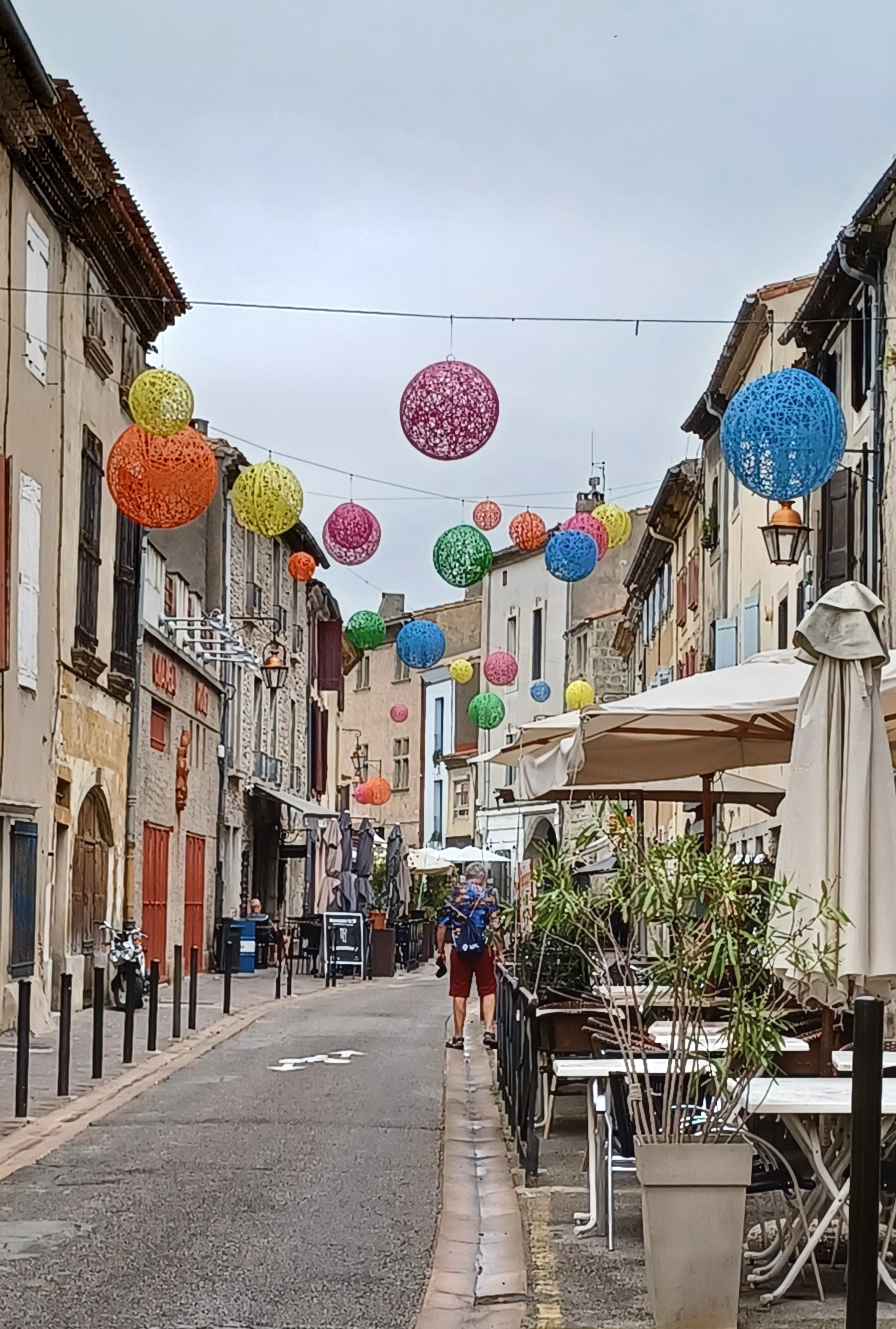
Looking up, I see towers and expansive ramparts peeking out above the tree line. It is the largest extant fortified city in Europe, but its size still took me by surprise. I continue along a street lined with shops, restaurants and hotels, and watch as workmen remove brightly colored globes that are suspended over the street.
I see a dirt path which takes me (and everyone else) up to the entrance to the city walls. I pause at a stone carving of Lady Carcas, an 8th century figure whose legend I will relate at the end of this post. The carving is a replica of the original 16th century piece, now eroded and housed in one of the castle museums.
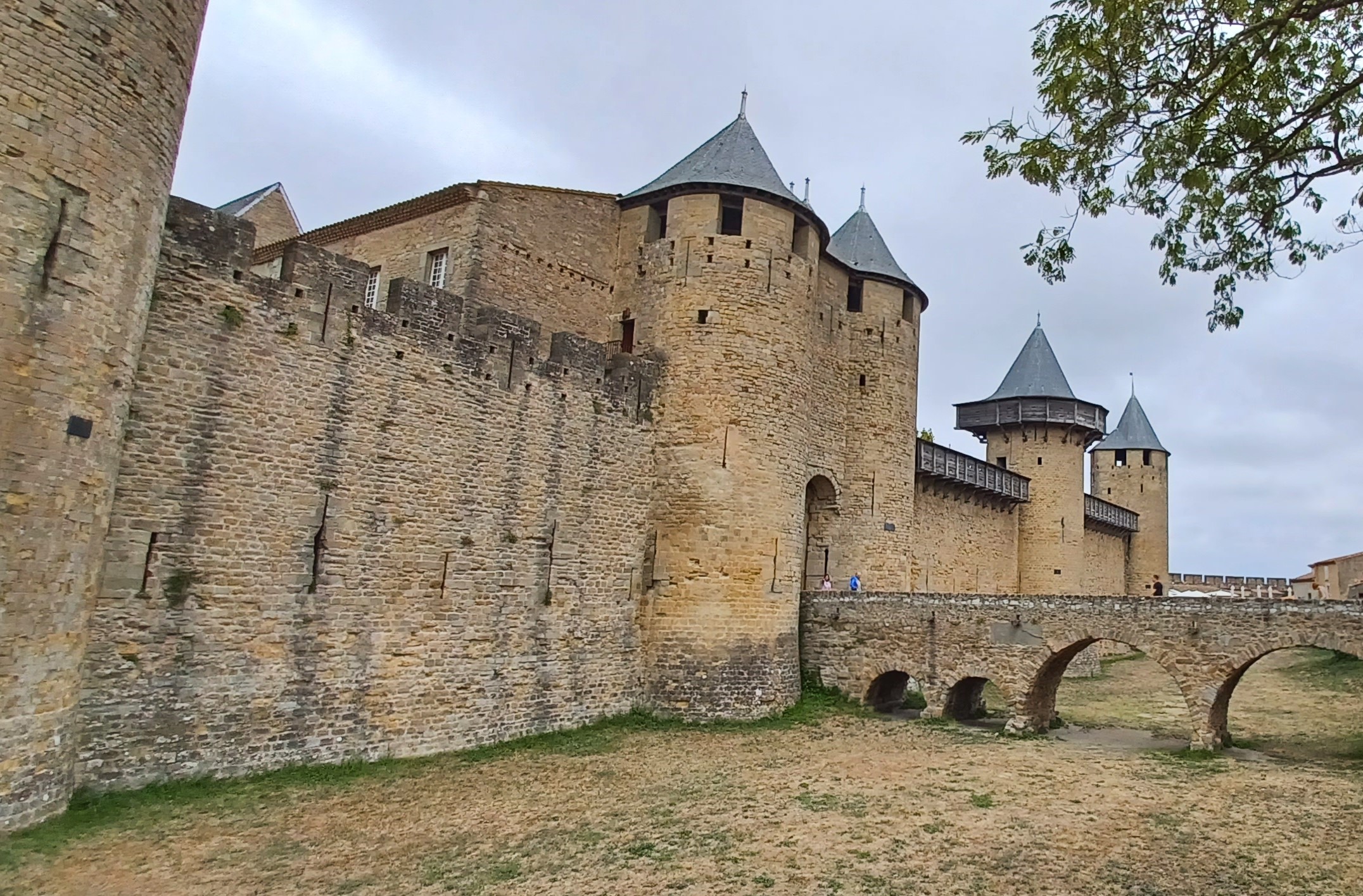
I enter the city via a draw bridge over a deep, dry moat, flanked by two 13th century towers linked by a stone archway. I look up and see the portcullis, and a ‘break-back trap’ – an opening where stones could be dropped onto invaders. The bridges is off-set, making the entrance into the city a zig-zag rather than a straight path and harder for invaders to march through.
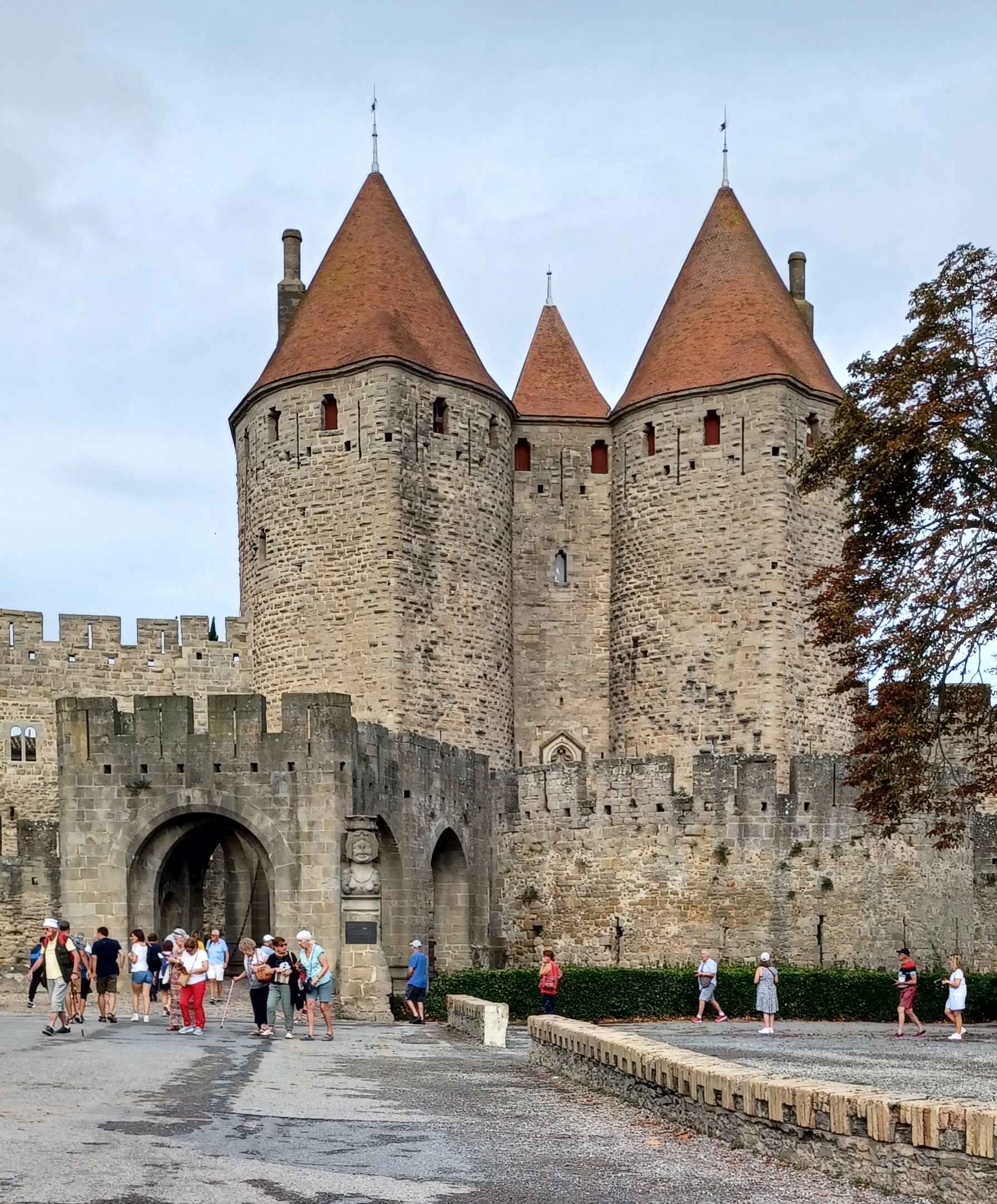

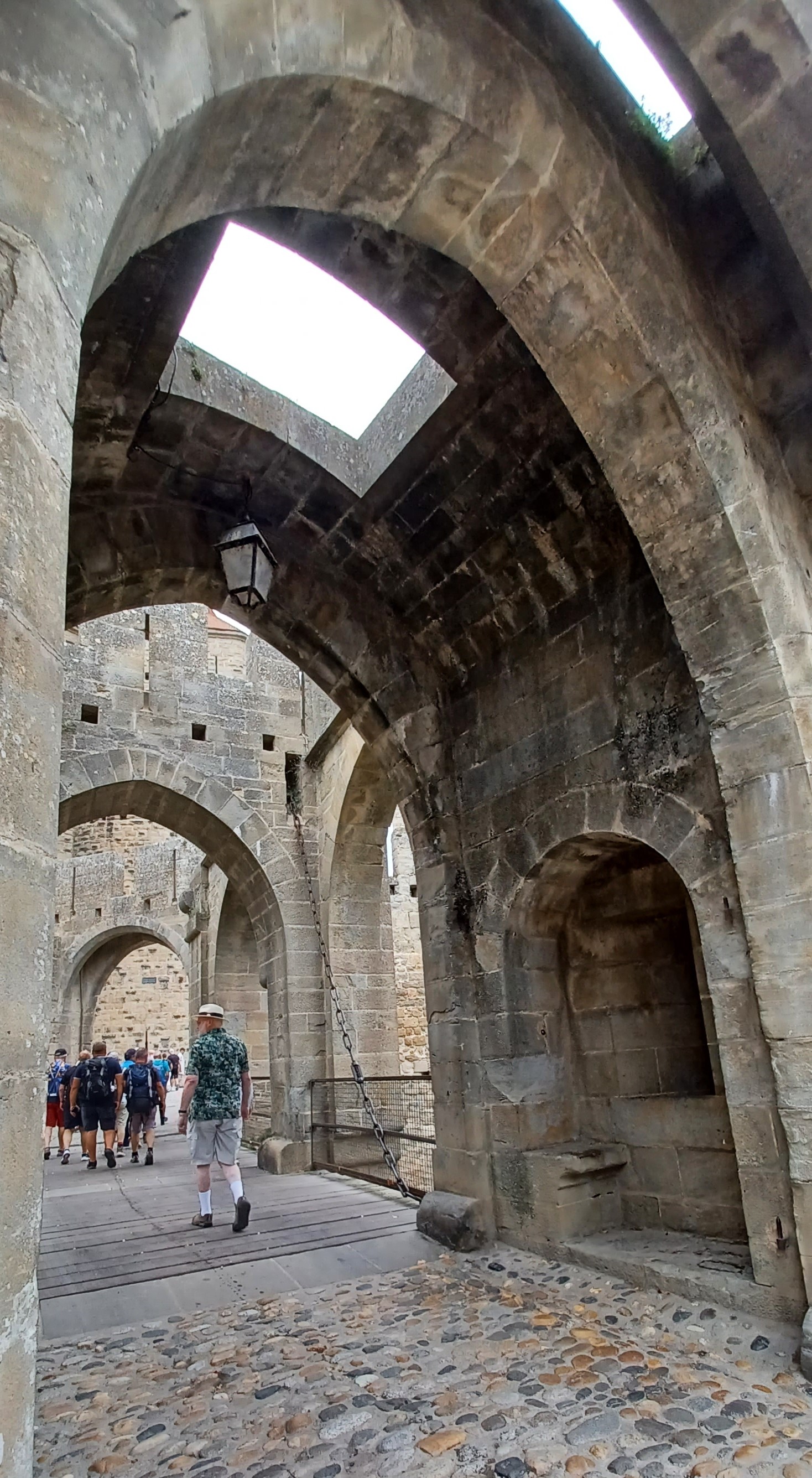
I expected to find a walled castle filled with ruins. What I find is a living city, with hotels, restaurants, shops and even some cars, though vehicular traffic is not allowed between 10 AM – 6 PM.
What must it be like to live and work in a place like this…
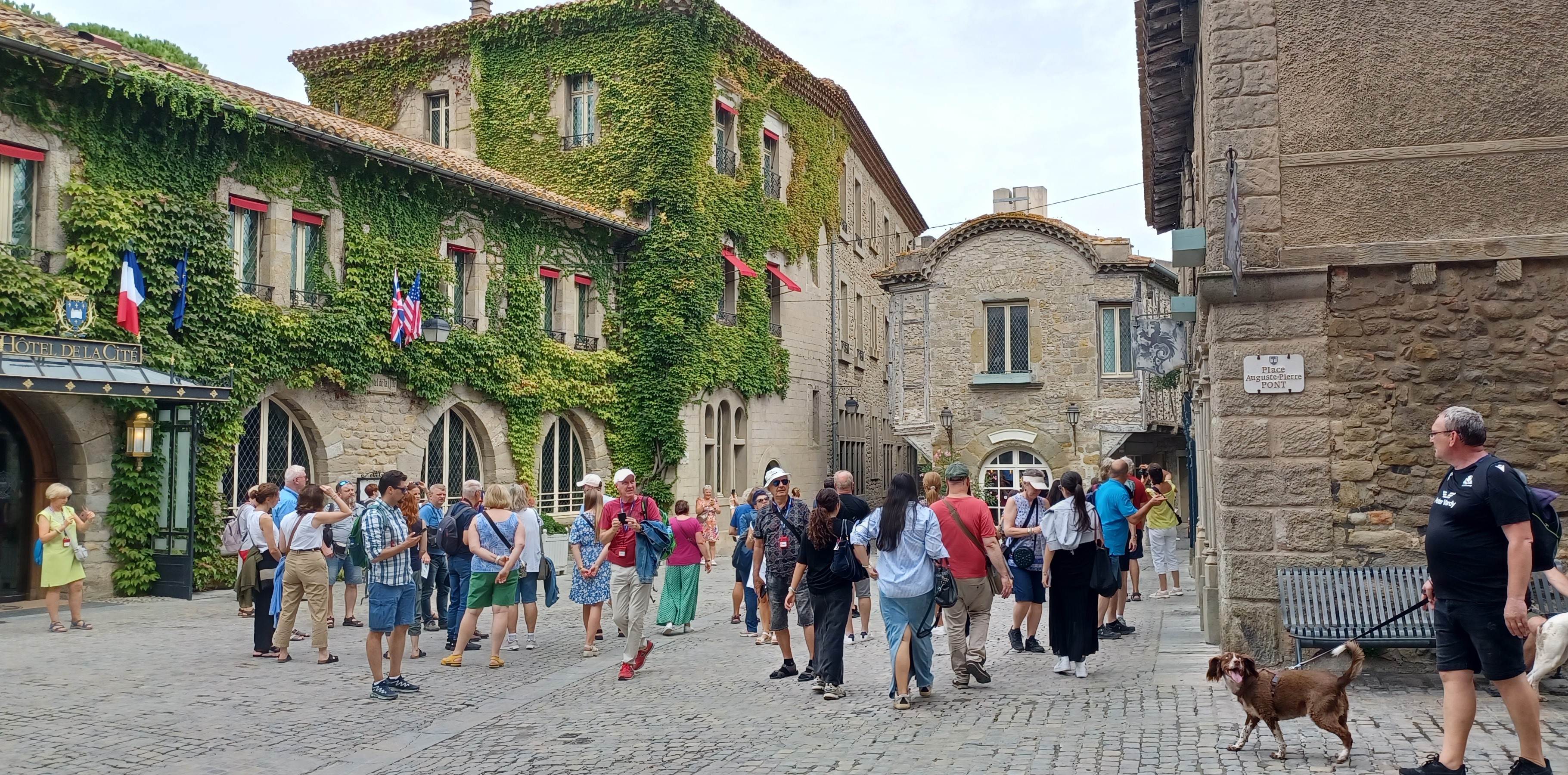
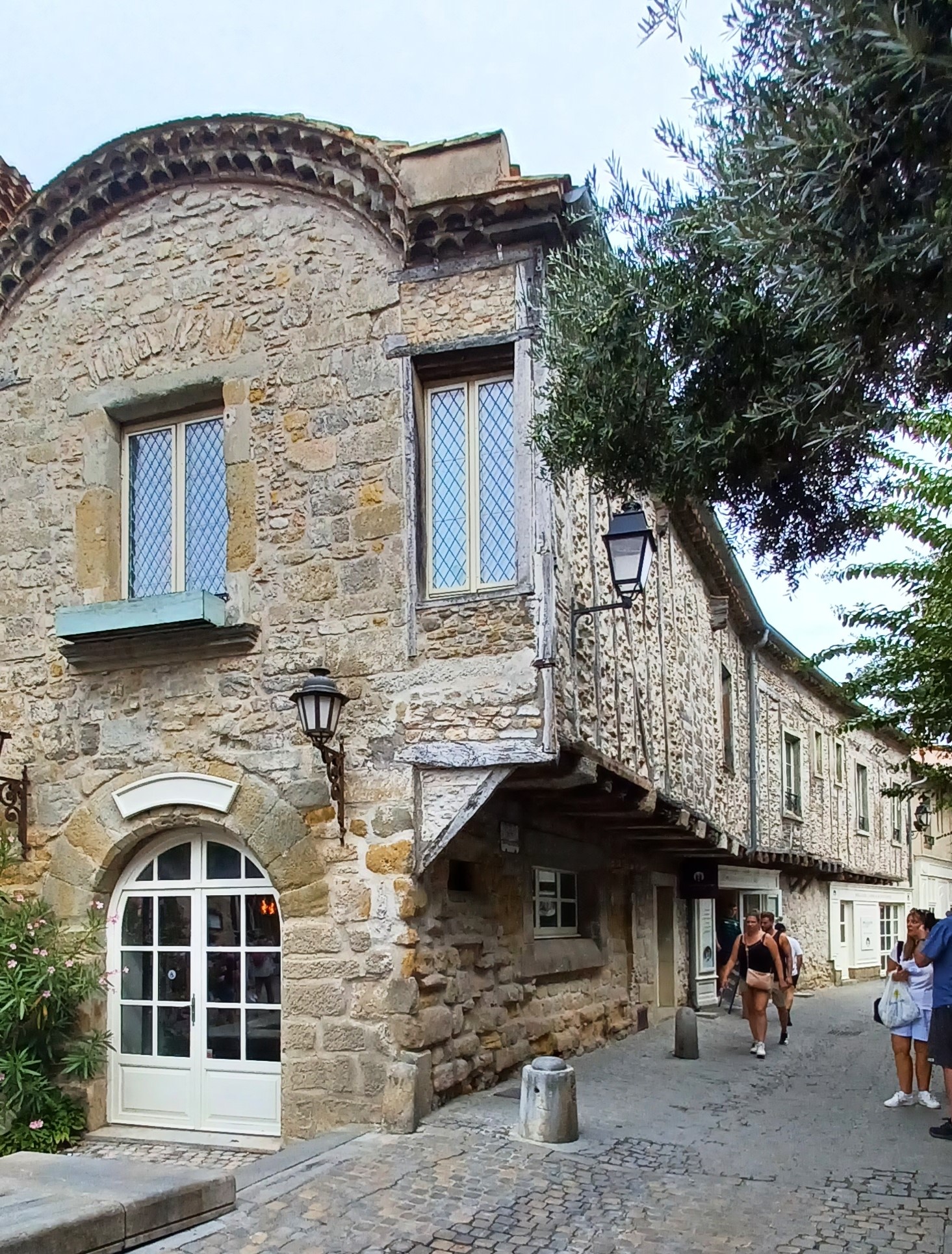
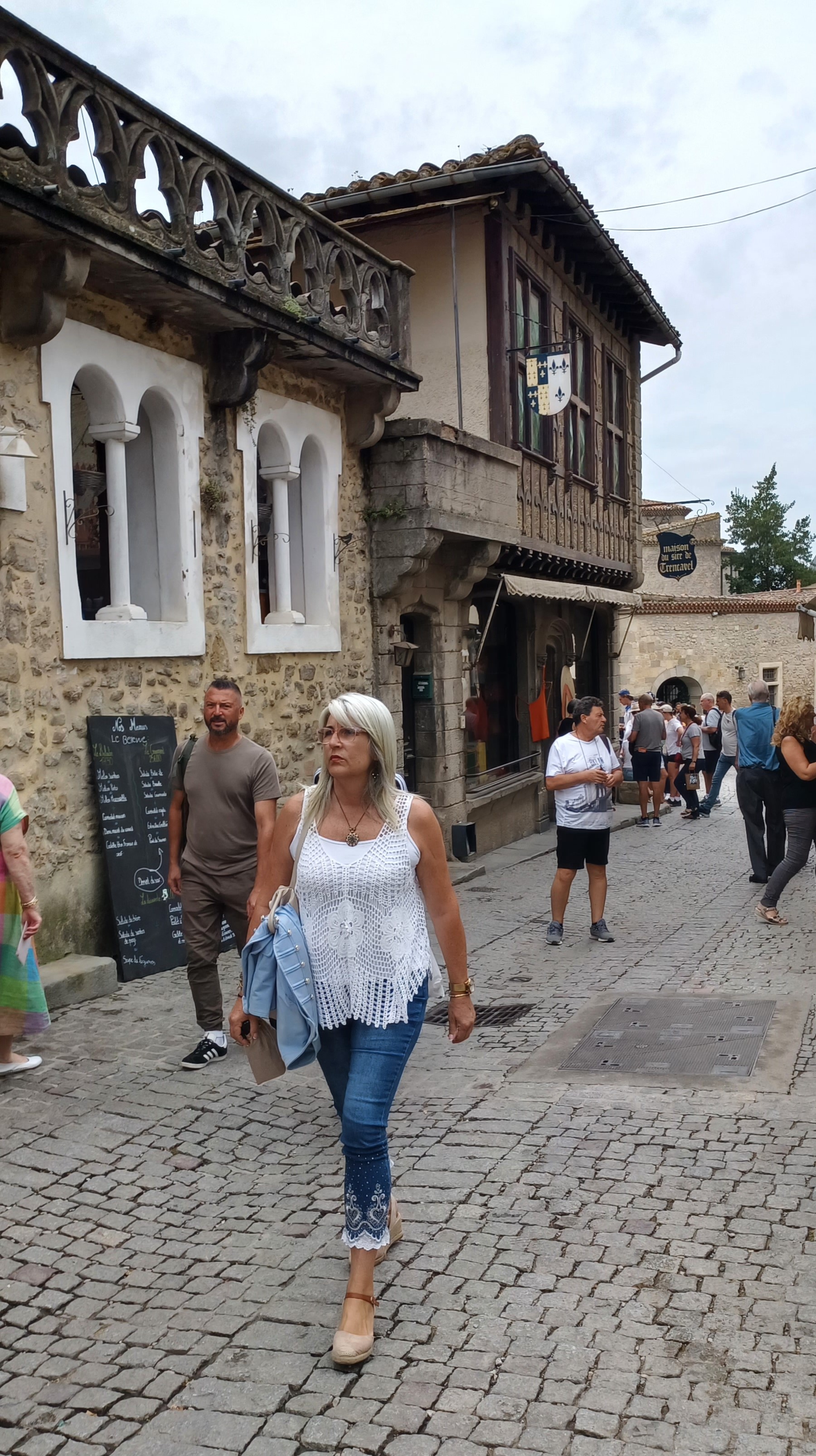
There are several guided tours you can take here. The historical tour I had reserved is led by an enthusiastic docent whom I have a hard time understanding, between her accent and a stout wind that came up about 30 minutes into the 1.5 hour tour. The first thing I do afterwards is find an English guide book to help me fill in the blanks.
Most of the building facades have been rebuilt, but the streets and squares are true to their original layout. There are two wells here although I only found one. It is the older of the two, dating to the 14th century with its columns and fittings dating to the Renaissance. It is said that Visigoth treasure is hidden underneath it, and that the underground water network of the city starts from this point.

I pass up the Inquisition Museum (having seen enough in Spain) but stop in at the School Museum, where I learn about practical things like weights and measures and chemistry. And lastly, the cathedral – half Romanesque and half Gothic, built on the site of their original Notre Dame, which was pillaged in the 8th century. I will cover the school museum and this cathedral in future posts.

After grabbing a late lunch, I head back over the drawbridge and walk over to the graveyard, whose gate is also closed. I spot the illuminated street art that I posted earlier. It’s a lovely walk back in to town and I am really happy that I drug myself out of bed today to see this part of the city.

The Legend of Lady Carcas
Carcassonne had been taken by the Arabs during the Umayyad invasion of Gaul in 725, and were driven out by the Franks in 759, led by their king, Pepin the Short. From that piece of history sprang an oral legend documented to the 12th century. There are several variances on the legend, this one is my favorite.
A Saracen princess named Carcas ruled the city after her husband died during a skirmish with the Franks. To protect the city, she armed the women, children and old men and posted them at the ramparts, and posted straw dummies dressed in her dead soldier’s uniforms to double the numbers of the armed living.
As the city was nearing the end of its food supplies, Lady Carcas ordered one of her Christian subjects to bring her their last pig, and had it taken to one of the towers where it was fed the last bushel of grain from the city stores. The pig was hurled off the tower, and burst when it hit the ground below. The Frankish army, seeing this fat pig with a stomach full of wheat, determined that the city had plenty of food if they were willing to make such a display, and lifted the siege.
Some versions of this story attribute Lady Carcas to saving the city from Charlemagne, but it was actually his father, Pepin the Short, who history records as having laid the siege and driving the Arabs out of Carcassonne.


Classic style for a Nomad
LikeLike
Oh.Emm.Gee! So Fabulous! Love the one of you in your red chapeau, too!
LikeLike
With apologies as I don’t think the photos are posting : (
LikeLike
My “going to work” clothes, at least I wish!
LikeLike
True!
LikeLike