
Saint-Pierre Cathedral
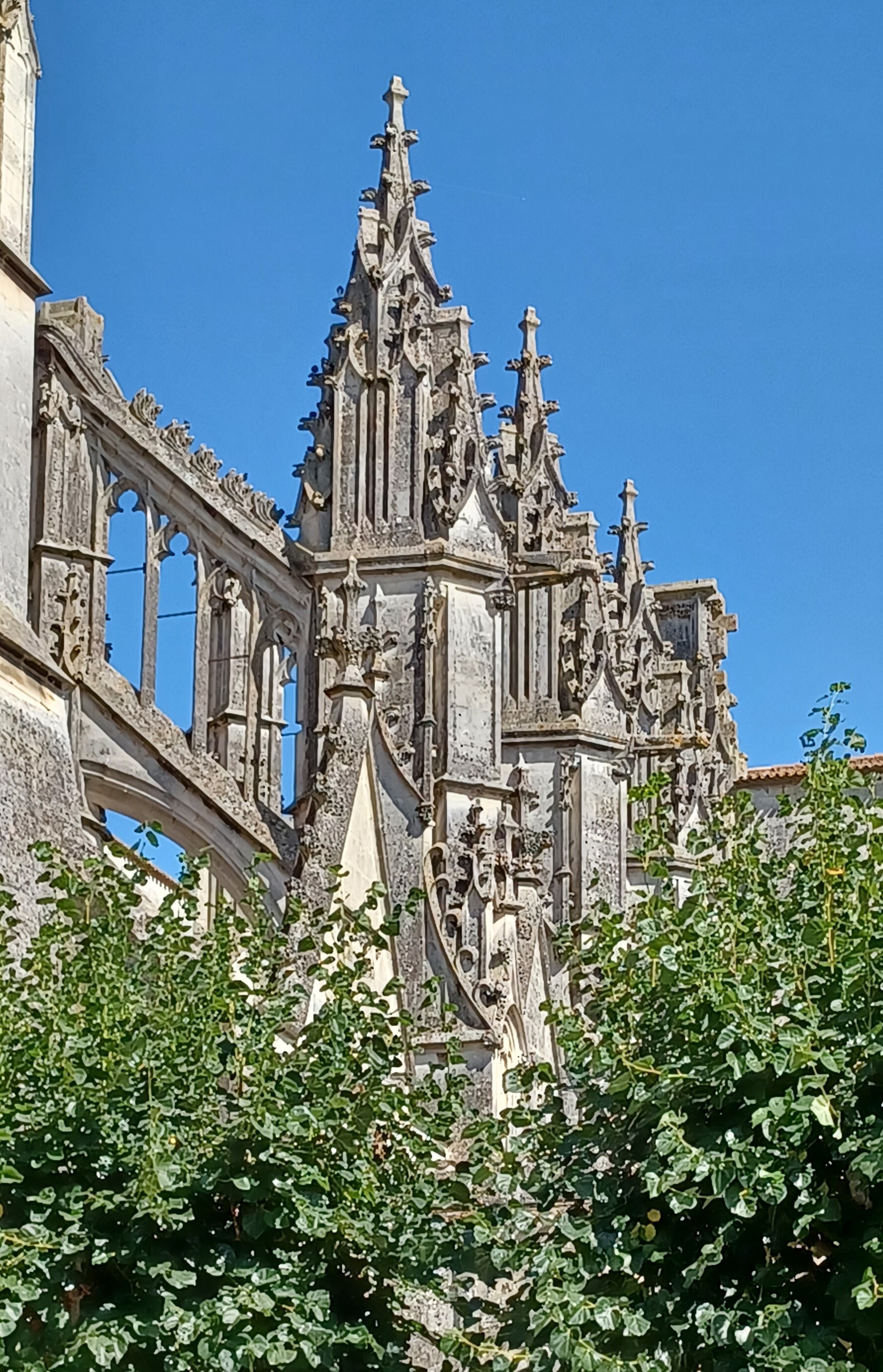
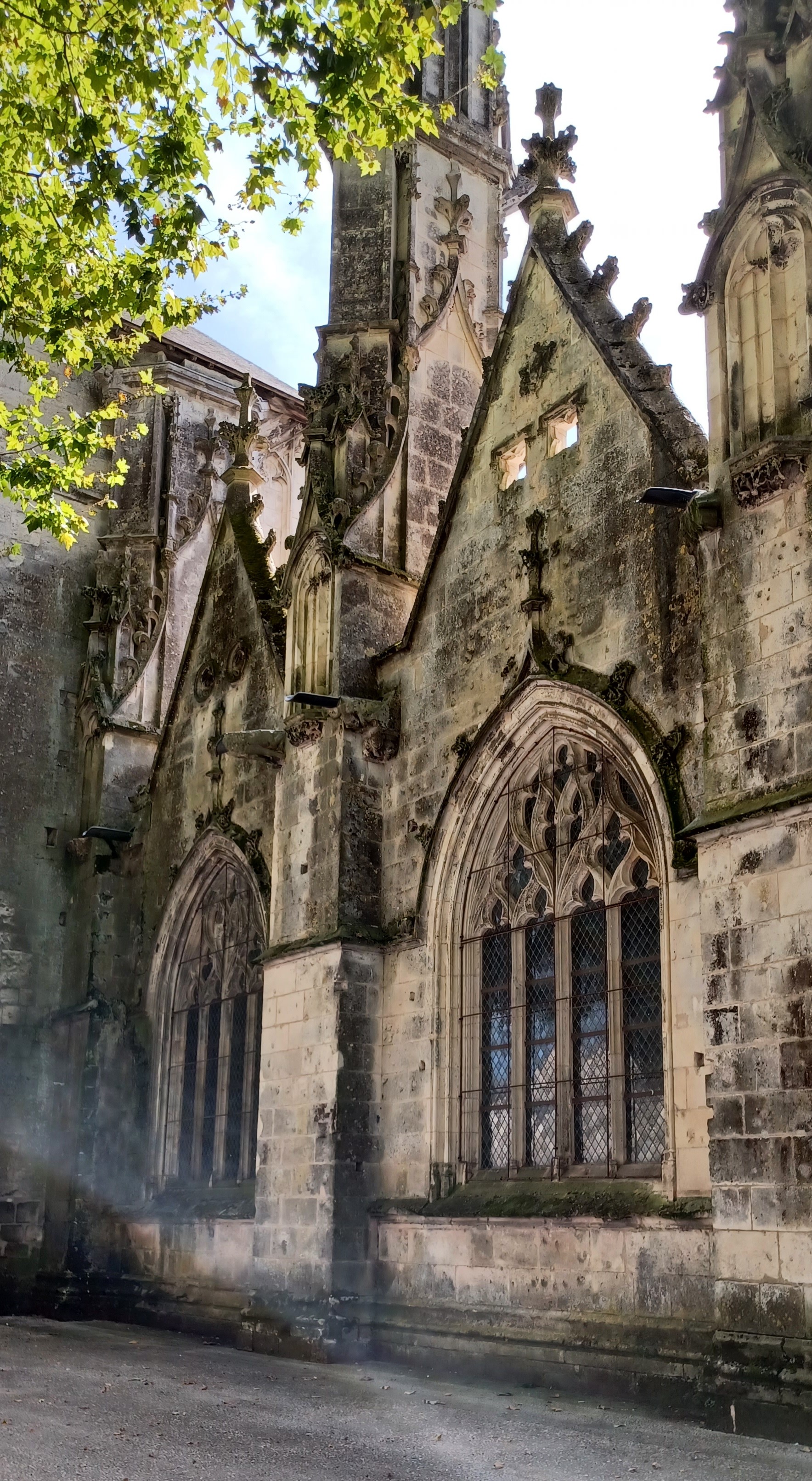
It’s one of the most distinctive cathedrals I have ever been in, which is saying a lot. It is visible from most parts of the city and would have been the tallest structure in Saintes had its spire been completed. It’s not until you get up close and personal with it that you see its intricate flying buttresses and collection of gargoyles.



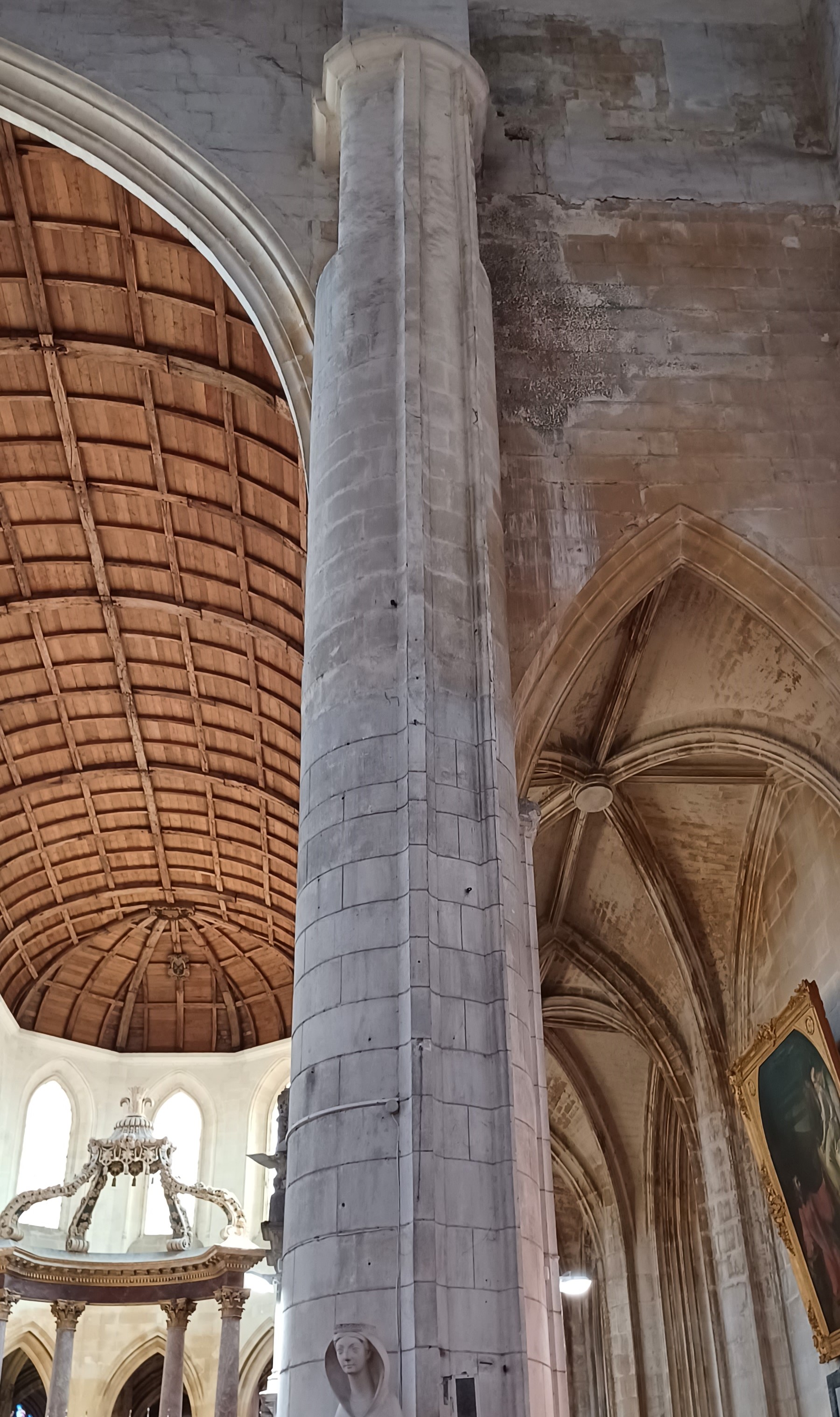
One of the things that makes this cathedral unique is its wooden ceilings, a cost savings measure during one of its many rebuilds. The Gothic vaulting was retained in the aisles and side chapels, most of which date to the 13th-15th centuries. The other thing that makes it unique is that it takes seriously its role as both a house of worship and a museum. There are informational placards along the outer aisle which explain its history, thus keeping its heritage alive by sharing it with people outside of its congregation.

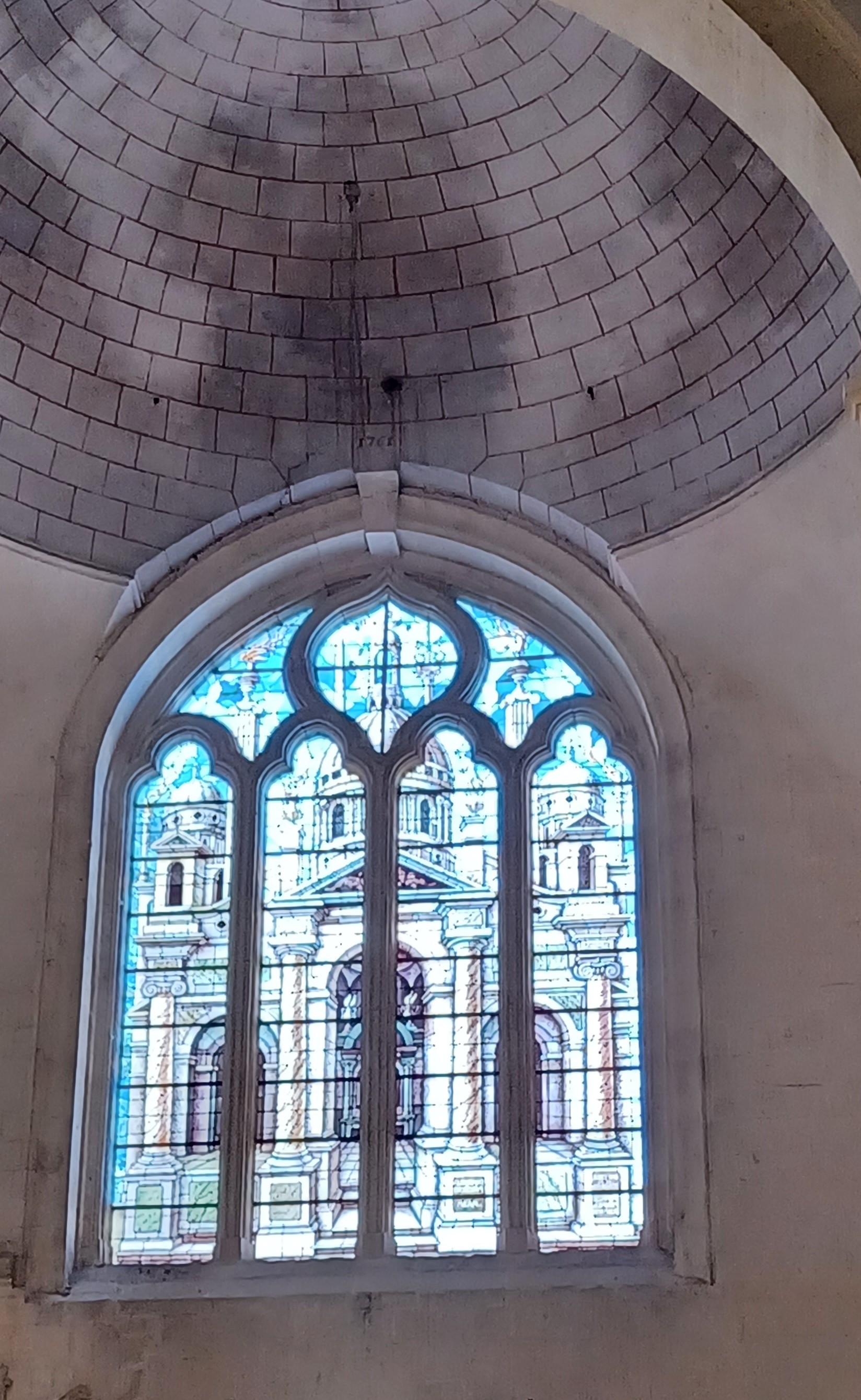
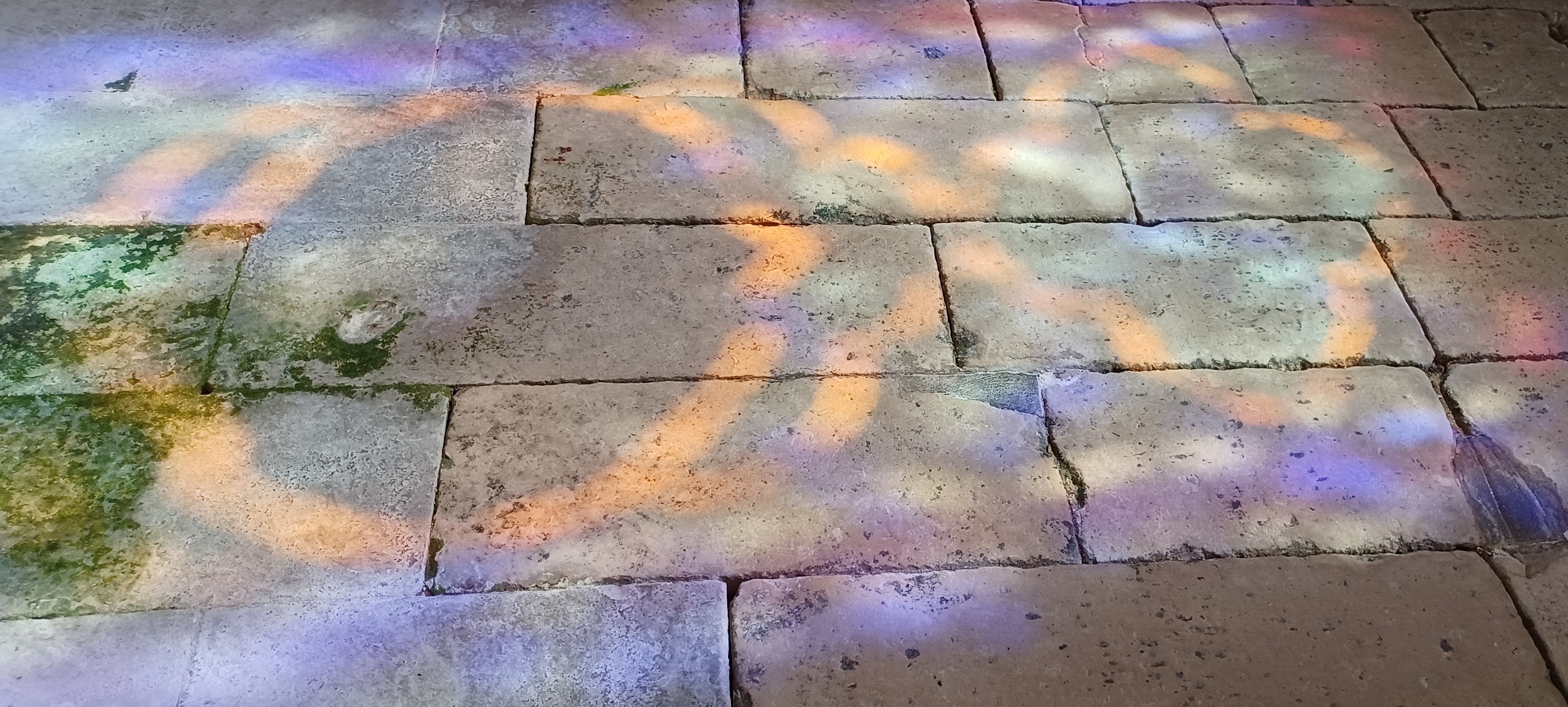
The windows are copies of the medieval originals, though I suspect the one in the first photo is more modern due to its color and theme. I looked down to catch light from the center window cascading onto the stone floor.
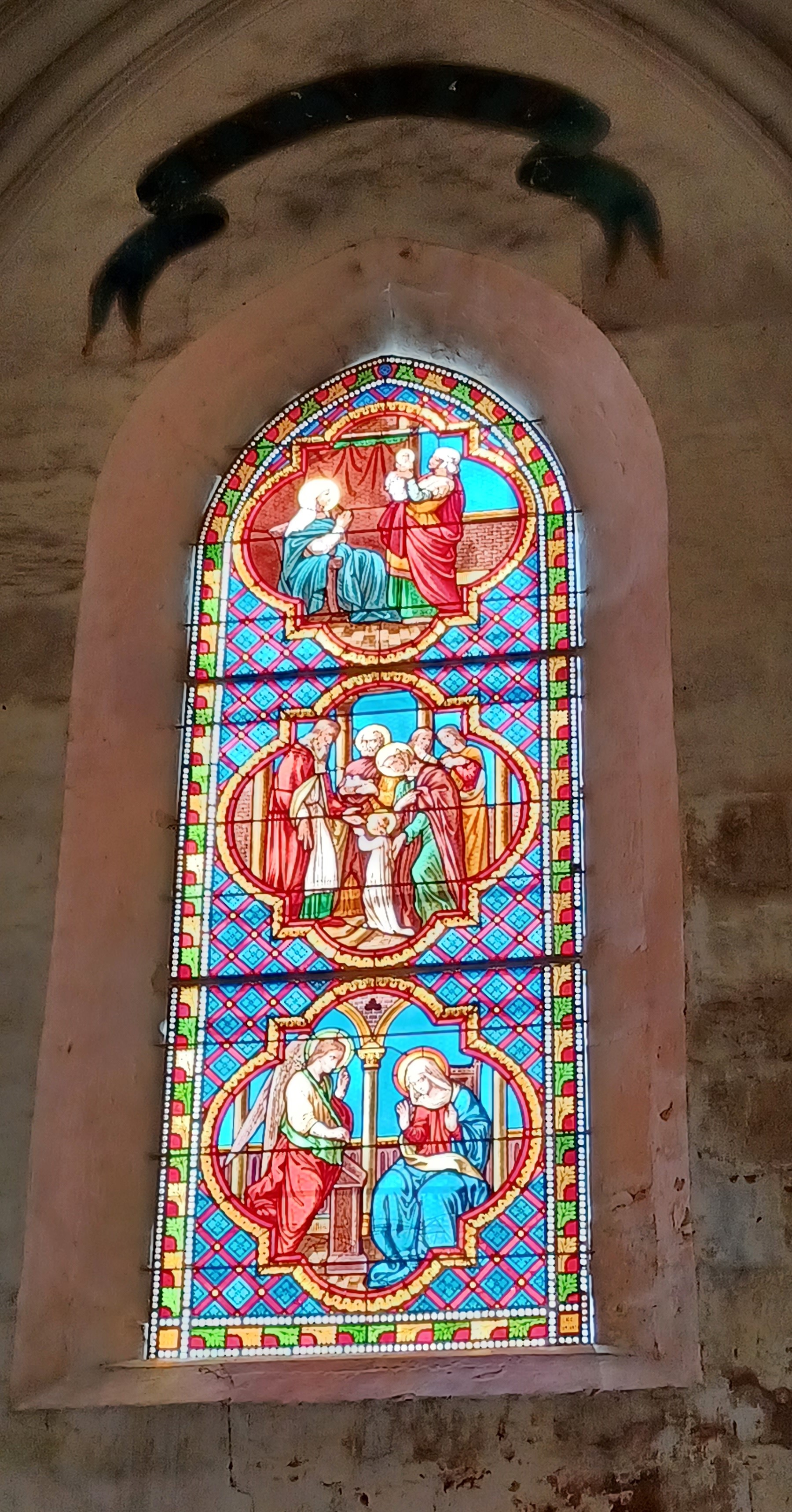
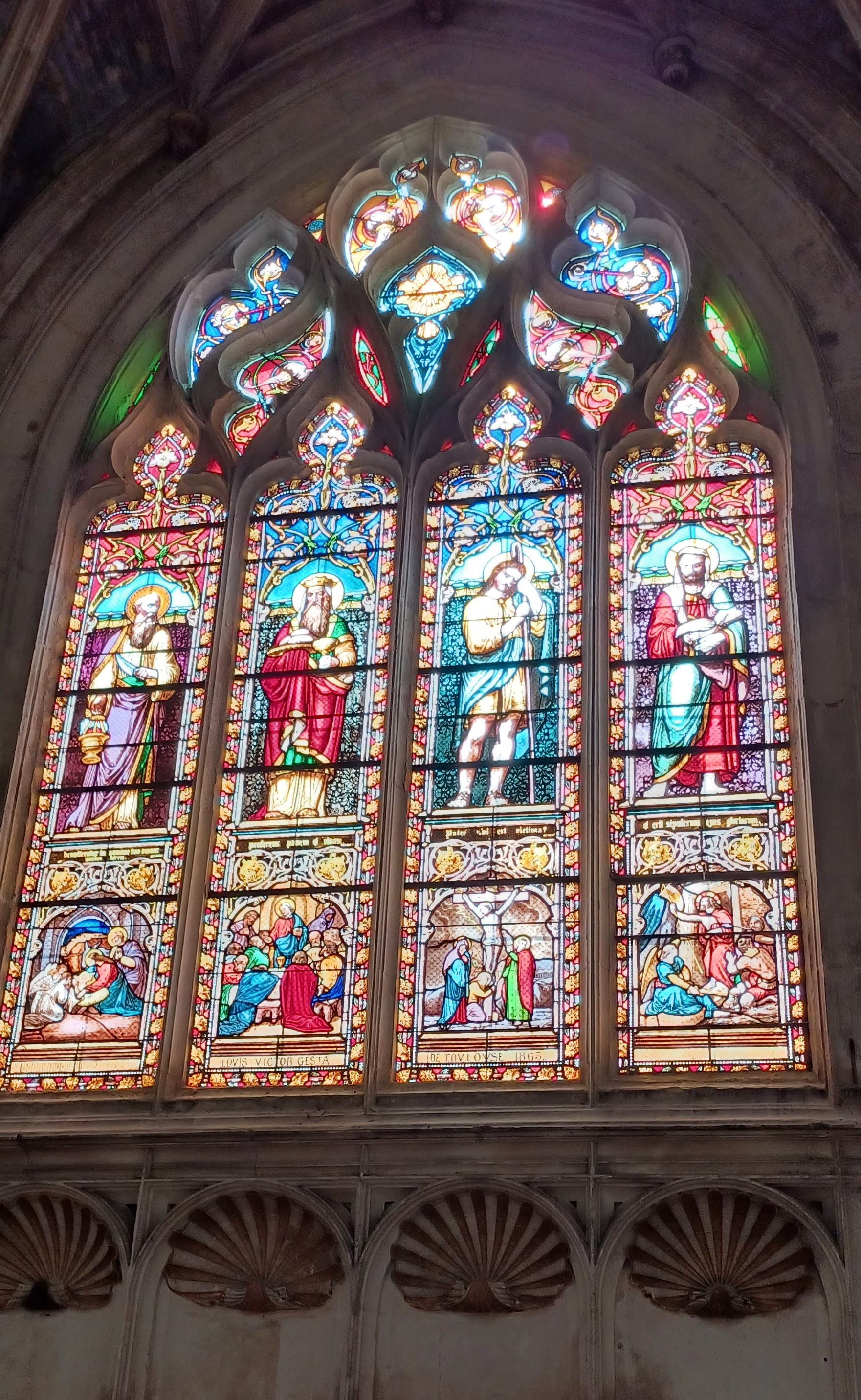
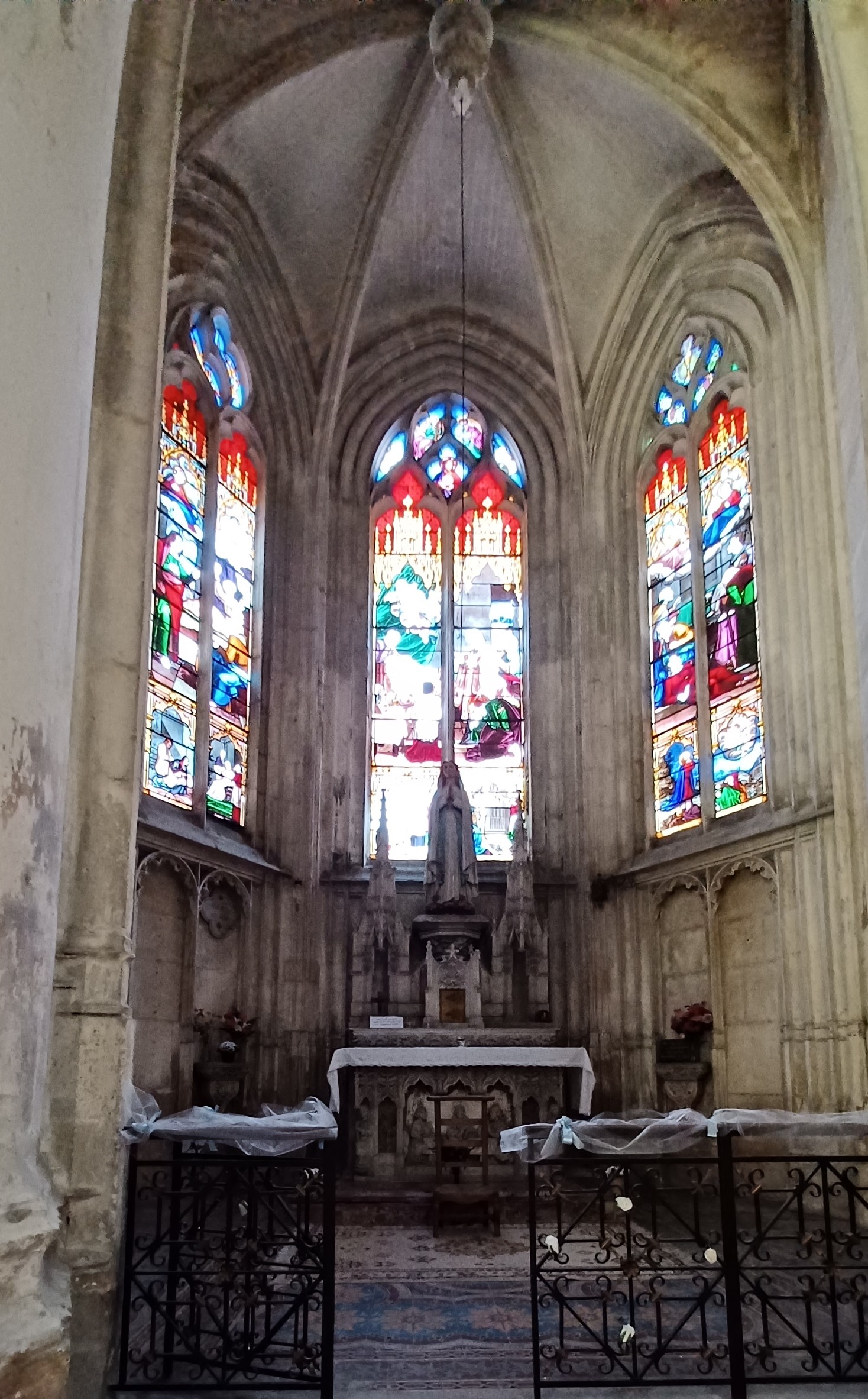
This cathedral is thought to have been founded in the 5th century by St. Vivien, one of Saintes’ first bishops, and is referenced in historical records in 596. It was rebuilt in the 6th century by St. Pallais, who enlarged it and equipped it with 13 altars. It was destroyed during the Norman Invasion in the 9th century. It was ravaged by fire in the 11th century and rebuilt and reconsecrated during the following century, although only a portion of that church exists today.
The next iteration came after the 100 Years War, financed over the next 75 years by those seeking indulgences from the Church. The Romanesque church was rebuilt in the “Gothic Flamboyant” style of the 14th century, with flying buttresses supporting the overly tall walls. The Wars of Religion brought work to a halt in 1560, and the central nave was destroyed by the Hugenots in 1568. Reconstruction began again in 1582 but with limited resources, so the ceilings were lowered and made from wood, which eliminated the need for vaulting and buttress support, although the aisles and some of the chapels maintained their Gothic vaults. Work was not completed until the mid 17th century. I believe either funding or interest ran out for the intended steeple. It is instead capped with a dome, and nicknamed “the unfinished cathedral.”
Saint Eutrope Basilica
One of the pilgrimage routes to Santiago-de-Compostella came through Saintes, bringing pilgrims to stop and pray at the relics of Saint Eutrope, credited as the first bishop of Saintes (3rd century) and martyred for converting the Roman governor’s daughter to Christianity. He became a bit of a cult figure, with his followers maintaining that status until the French Revolution began in 1789.
The church was consecrated in 1096 by Pope Urban II to house Saint Eutrope’s relics and to give pilgrims a place to pray. It is considered one of the preeminent Romanesque buildings in the region.

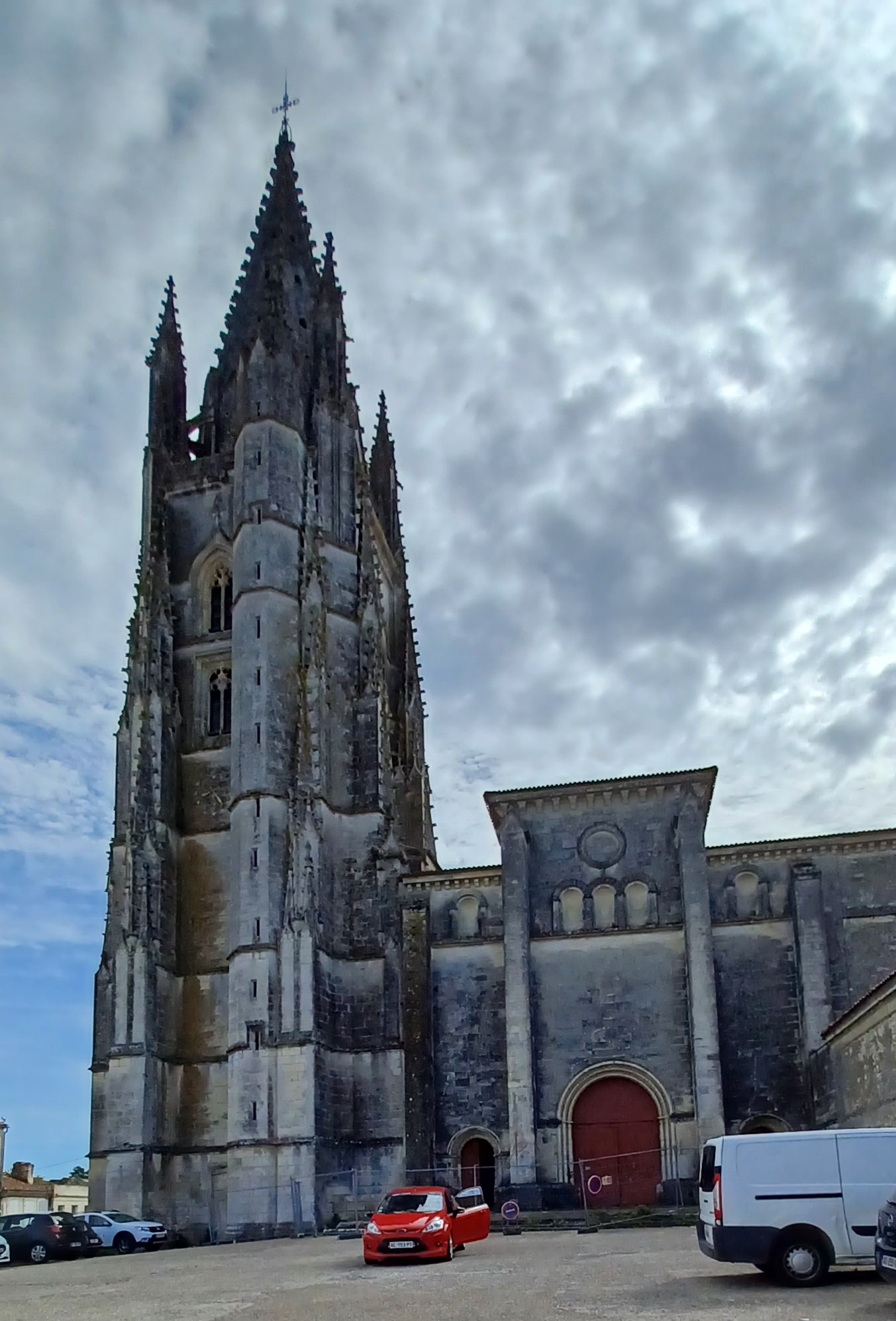
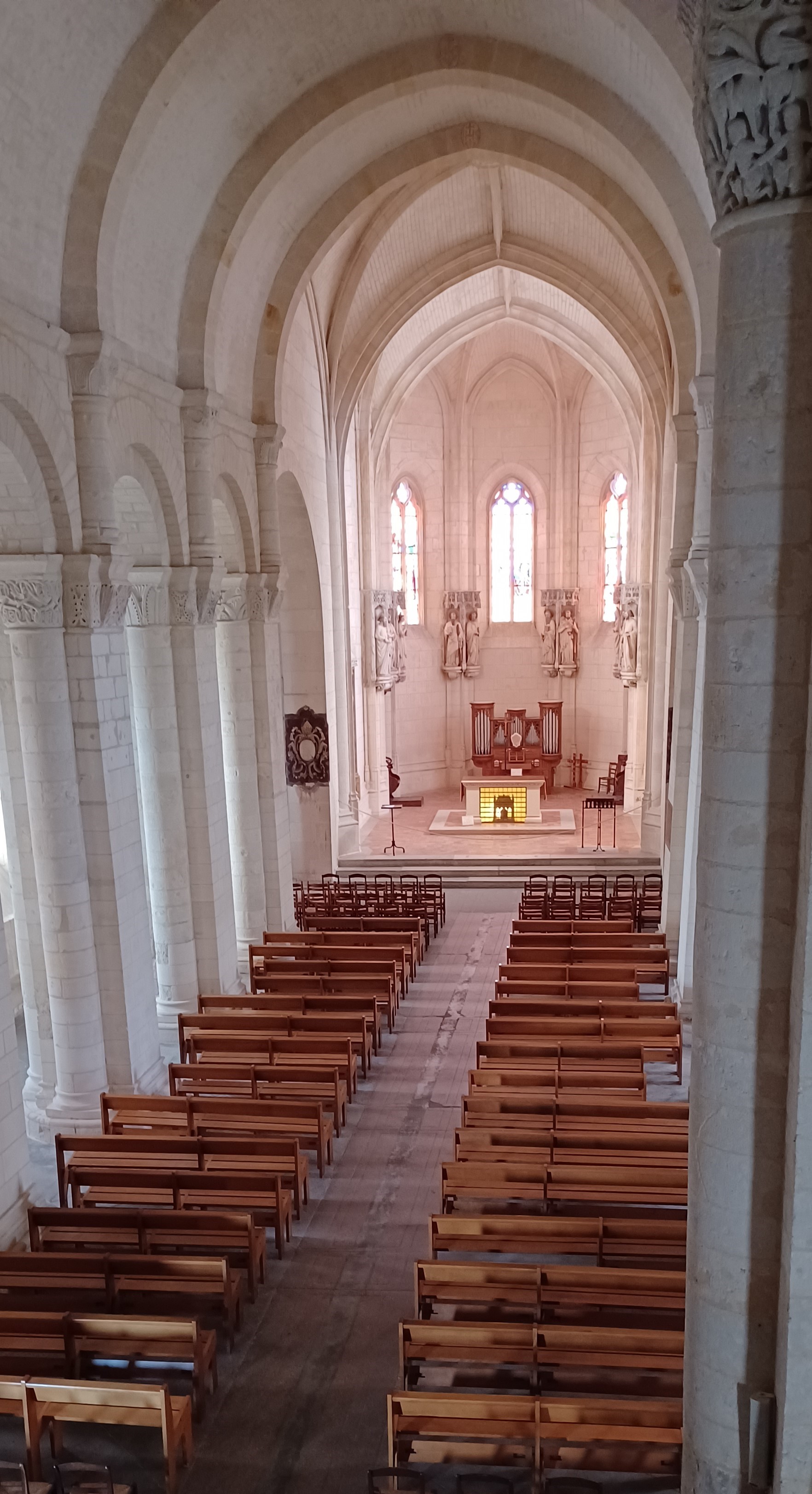
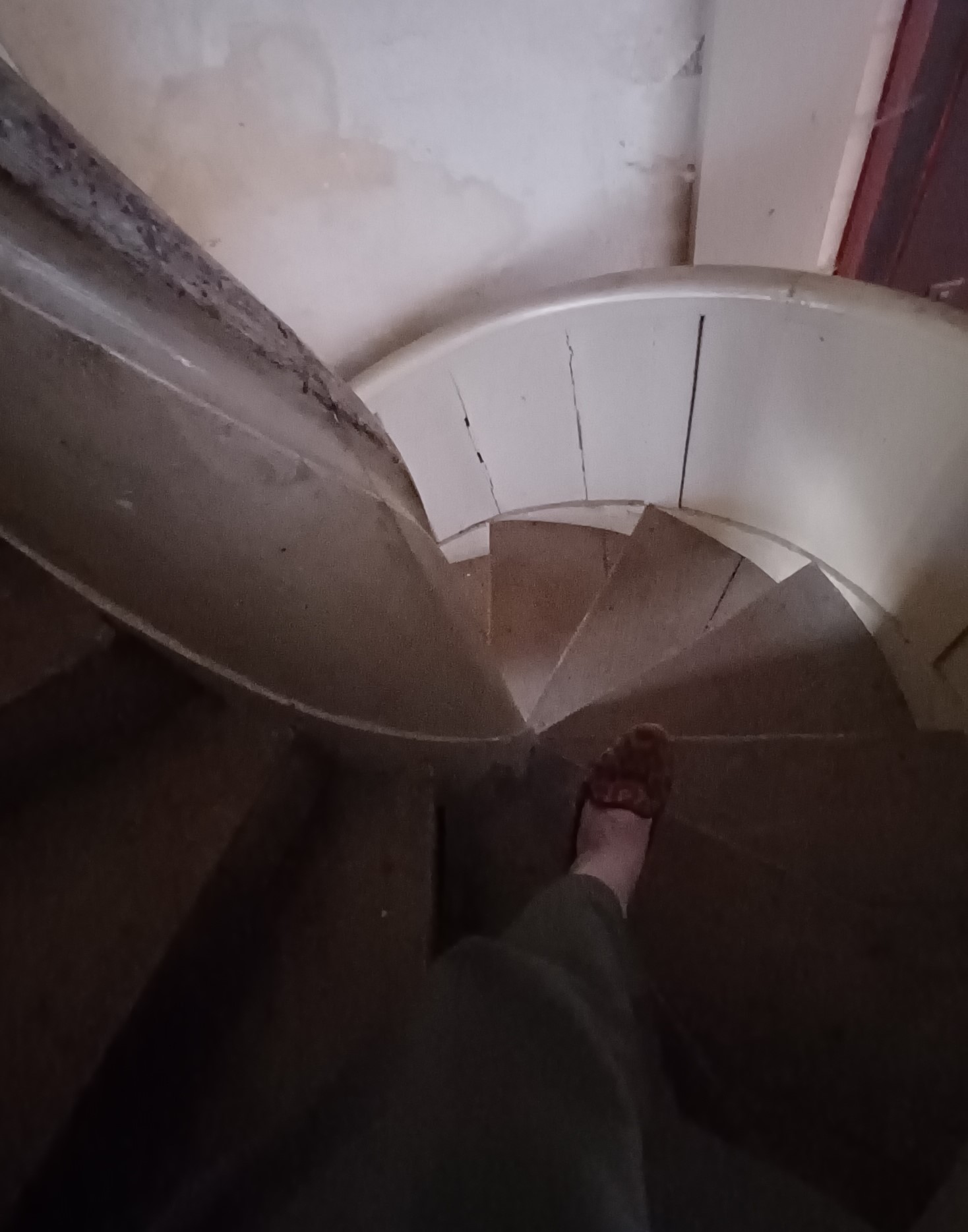
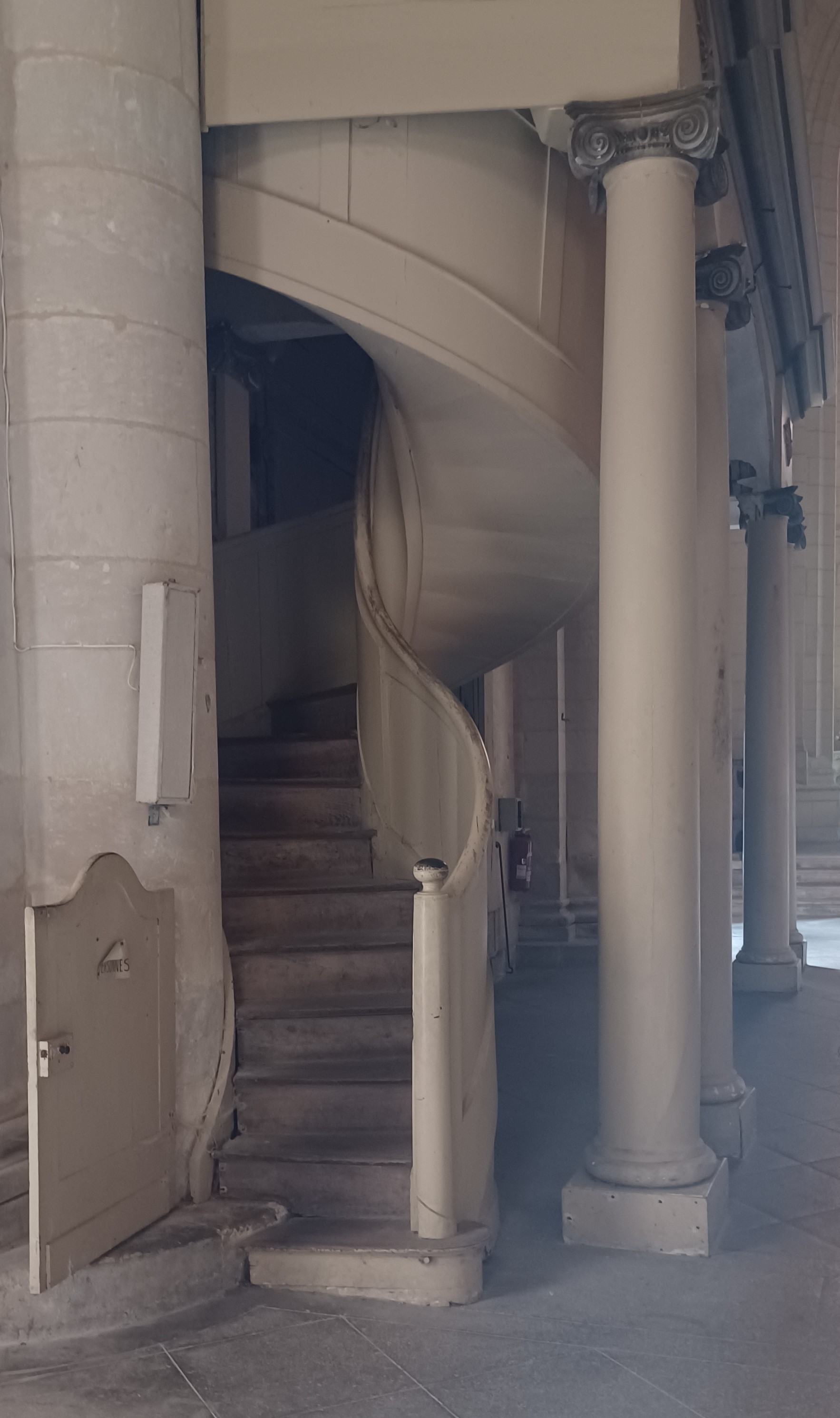
It is the only church where I have found my way to the choir loft. Here’s the view from there, and views of the staircase, going up and coming down.

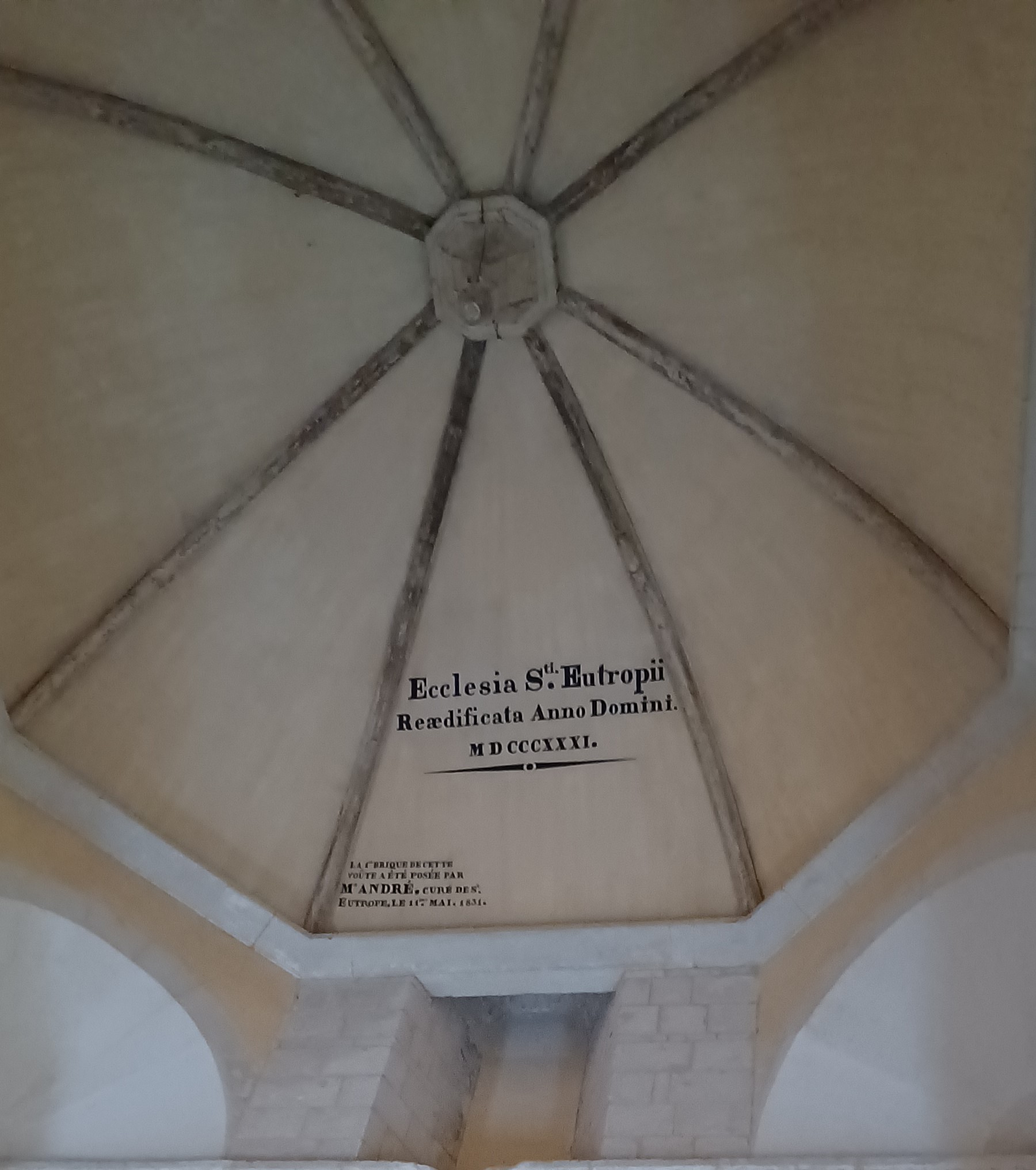

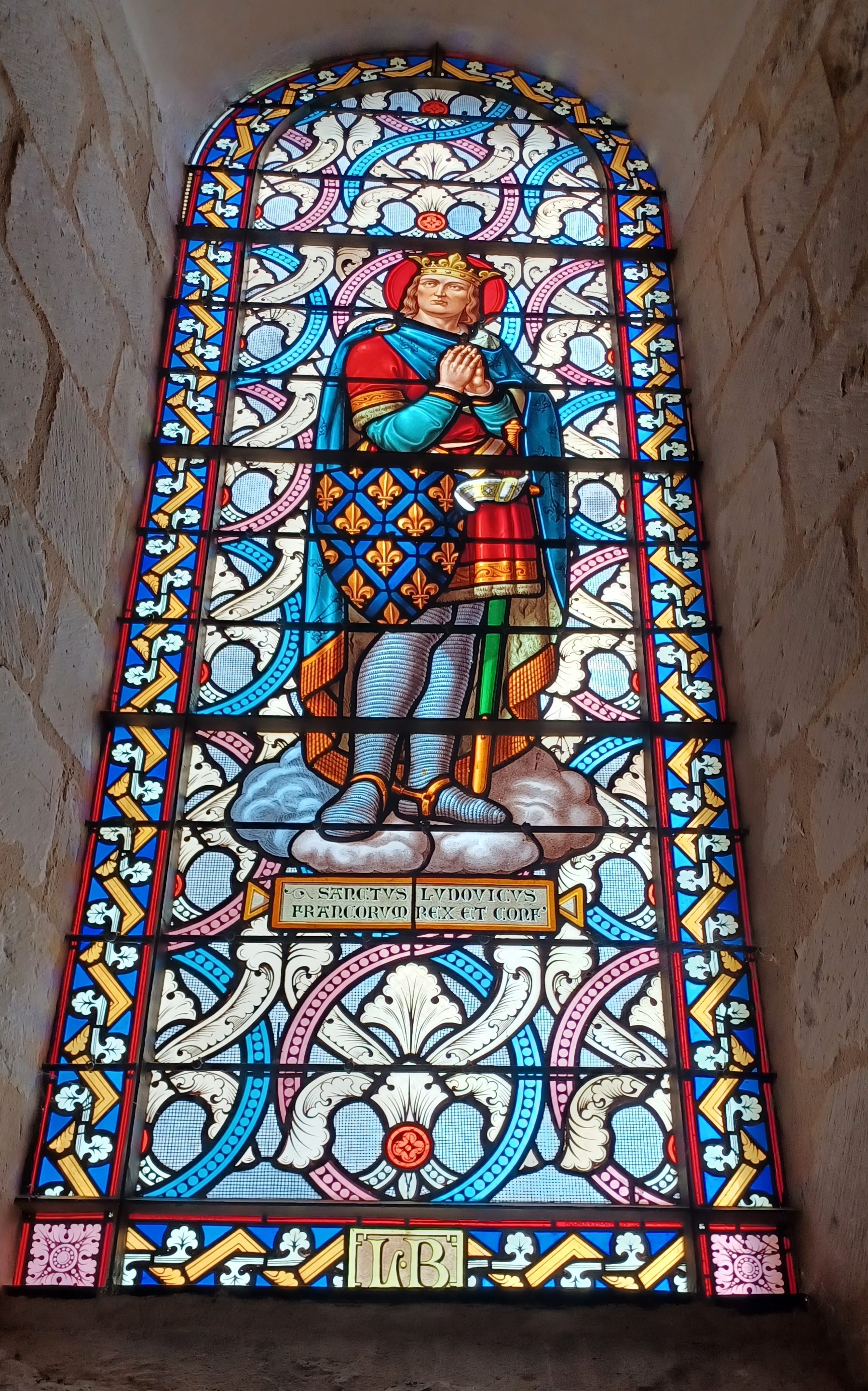
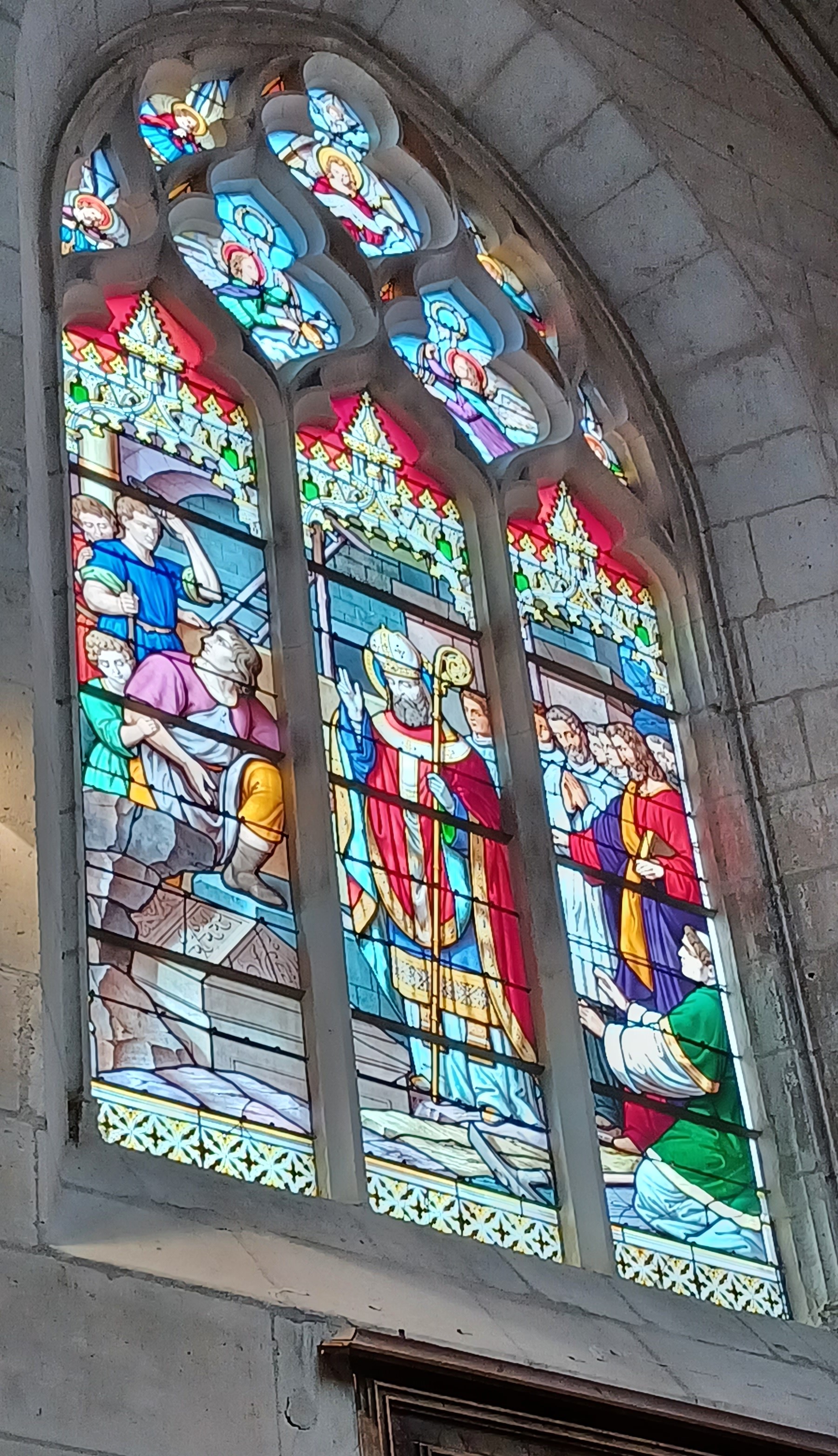
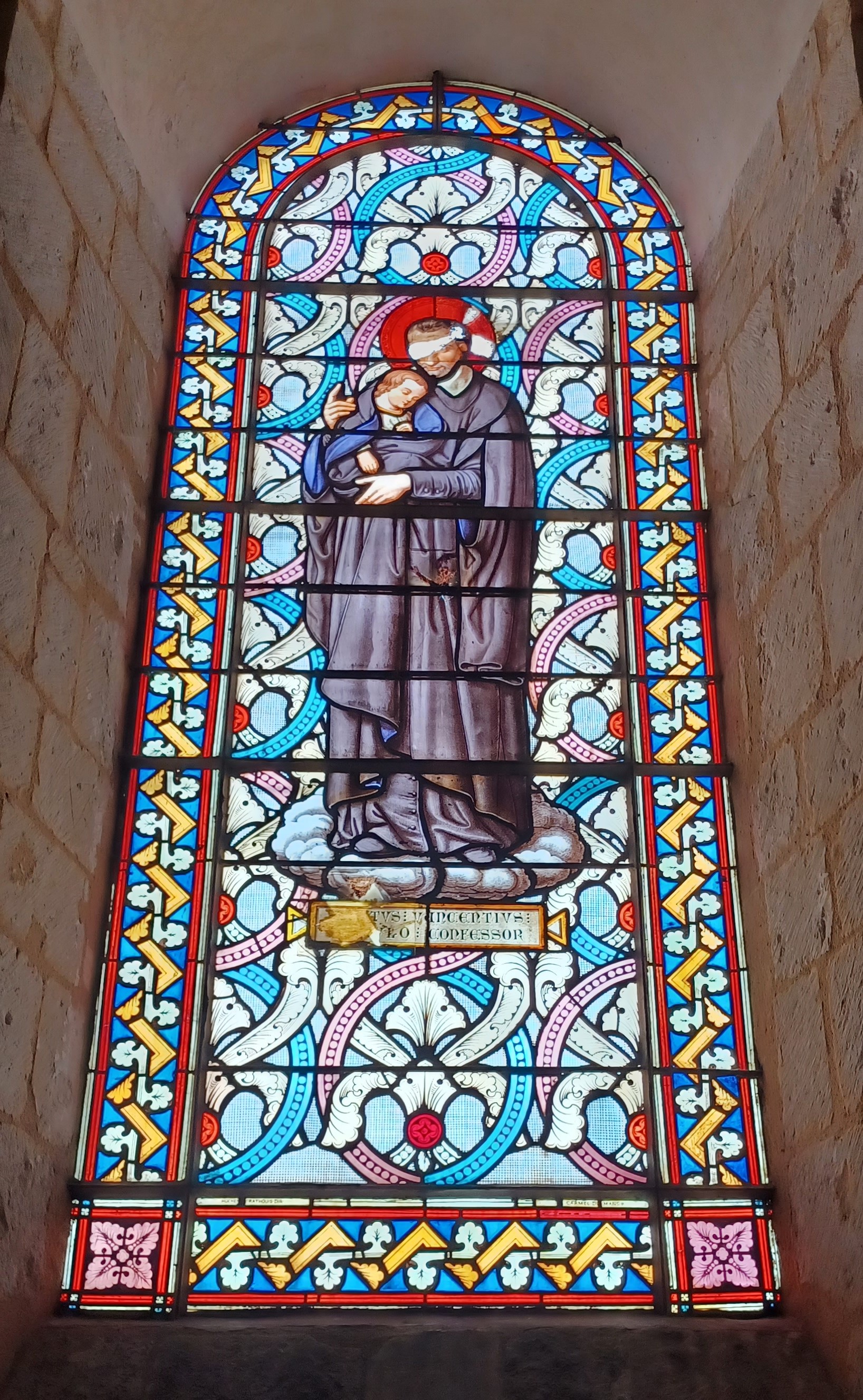
And of course, there is glass.




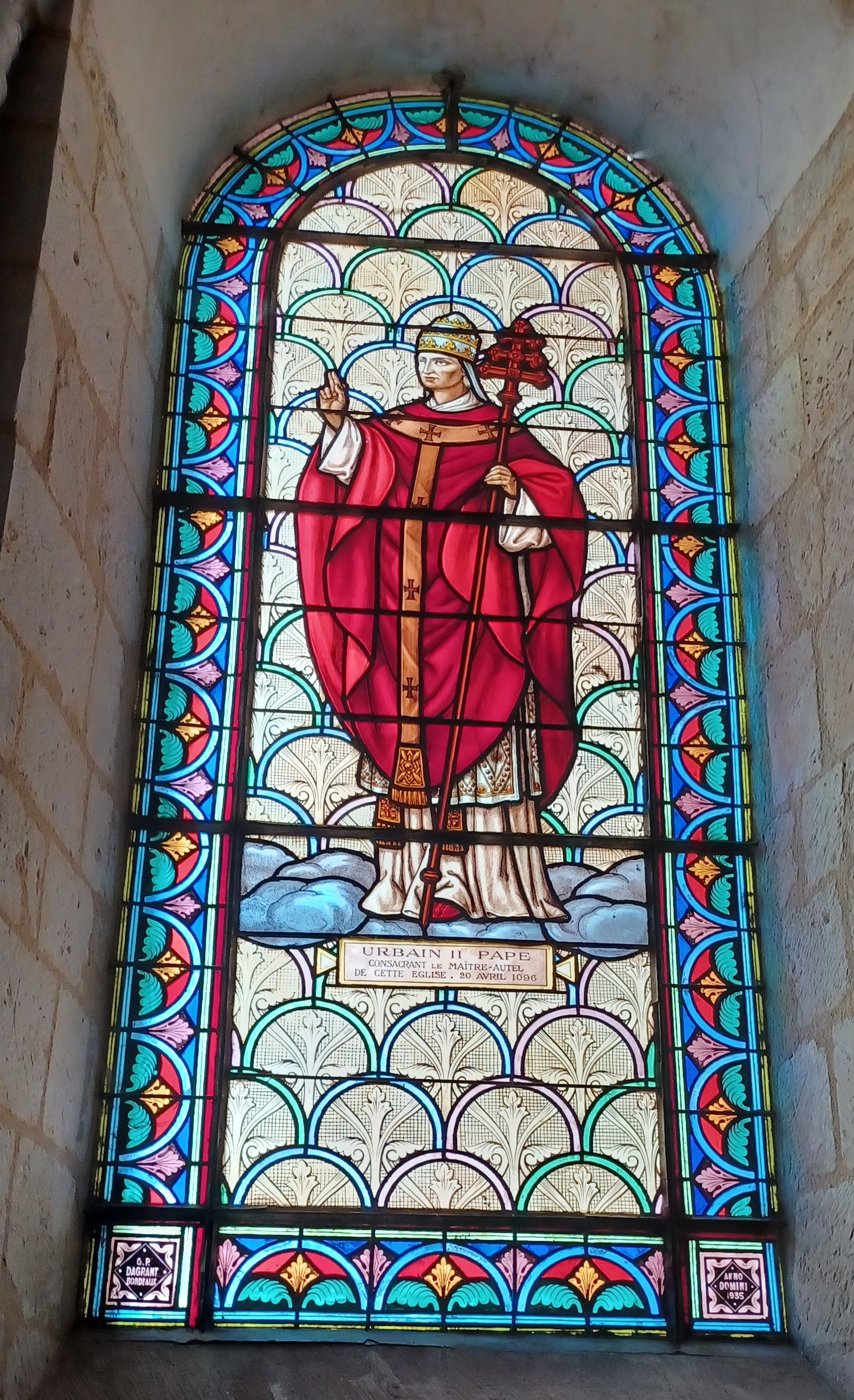
The Crypt
Saint Eutrope is buried below this basilica in one of the largest Romanesque crypts in Europe. It was dark for the first several feet until I tripped the light sensors. Then it was incredible.


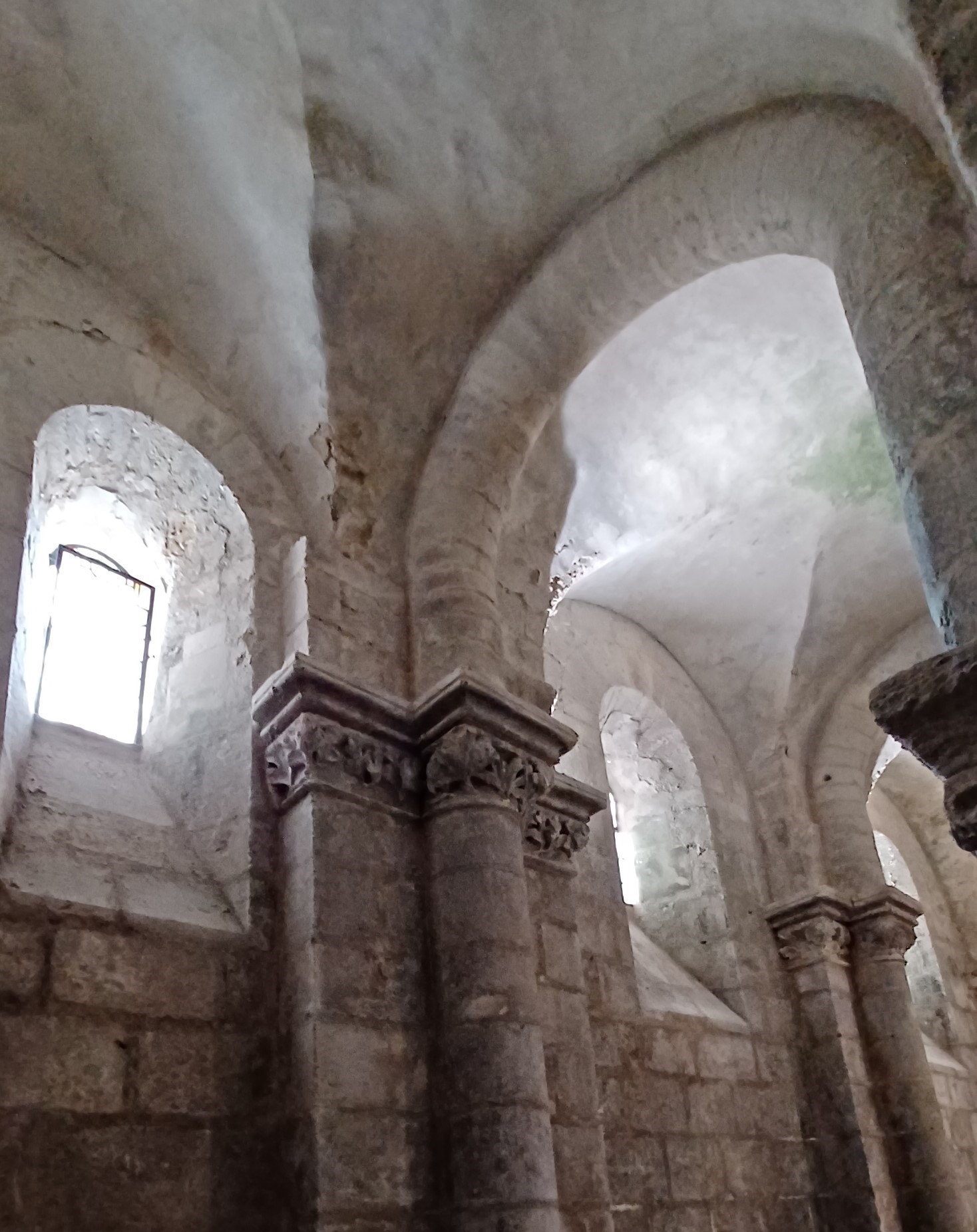


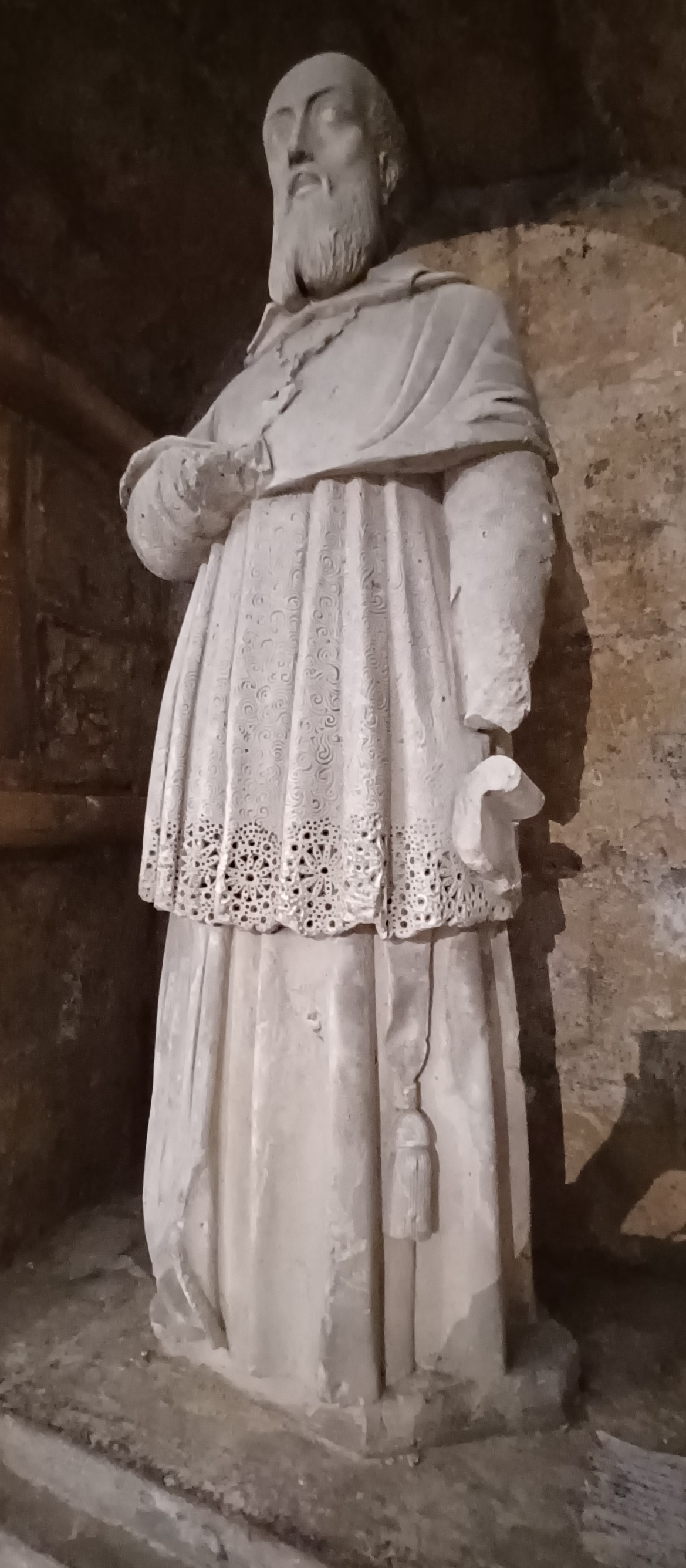

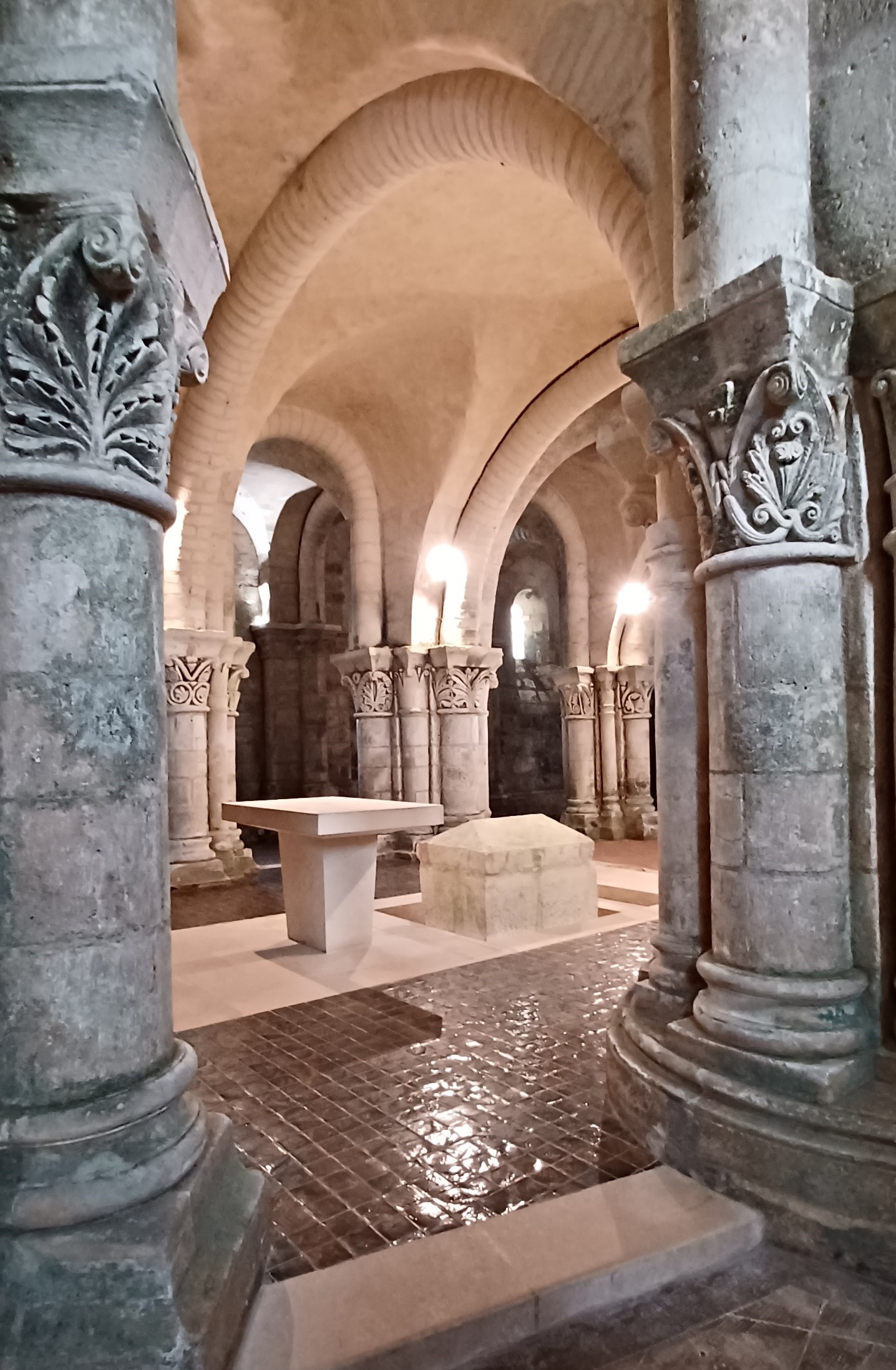

The place moved me in ways I cannot describe, and which stayed with me the rest of the day.
 Daveno Travels
At the risk of sounding like Spock, I can only say, “Fascinating!”
LikeLiked by 1 person
I visit churches for the glass, the flying buttresses, and the gargoyles. I’m fascinated by gargoyles…
LikeLike