
I write to you from my cell in the Abbaye aux Dames in Saintes, an 11th century convent now serving as a hotel and venue for concerts and artist residencies. I’m listening to a female choir, either in rehearsal or in concert. The acoustics are such that their voices fill the entire complex. In fact, sound carries so clearly here that I was compelled to carry my luggage rather than rolling it down the long, vaulted stone hallway to my room when I arrived. It’s a practice I would continue for the remainder of my trip when I didn’t want to disturb people with suitcase wheels hitting cobblestones.
I unlock my door and find a room that is austere and unexpectedly claustrophobic. There’s no TV, sink, toilet, or shower; just a pair of narrow beds, a chair and a writing desk, and towels and bathrobes to use at the facilities down the hall. There’s a smell of something like wet brick. The wooden door is very heavy and shuts with a distinctive thud: I learned in Genoa it was how the abbess knew when nuns were coming and going. I drop off my luggage and go out to find some dinner.
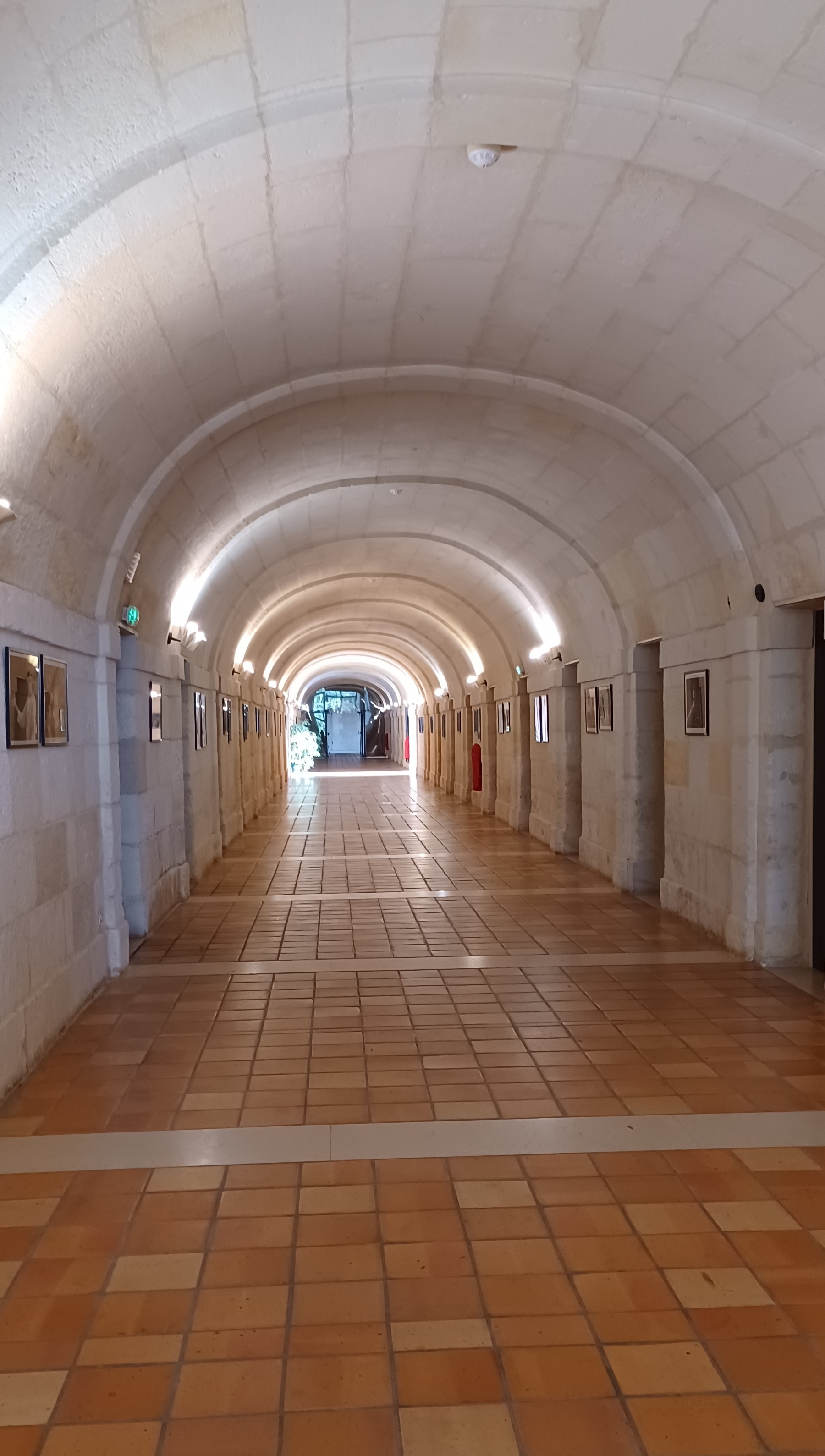

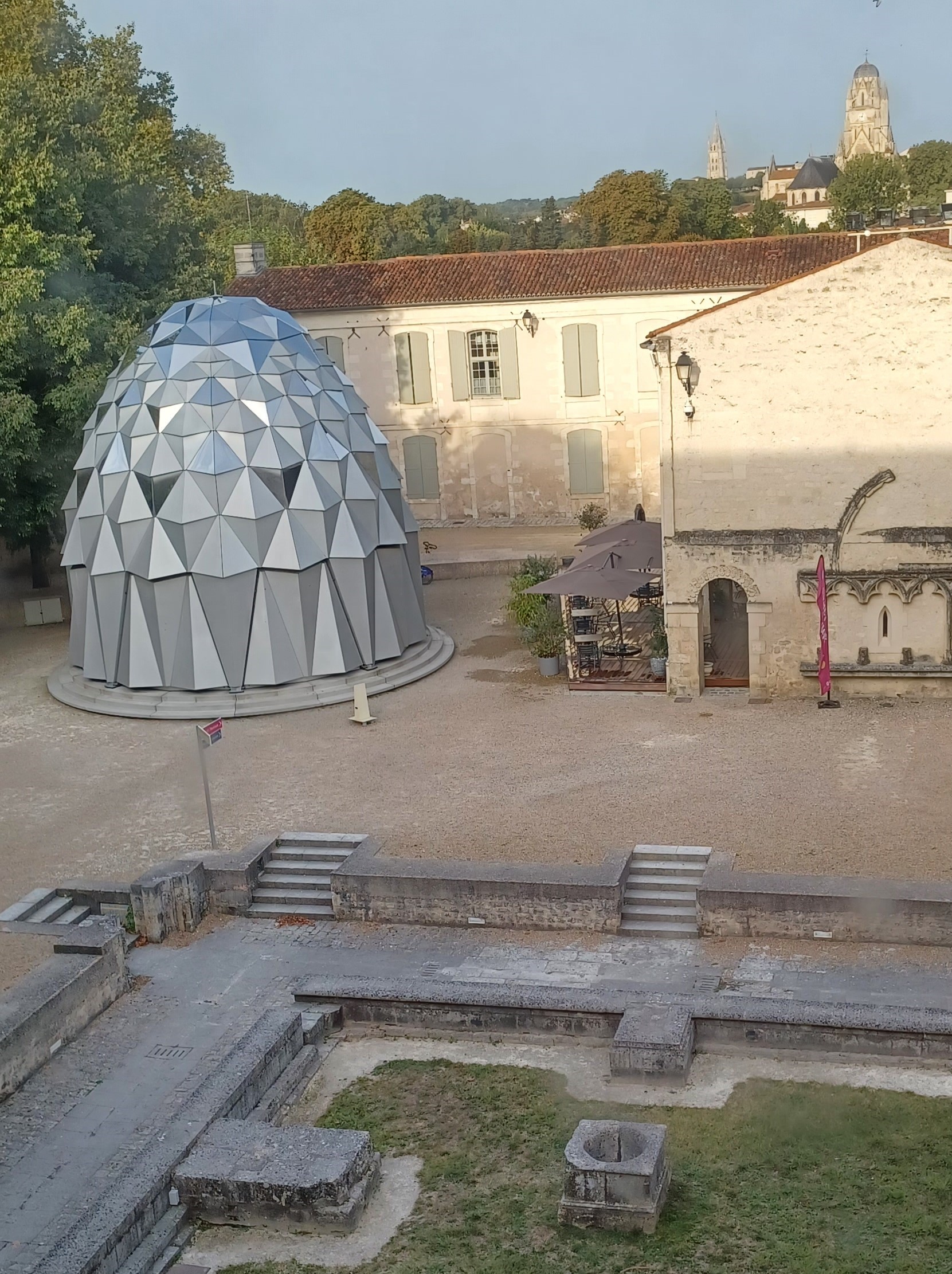
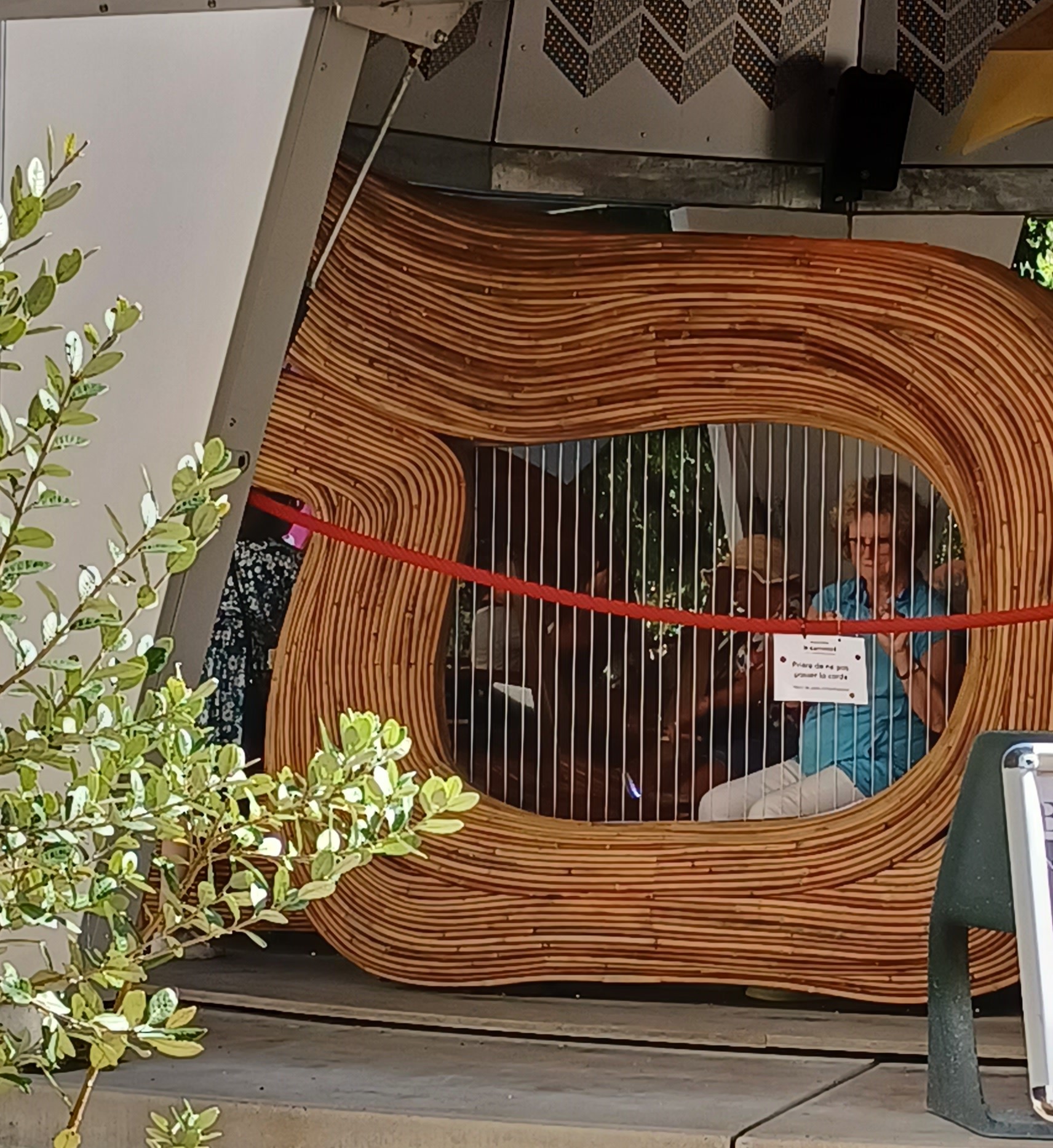
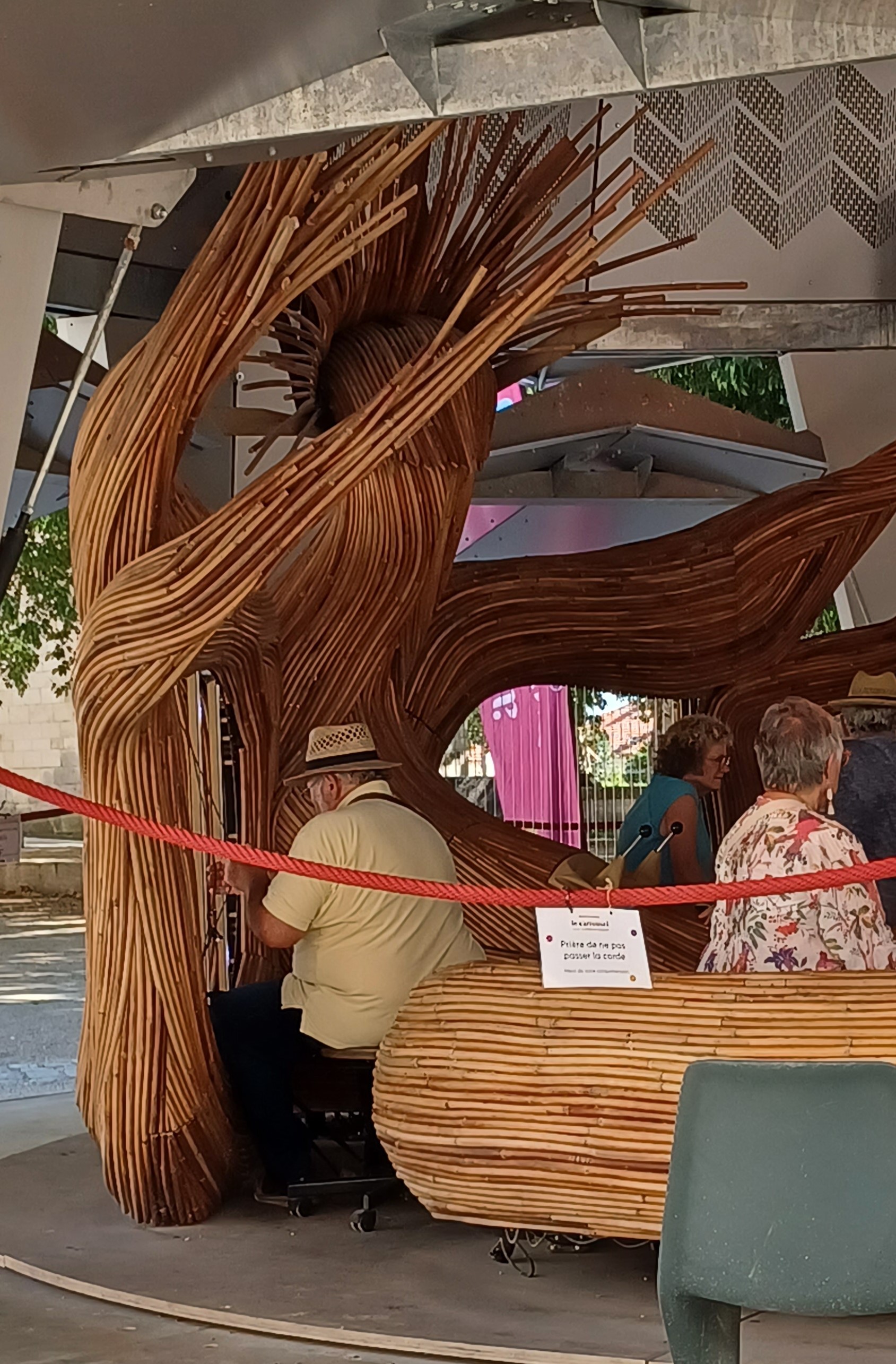
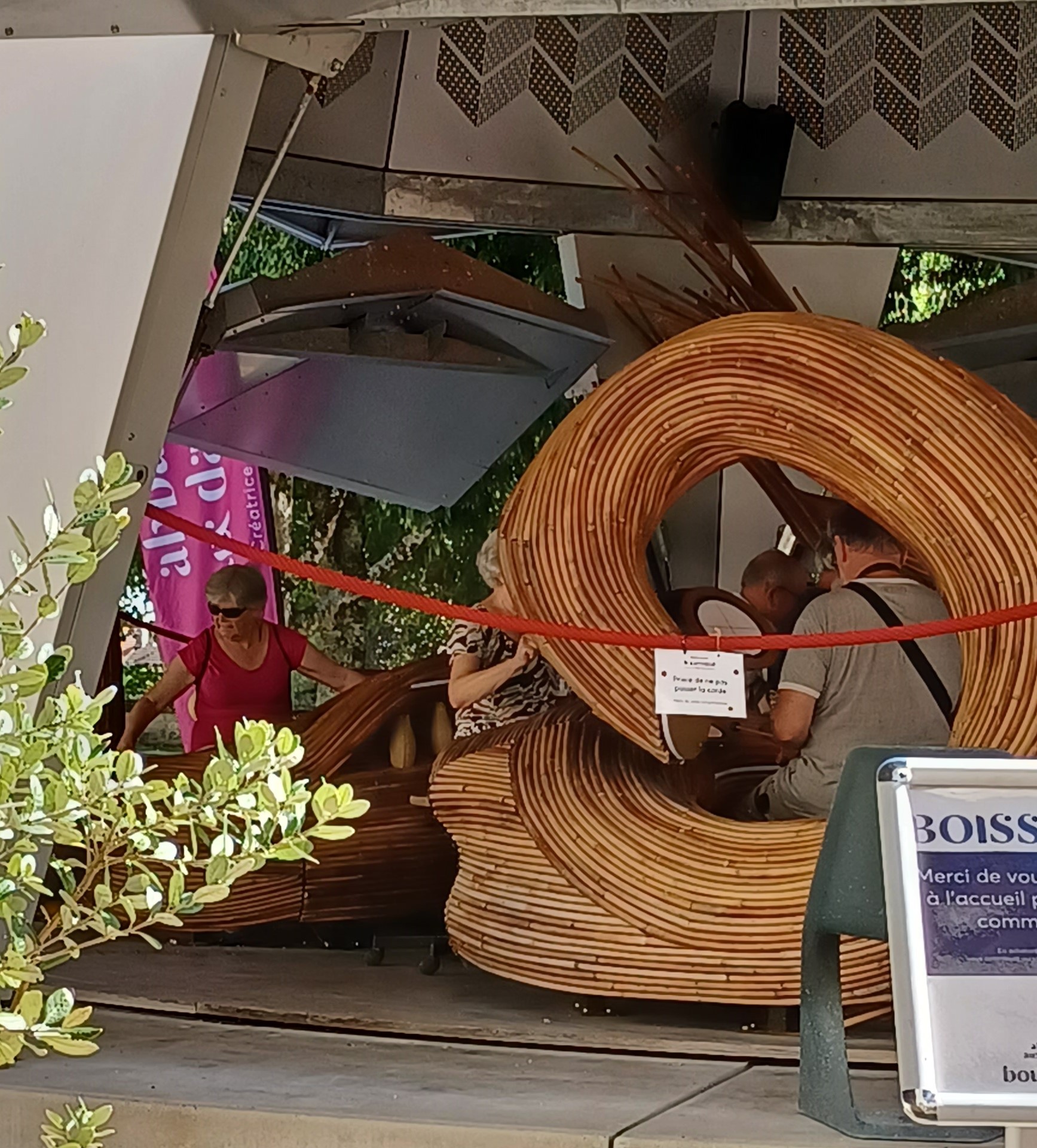
I look for a guide book in the registration building / gift shop but only find one in French. I am surprised to find that most people here speak better English than they will admit to. I ask about the large, pine cone-shaped structure outside. I am told it encases a carousel, where the riders become musicians and improvise music on digital harps, drums and piano during a 10 minute ride that costs 3 euros. I would see the next day that the electronics are wrapped in wicker structures, and after watching a few rotations, would realize that the largest structure is a phoenix.

Googlemaps literally runs me into a brick wall where it says a restaurant should be. I stash the phone and follow the signs to the city center where I find a Carrefour – my go-to grocery for cheap and easy meals. Dinner is a picnic on a bench along the river’s edge and a celebration of a lack of blisters, though my shoe repair from two nights ago is giving way. I hope those shoes last the trip.
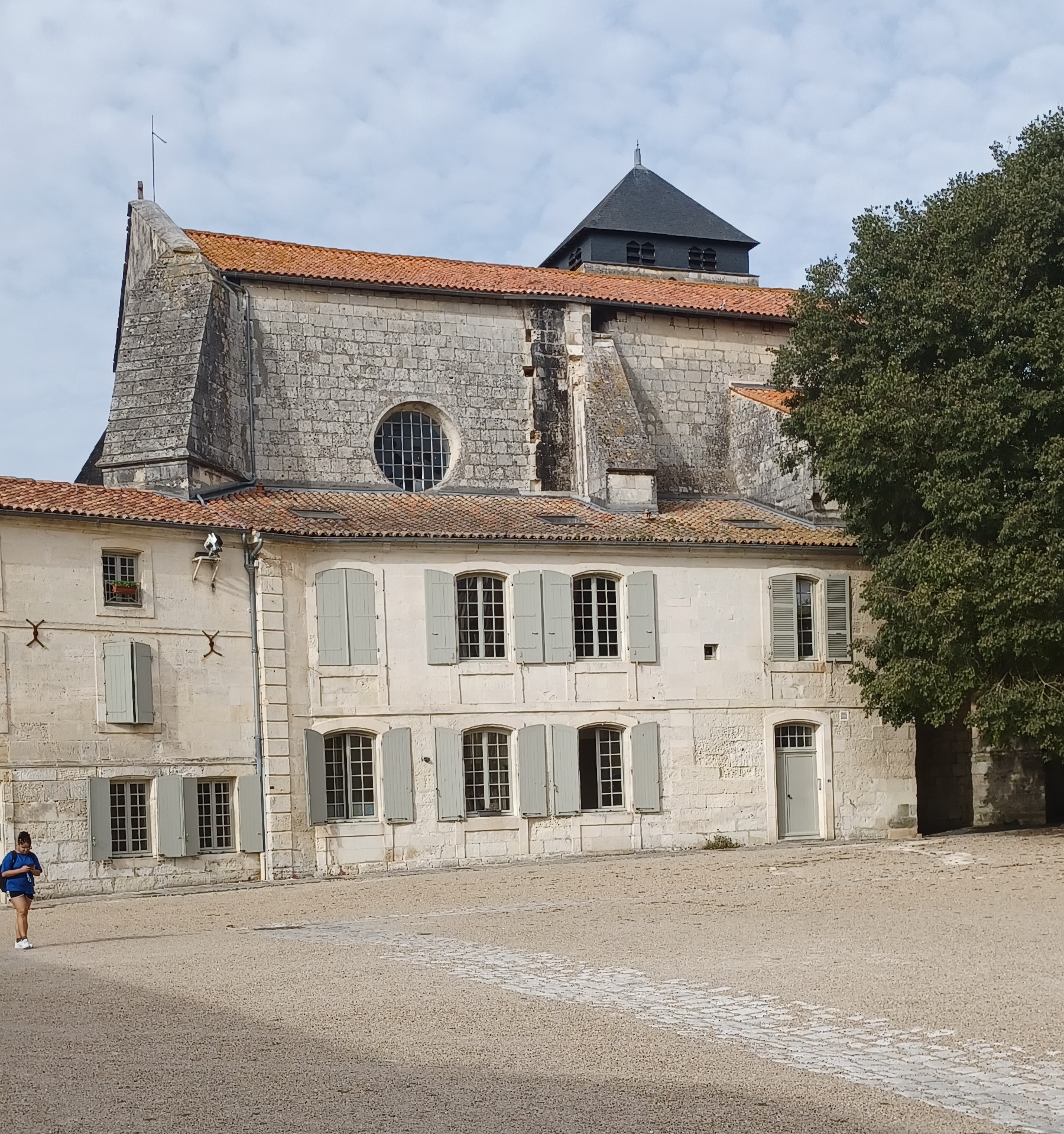
The next day I take an exploratory tour of the abbey and its grounds.



History of the Abbey and the Notre Dame Church
The abbey was founded by Geoffrey Martel, Count of Anjou and his wife, Agnes de Bourgogne in 1047. The abbey lays on one of the pilgrimage routes to Santiago-de-Compostella, where pilgrims would stop to pray at the relics of Saint Eutrope, who is buried in a crypt below his cathedral here. Eleanor of Aquitaine – whose footsteps I had tried but mostly failed to trace on this trip – lived here in 1182 between her divorce from Louis VI, King of France and her marriage to Henry II, King of England. She helped to support the abbey through largesse in her role as Duchess of Aquitaine, and granted the city of Saintes its first general charter.
The abbey was sacked in 1326 over a feud of ownership between England and France, and again in 1568 by the Huguenots during the Wars of Religion. It was ravaged by fire in 1608 and again 40 years later. Reconstruction began in 1650, which is when many of the current buildings date to. The abbey became a prison during the French Revolution, and a military barracks from 1808 to 1924 when it was purchased by the city. When German troops swept through in 1940, the abbey became a transit camp for French prisoners of war.
It was restored once again during the 1970s-80s to host the Saintes Early Music Festival, now known as the Musical Academies. It is considered the cultural center of Saintes.

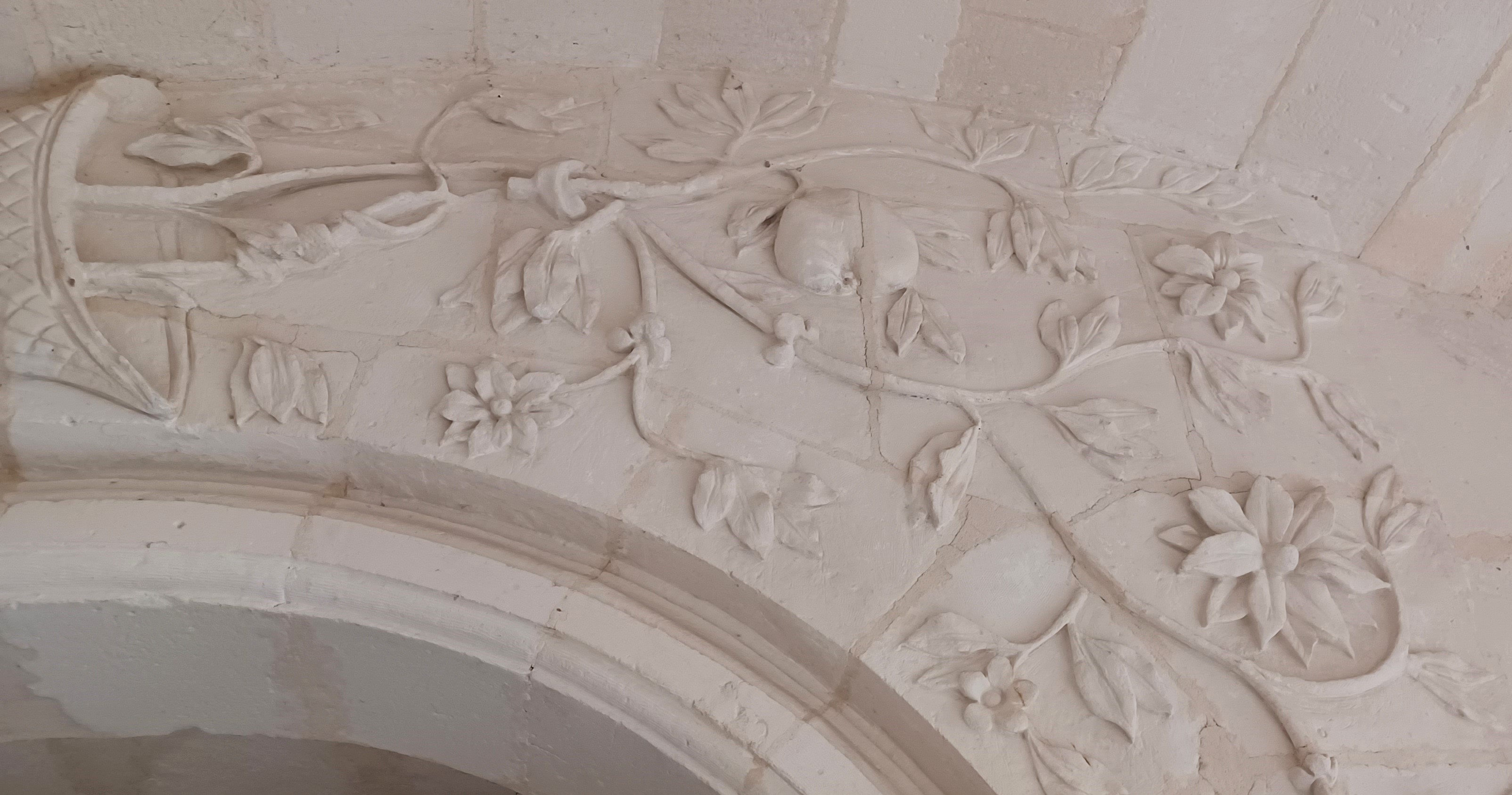
The Notre-Dame Church that adjoins the abbey was consecrated in 1047, the year the abbey was founded. It underwent major alterations during the 12th century which included arcading in the interior and the addition of the bell tower and new front.


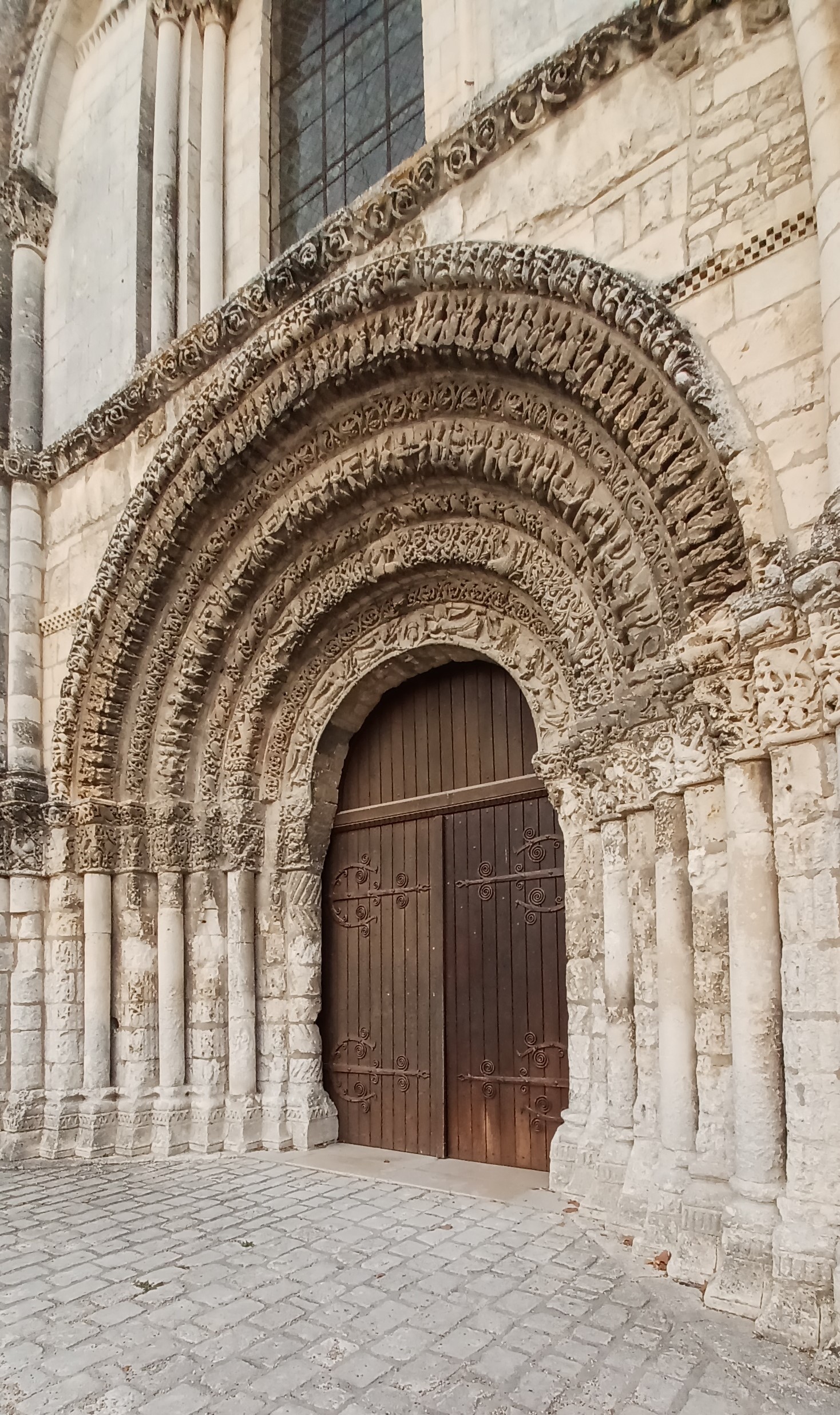
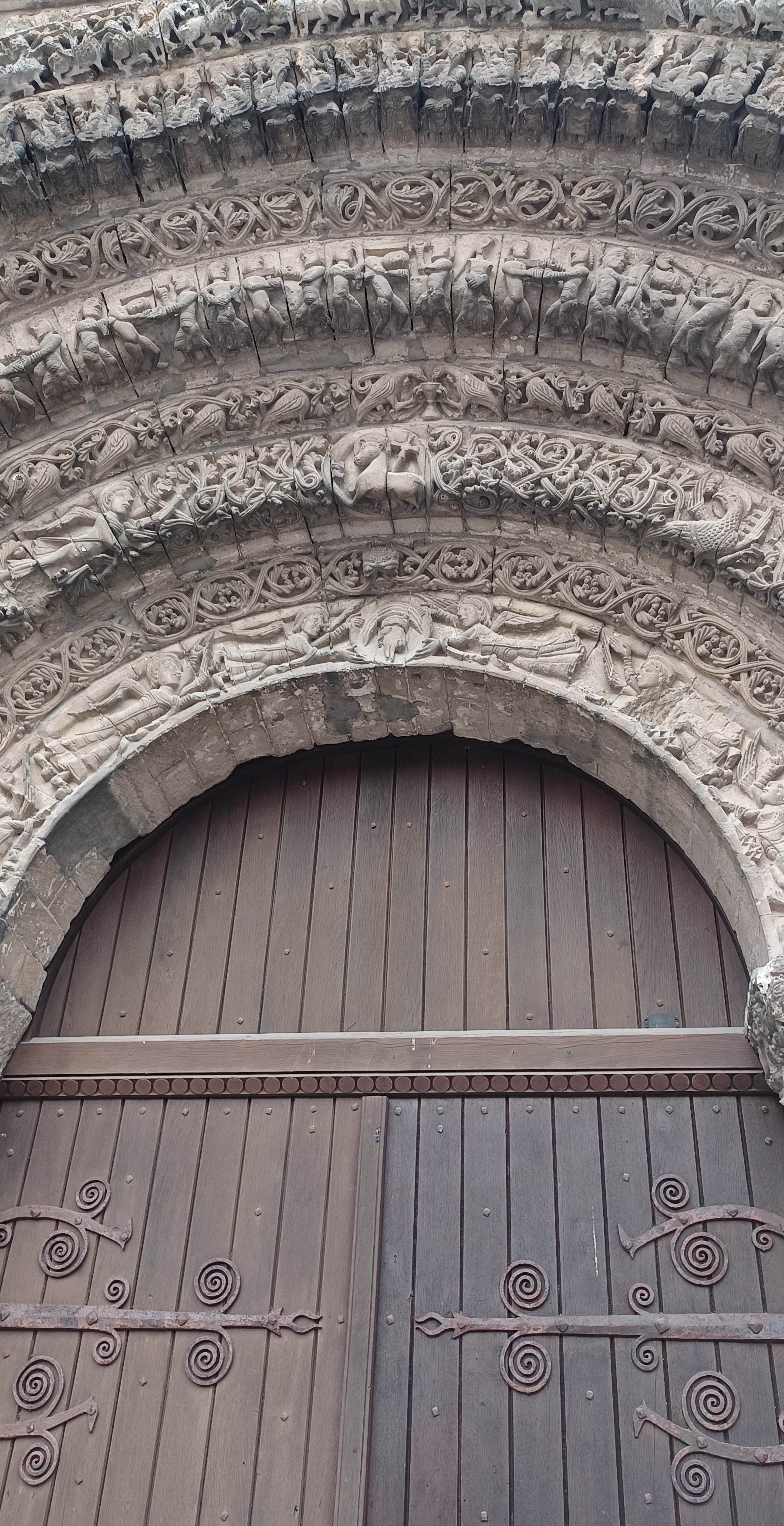
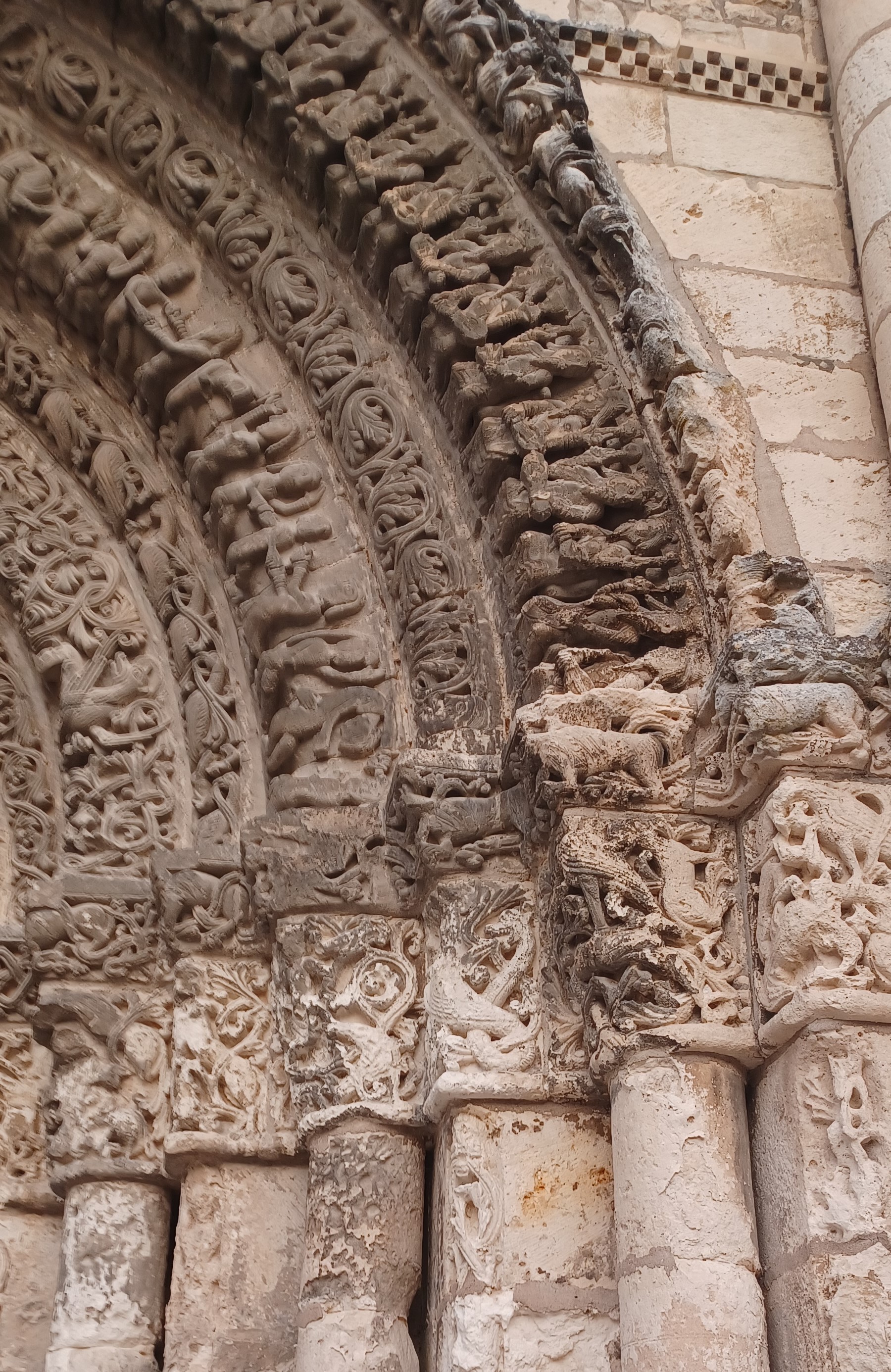
There’s a hand written note pinned to the door, asking people to close the door behind them when they enter, because of pigeons :)
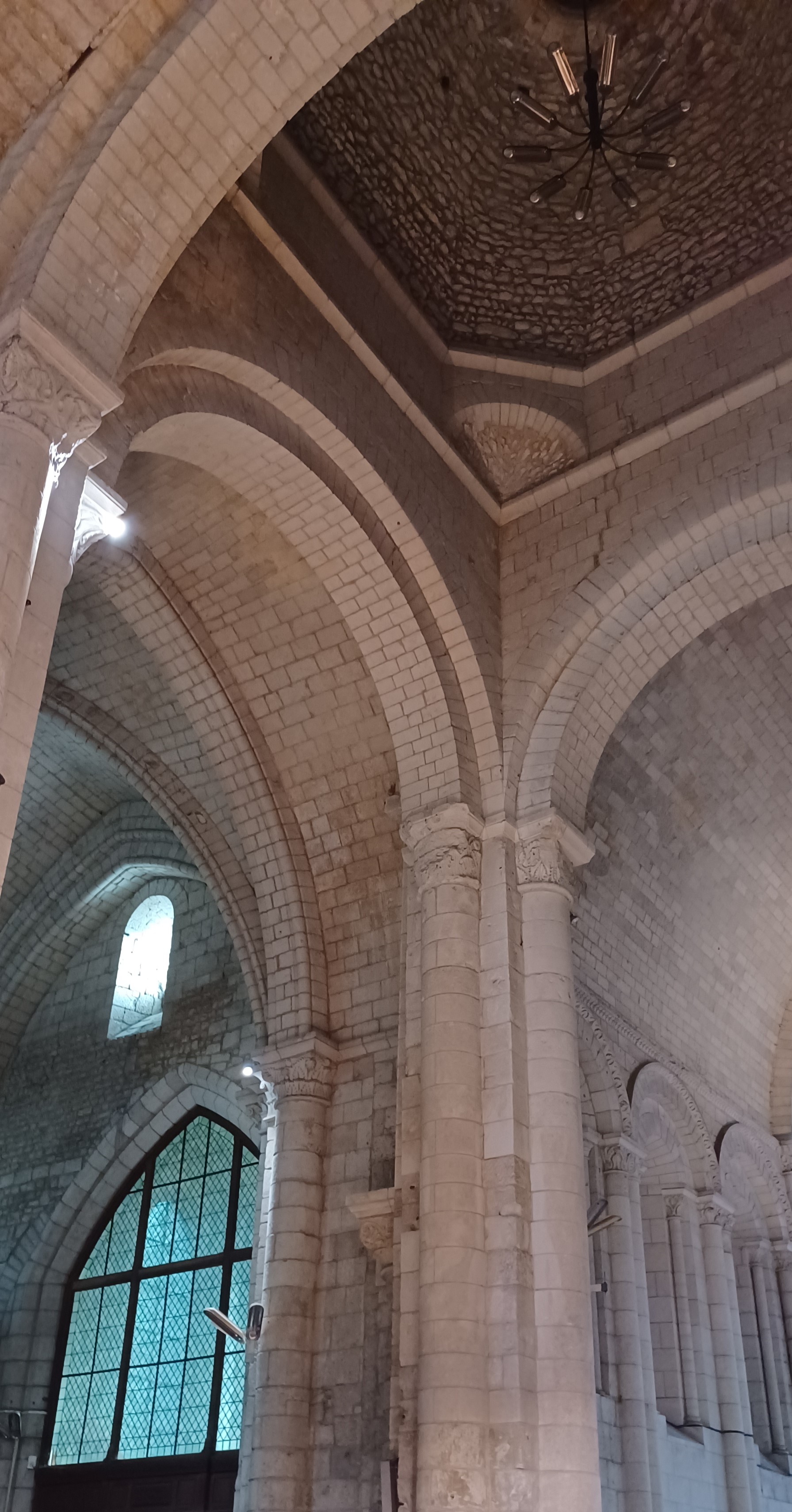

There are modern tapestries hung along the walls, I wonder if they indicate the Stations of the Cross. I’m not familiar enough with the practice to understand their context, but I found them interesting from a design perspective. Perhaps someone can enlighten me.


Having covered this hallowed ground, I return to the Green Line that will lead me up a long hill climb to the Roman Amphitheater.
 Daveno Travels
Good Night, Gracie.
LikeLike
Sleep well, intrepid traveler! Love the selfie in the chapeau!
LikeLike