
Niort has several cathedrals, of which I was able to visit two.
Notre Dame in Niort
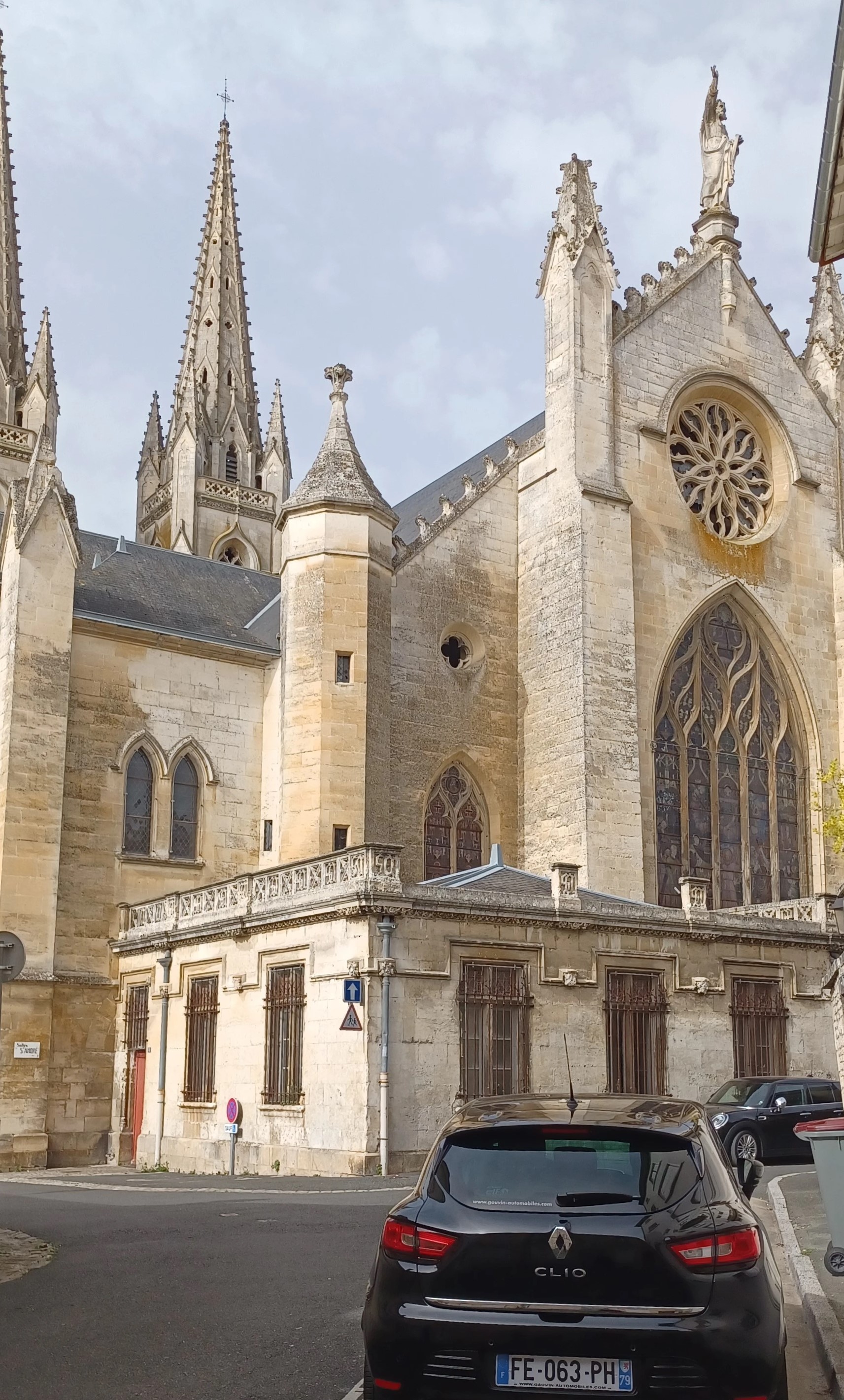
Every city I have visited so far has a Notre Dame. This is the one in Niort, although it is classified as a church rather than a cathedral.
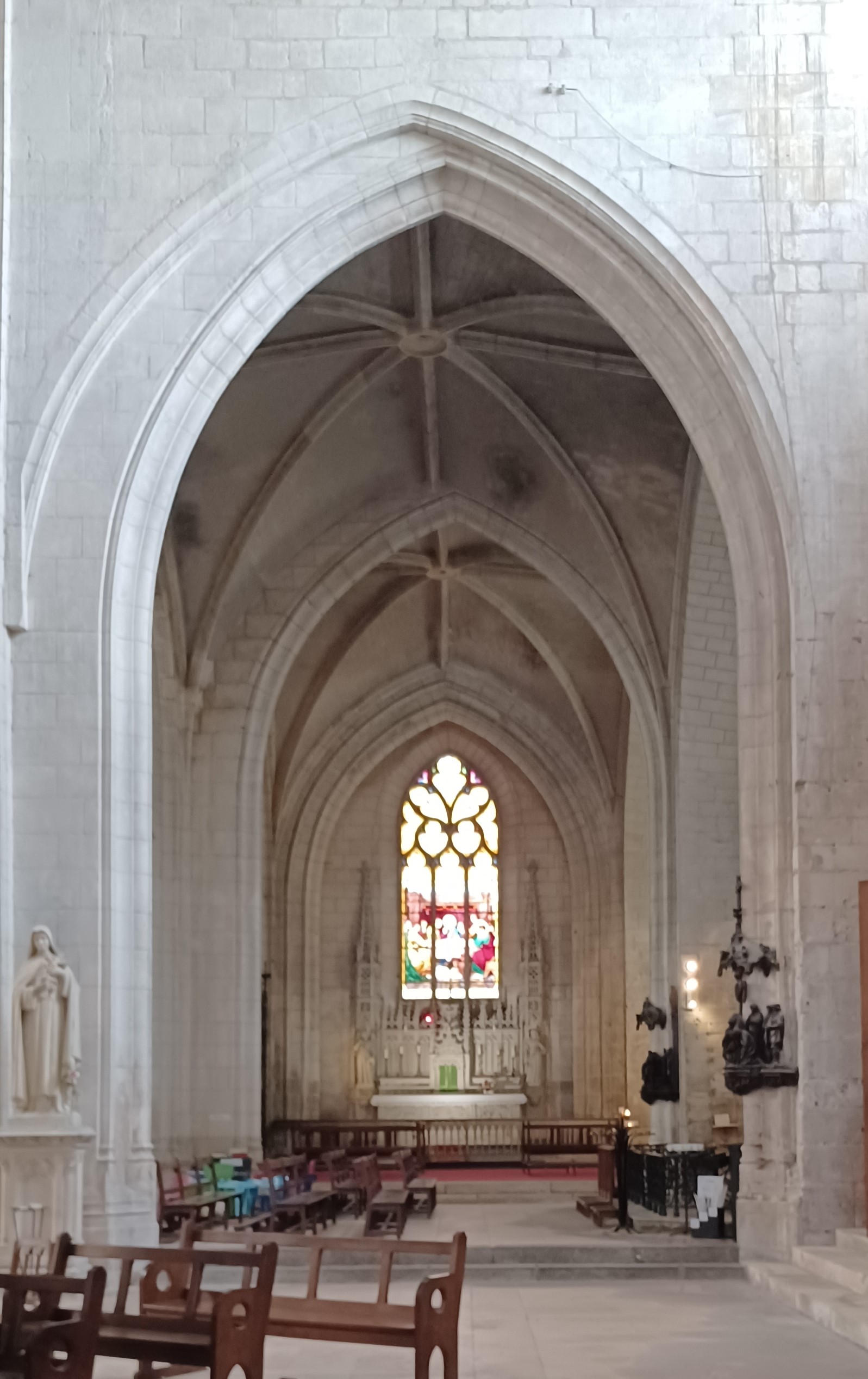
Built in the “Flamboyant Gothic style” of the late 15th century, it stands on the original priory built in the 11th century. Its bell tower is 75 meters high and is flanked with statues of the Four Evangelists about 2/3 of the way up. There are gargoyles around the base of the spire.

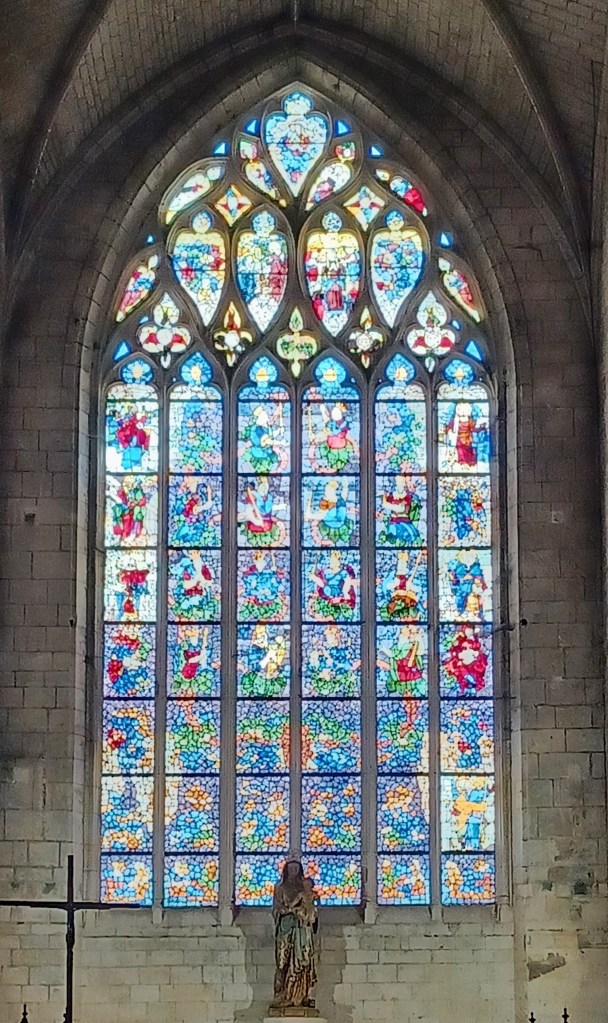
The glass dates to 1491 and was restored in 1990. It depicts the Tree of Jesse and the theological view of the Christ’s lineage. It’s iconography dates to the 12th century.
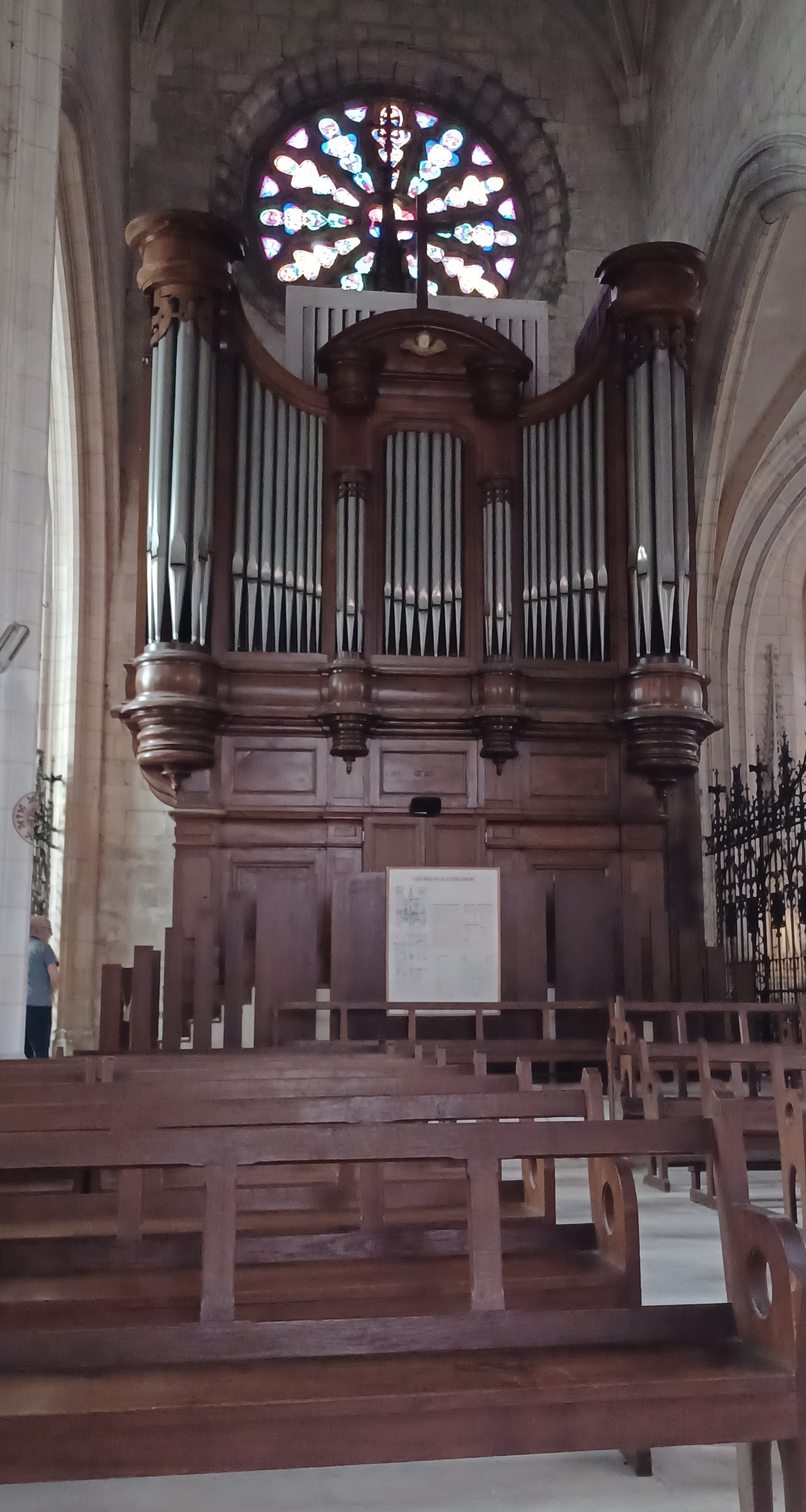
The organ dates to 1745. The baptismal font is in a side chapel rather than on the main floor, which allows it to be illuminated by stained glass. A series of eight tapestries that hung along the main corridor and which dated to the 18th century were stolen in 1988 and were never recovered.

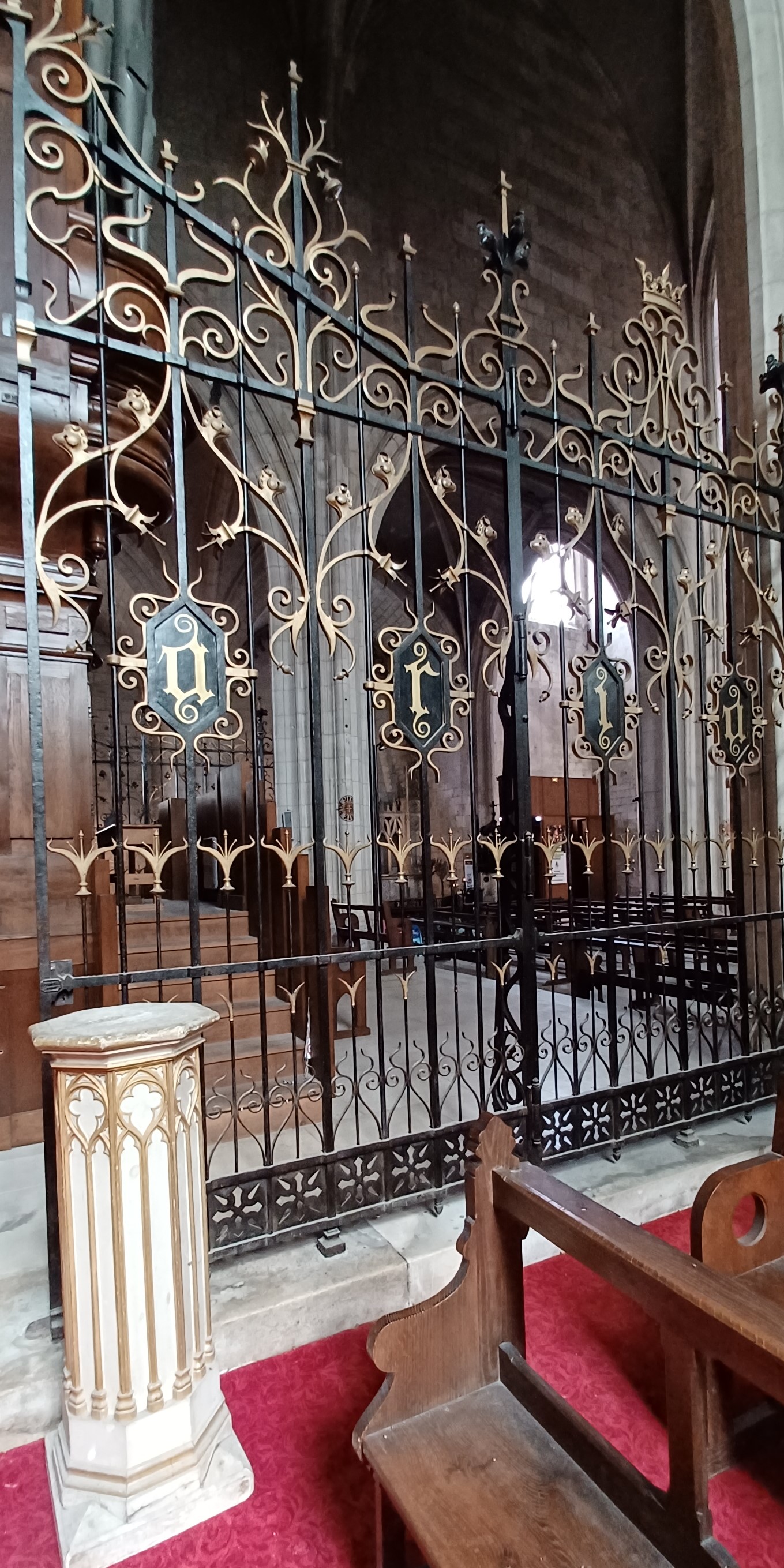
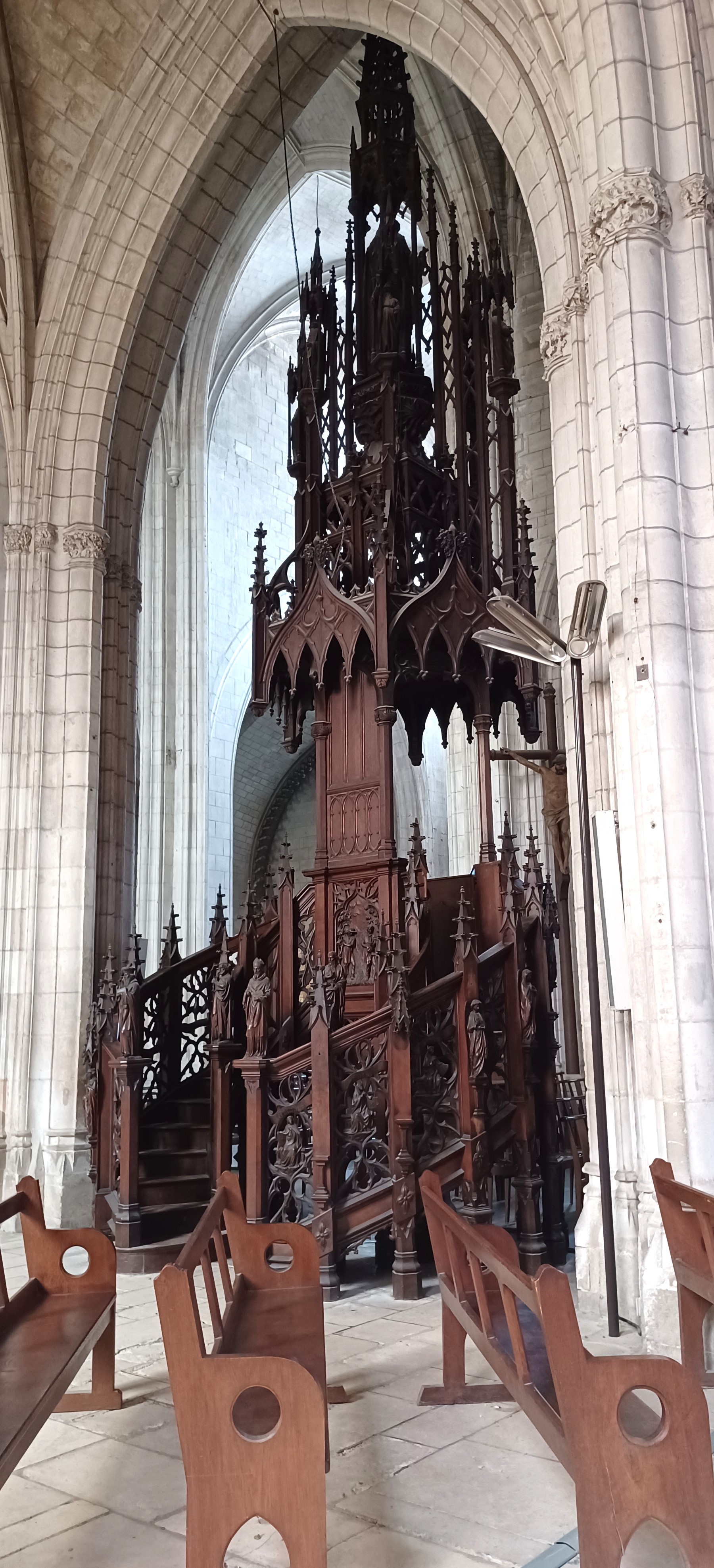
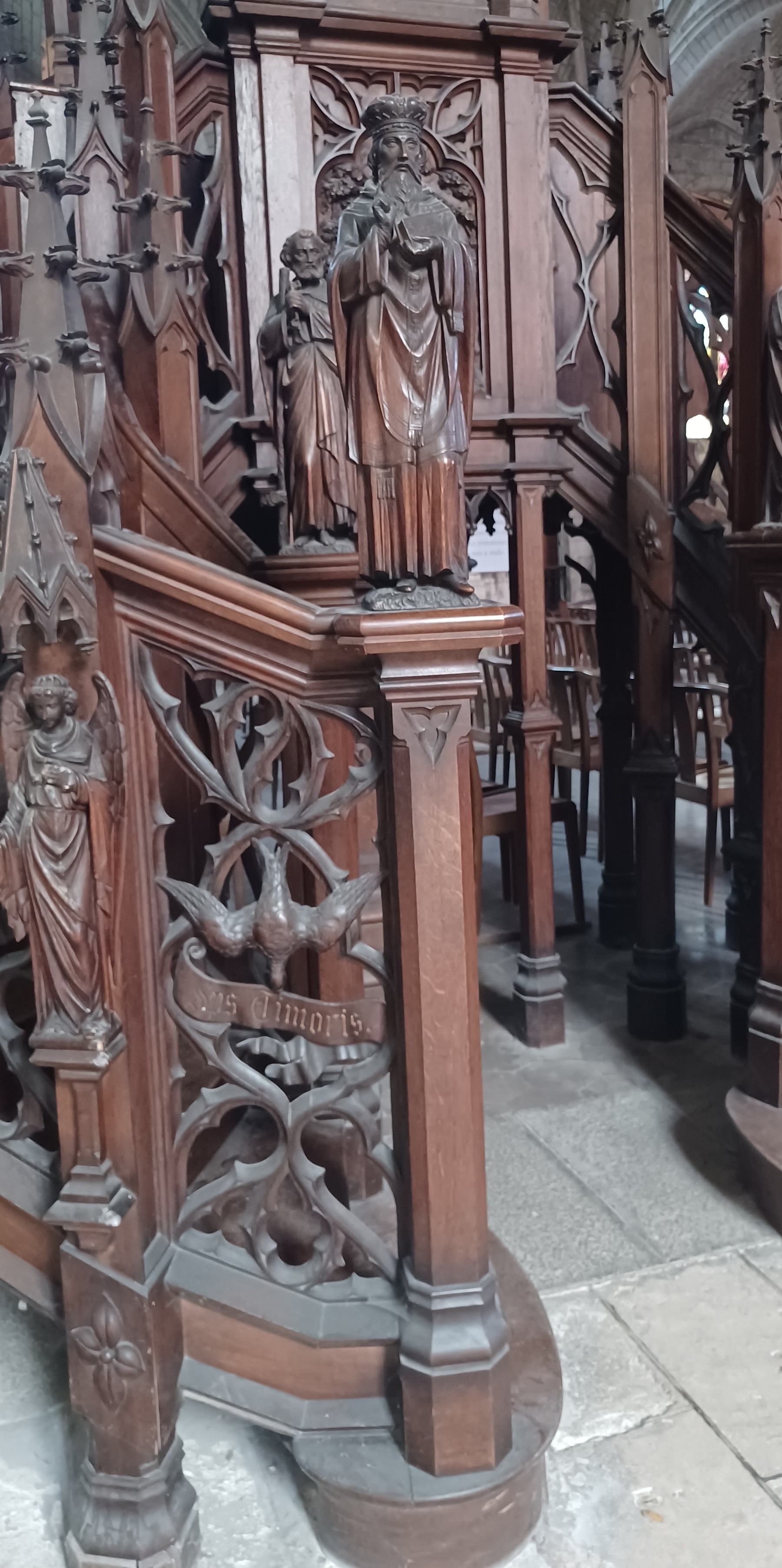
The pulpit is a work of art unto its own and my camera barely did it justice.

Niort was one of two intellectual seats in this district during the Renaissance, “with emblematic men such as Agrippa d’Aubigne” who as I mentioned in a previous post, was married in the chapel at Mazette! (the chateau I stayed at while I was in Niort).
Saint Hilaire
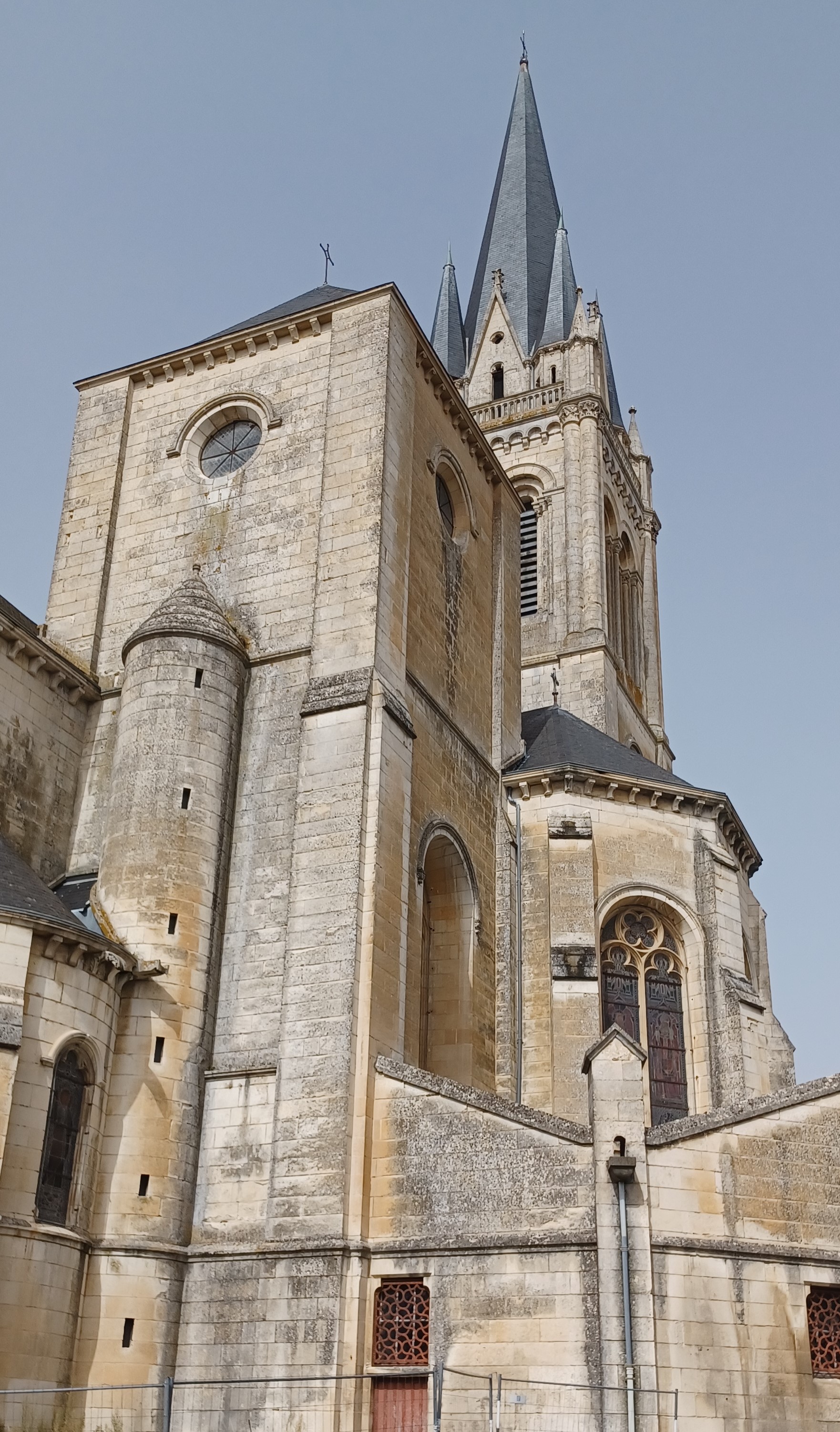
The other church I visited was Saint-Hilaire, whose cornerstone was laid May 18, 1862 and was consecrated in June 1868. Its 20 meter spire nearly didn’t get built – the scaffolding supporting the work in progress fell victim to a hurricane the night of November 27, 1865. The city council became lethargic in approving new funding, and it wasn’t until “an awakening” of the city council did work start again, with the spire being finished on the last day of 1870.

Its first newspaper was founded in 1899, a monthly edition that also served as the city newspaper until 1919. In addition to a detailed accounting of church business, it also published international news, the dates of local fairs and markets, and even notes from local history from 1794, “The Reign of Terror” towards the end of the French Revolution. It remains an important historical archive for Niort as well as this church.
I found its interior architecture unusual because it has domes rather than vaulted ceilings, which gives it a Byzantine feel.


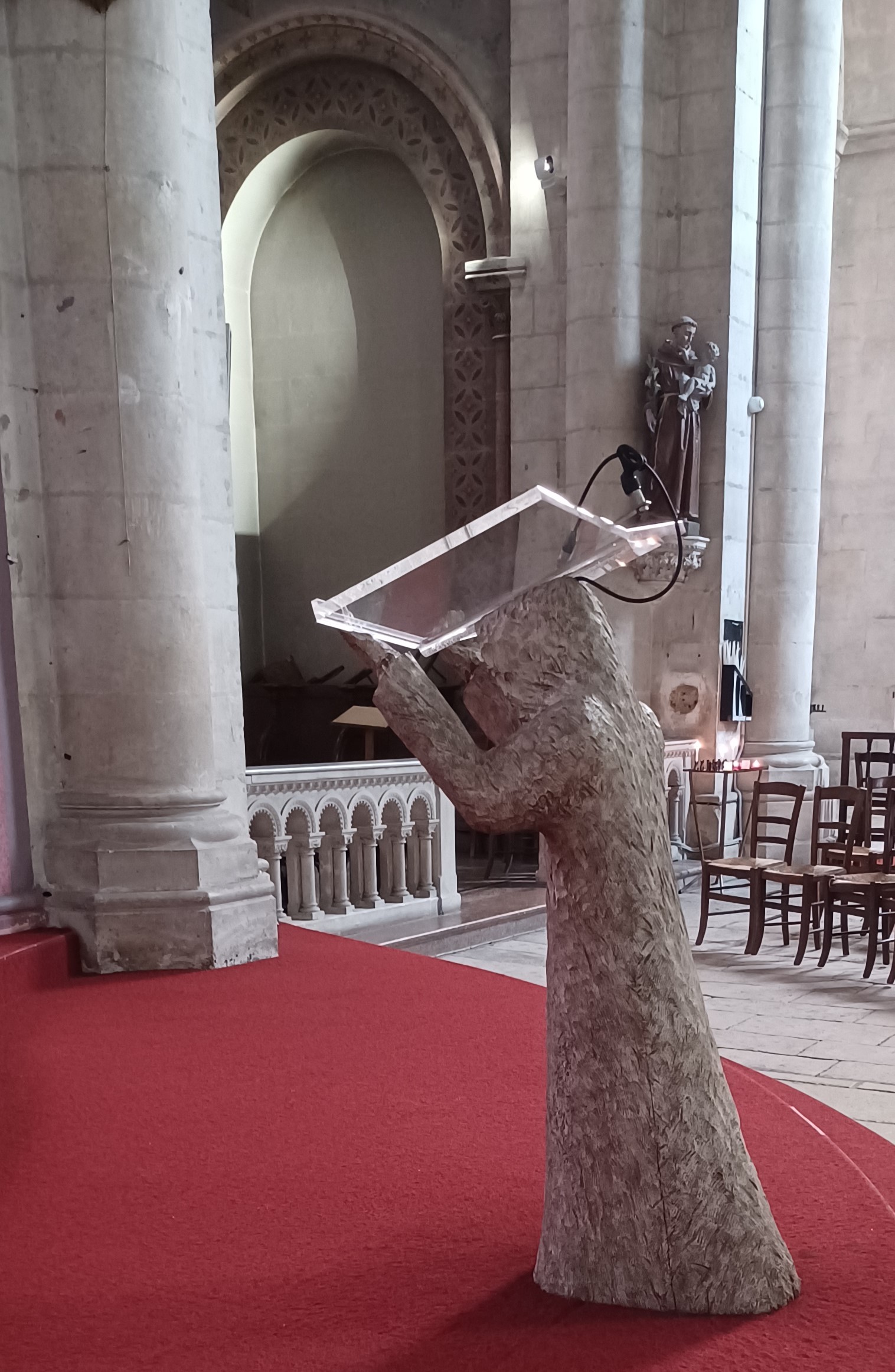
I like the stone monk that served as a modern-day Bible rest. I am struck by one of the ‘chapels’ along the side, which is no more than 4 wooden chairs and a votive table.

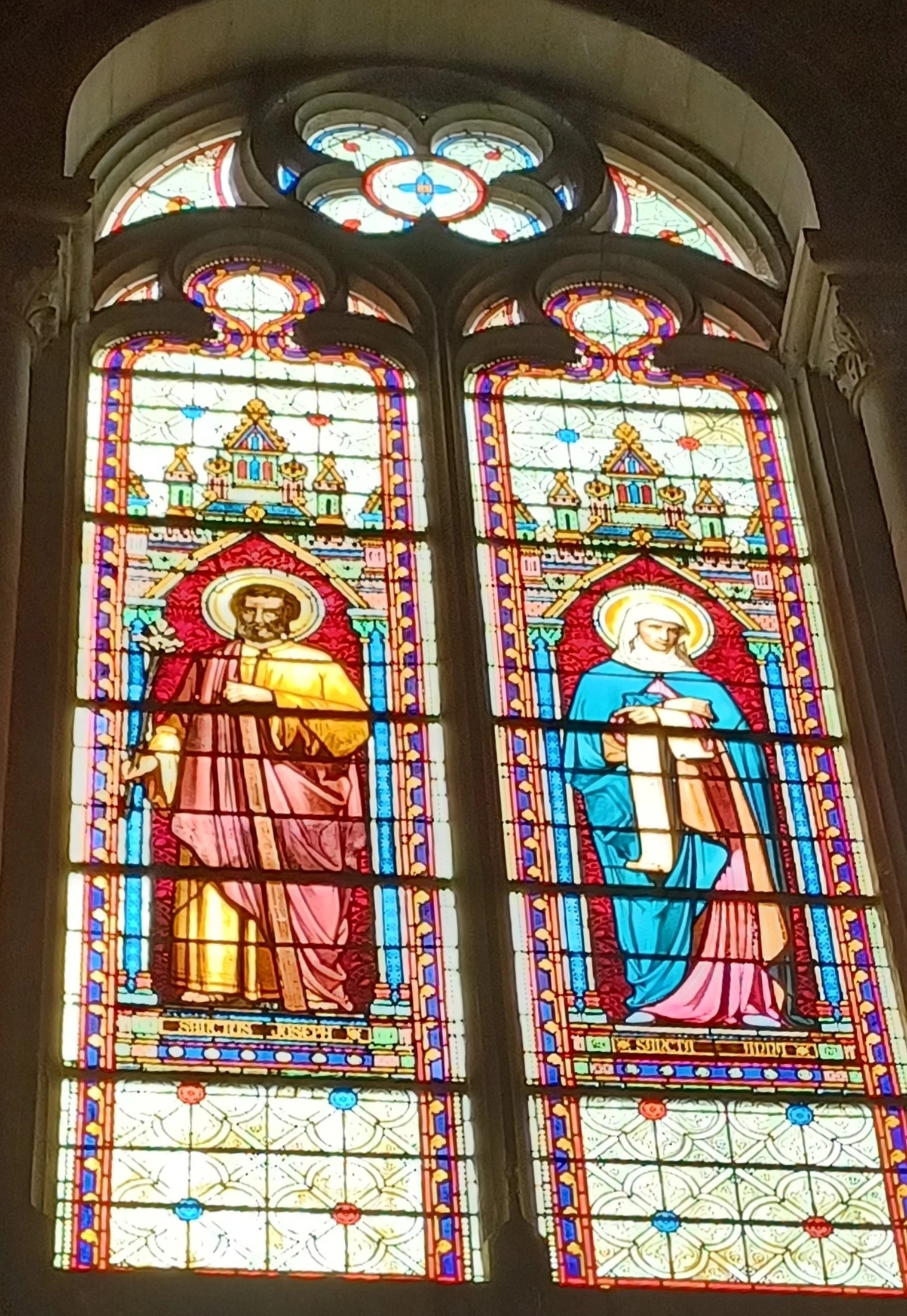
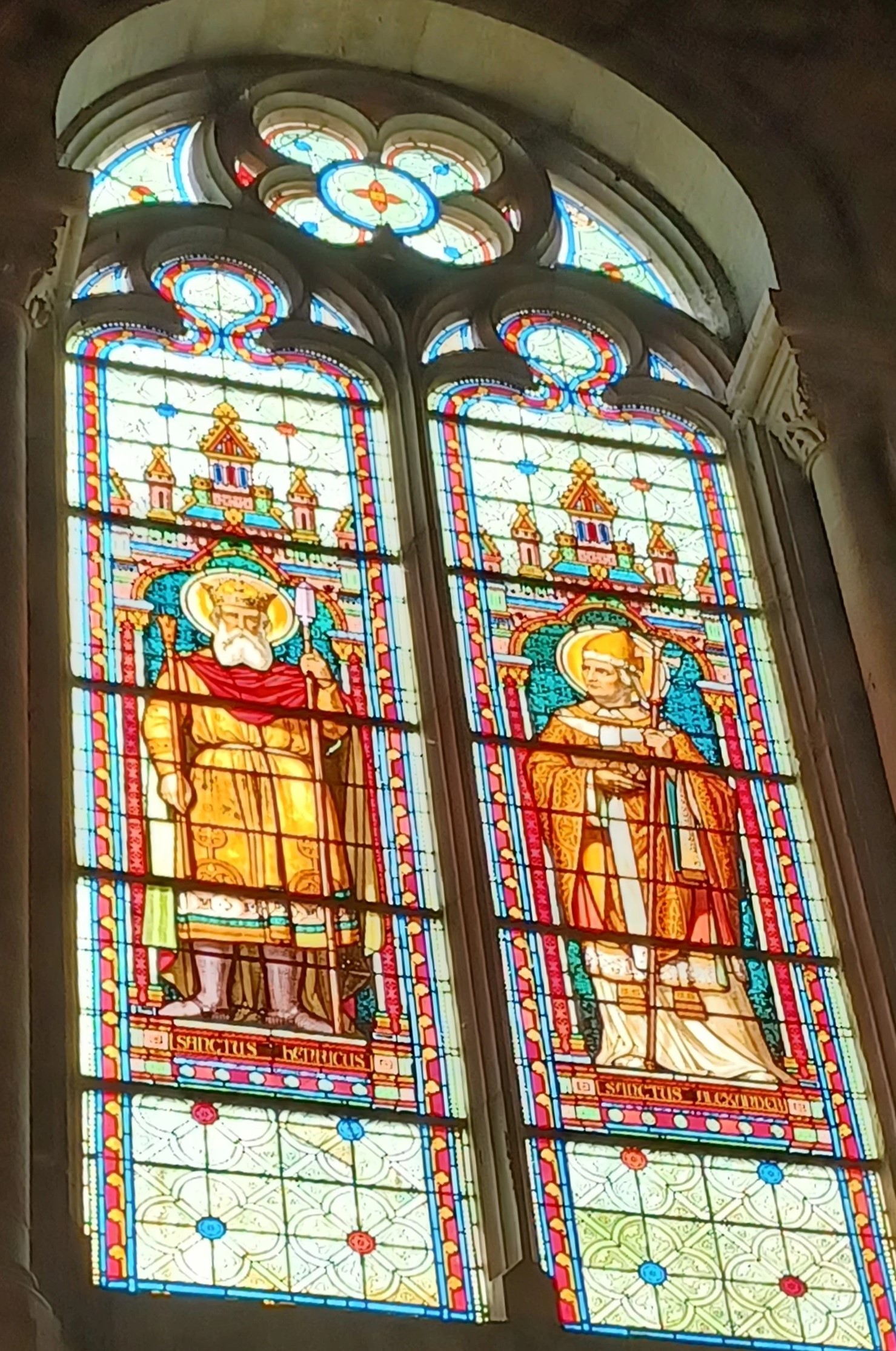
And of course, the glass, which is what attracts me to the older churches in the first place. The last one in the top row was expecially difficult to photograph because the sun was glinting through. But I was OK being bathed in colored light in the process.

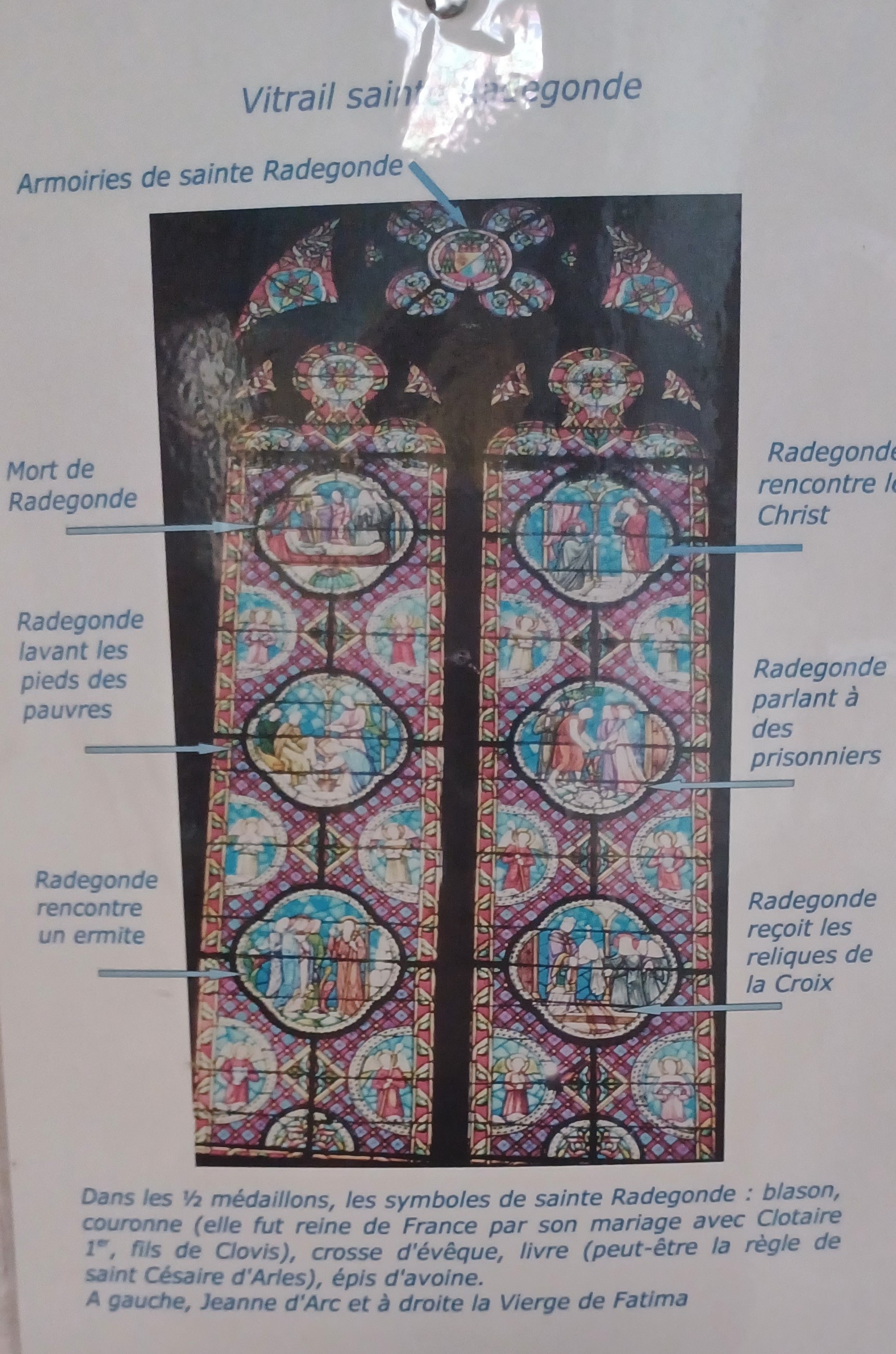
The most interesting glass depicted scenes from the life of Saint Radegonde, a 6th century Frankish queen and ascetic who founded the Abbey of the Holy Cross at Poitiers, named after a relic she received from Emperor Justin II. She is the patron saint of several churches in France and England.

 Daveno Travels
Yes, the pulpit is the most ornate one I have ever seen. The glass wasn’t bad either ;) Will post more after I can do some cropping to bring out more detail.
LikeLike
Ah, at last the Chapeau at the Chateau! Glad you were able to achieve entry into cathedrals because your photos are stunning! That ornately carved wooden pulpit is astonishing!
LikeLike
I agree, that wooden pulpit is incredible. Sad to leave the Chateau, sounds to me like it’s worth an extended stay. I’ve had such stays in my life that were worth more than the reasons for the trip.
LikeLike
Yes, this chateau became the real reason for the trip. I could stay for a week here
LikeLike
The Director’s Cut “Spires in the Sky” is marvelous!
LikeLike
Thanks! At the risk of burning out on churches, I’ll continue to bring to you all the ones I saw. The glass seems to get better the further south in France I go : )
LikeLike