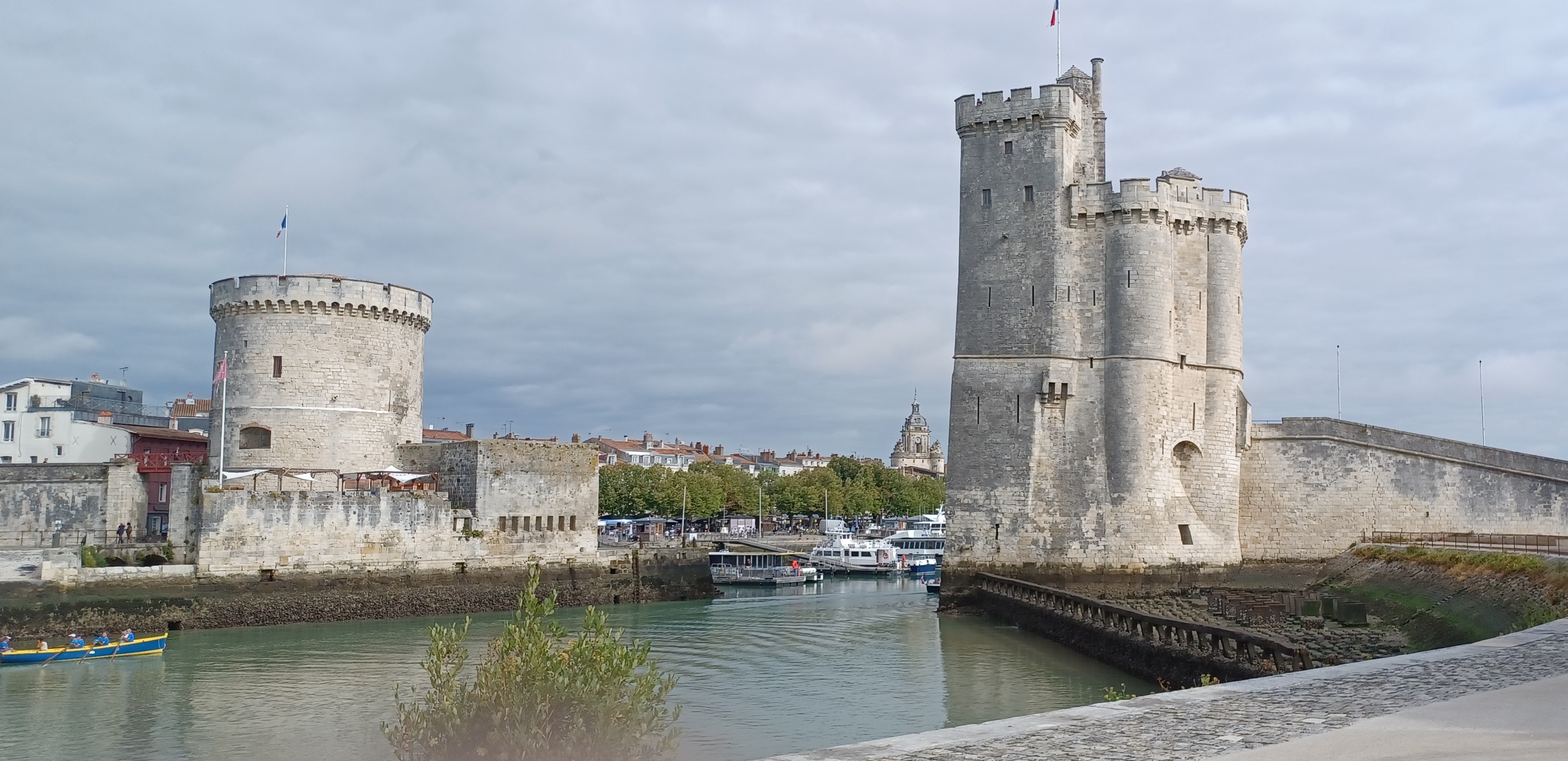

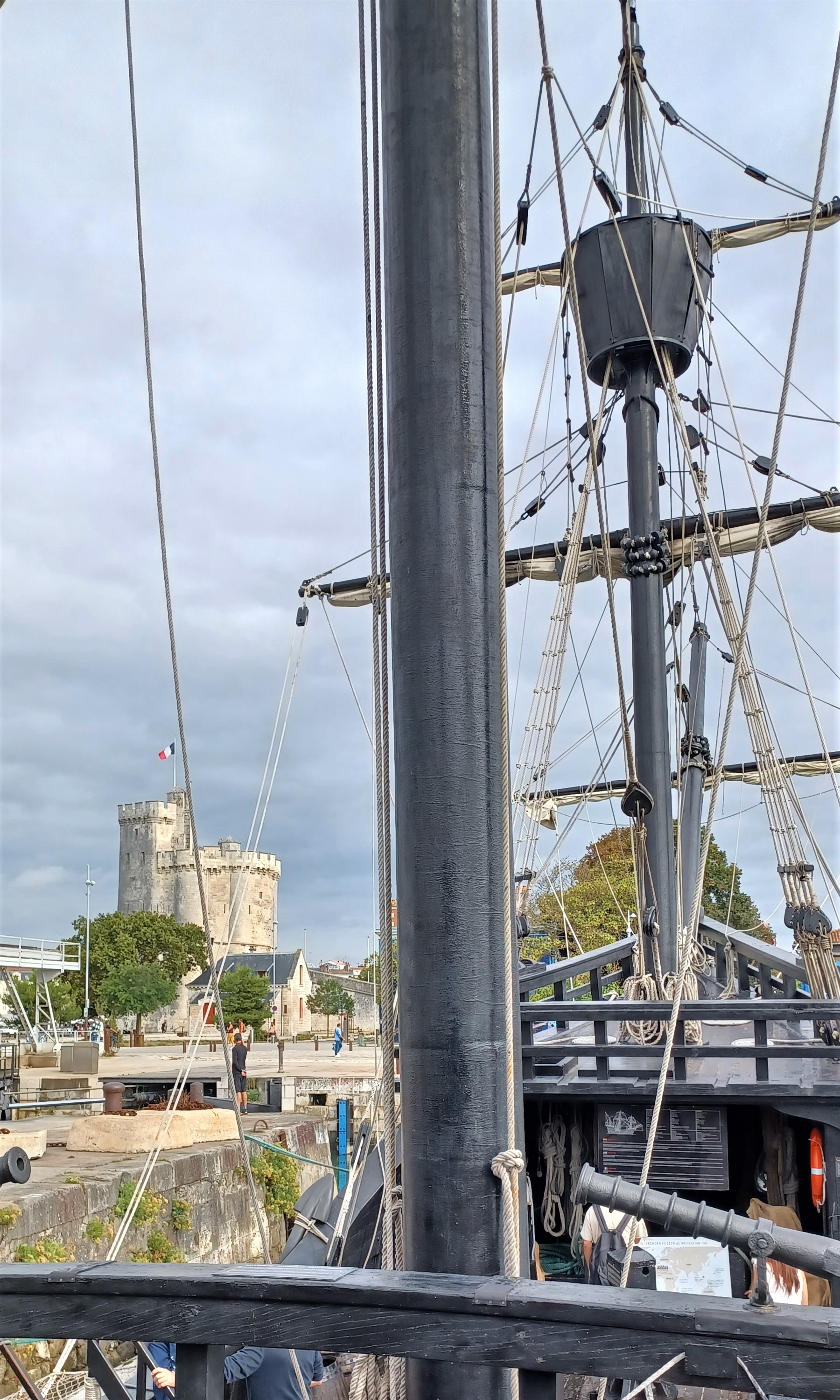
Down at the harbor in La Rochelle, the first thing that caught my attention was a black ship. So of course I put GoogleMaps in my pocket and went off the path to investigate.

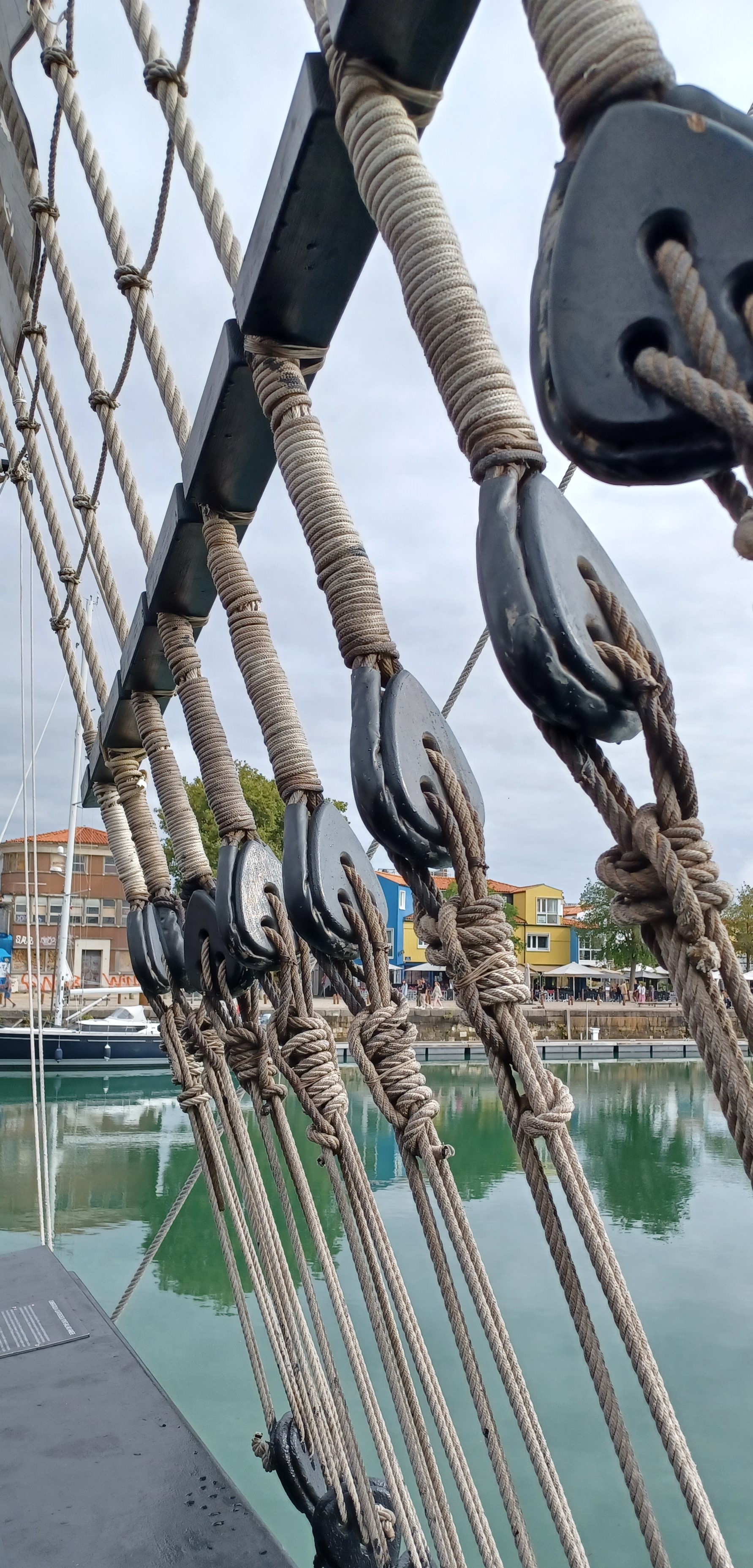
It’s a replica of the Nao Victoria – the first ship to circumnavigate the globe in 1519, a voyage that took three years. This replica, built in 1991 repeated that voyage in 2004, making it the first historical replica to repeat that journey.

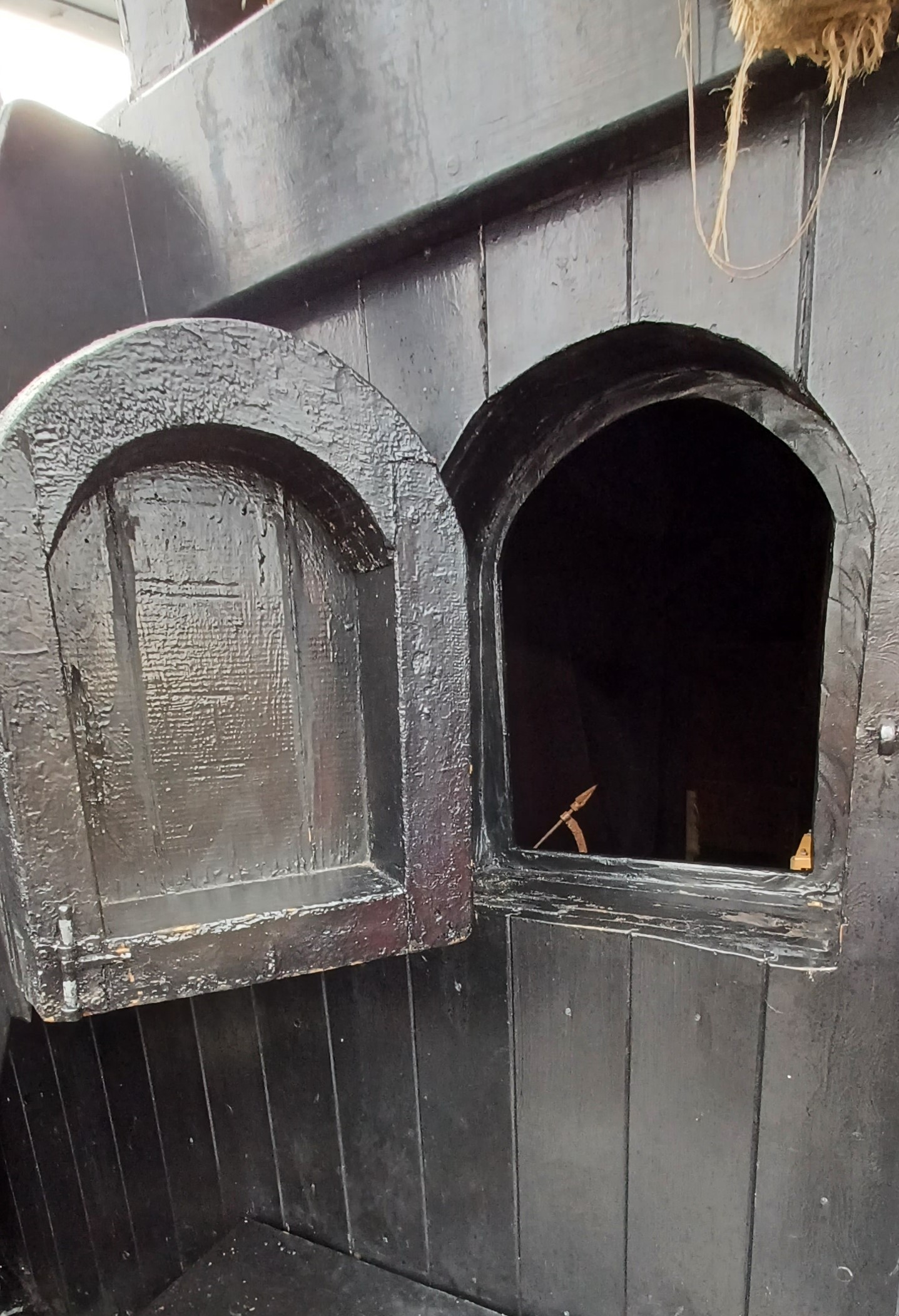
The one cabin in the bow was used exclusively by the captain, the pilot, or the highest ranking person on board. There was a single bed, a writing desk below the pass-through window, and a few items on display, including a basket of tools. I’m always impressed by how little our most common tools have changed over the centuries.


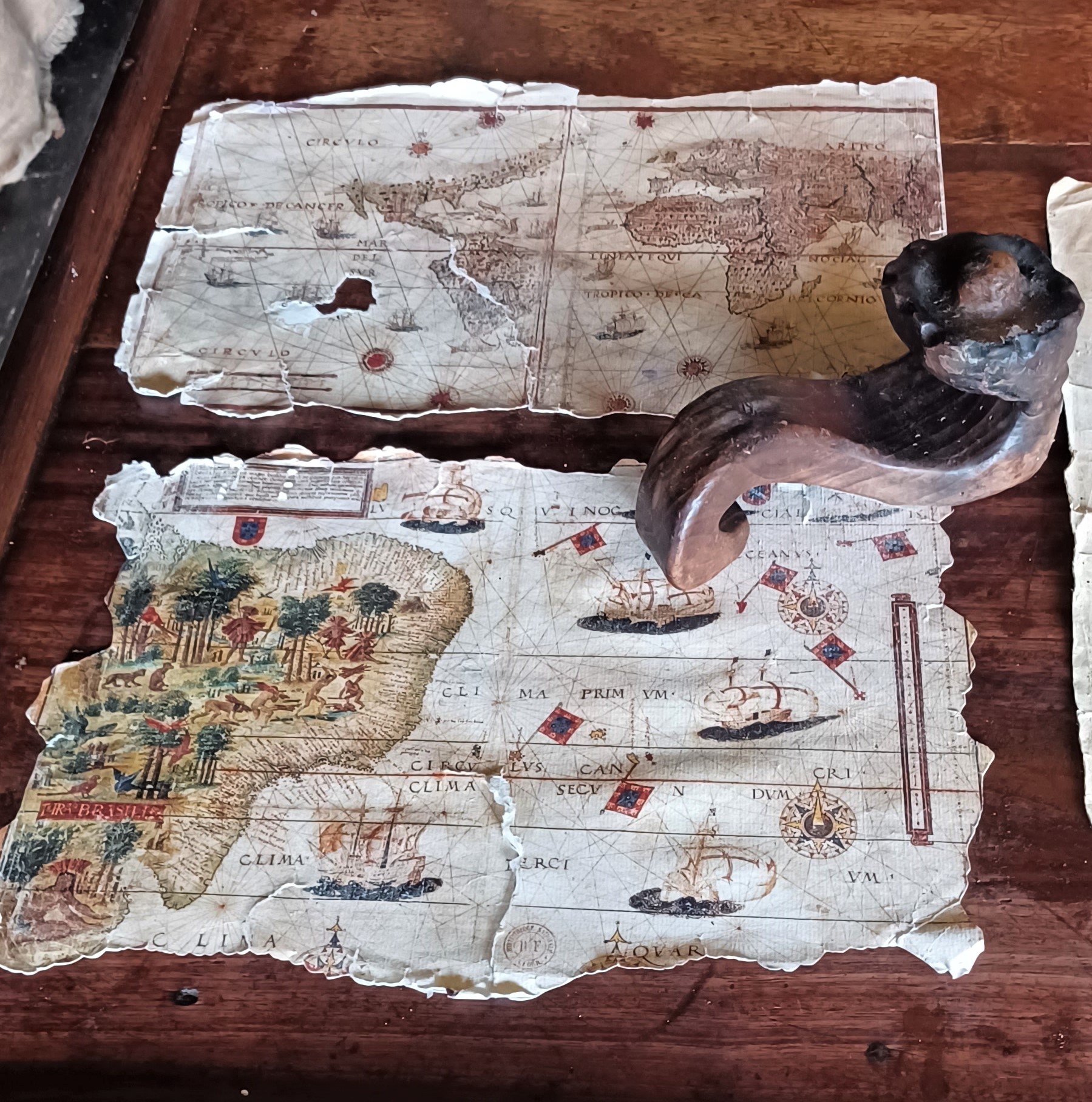

The sailors slept with the sails, tools and spare parts in the forecastle at the stern. From the looks of things, it would not have been a comfortable sleep.
Back on my map, the “Three Sisters” were my primary targets today – the iconic towers that have stood guard over the harbor since the medieval era and which are the only pieces of the original city fortification that survived the Great Siege of 1627-28, when Cardinal Richelieu led efforts to crush the Protestant rebellion after La Rochelle had become a refuge for the Huguenots in the 1560s. The entire city was originally fortified, but Louis XIII ordered the city wall to be destroyed, except for the section on the seaward side.
The Saint-Nicolas Tower was the first and most interesting of the three. Dating to about 1376, it is a tower with four turrets that served as a defensive structure and a residence until the 16th century, when it was used as a military prison until the early 19th century. It was declared a historic landmark in 1879.
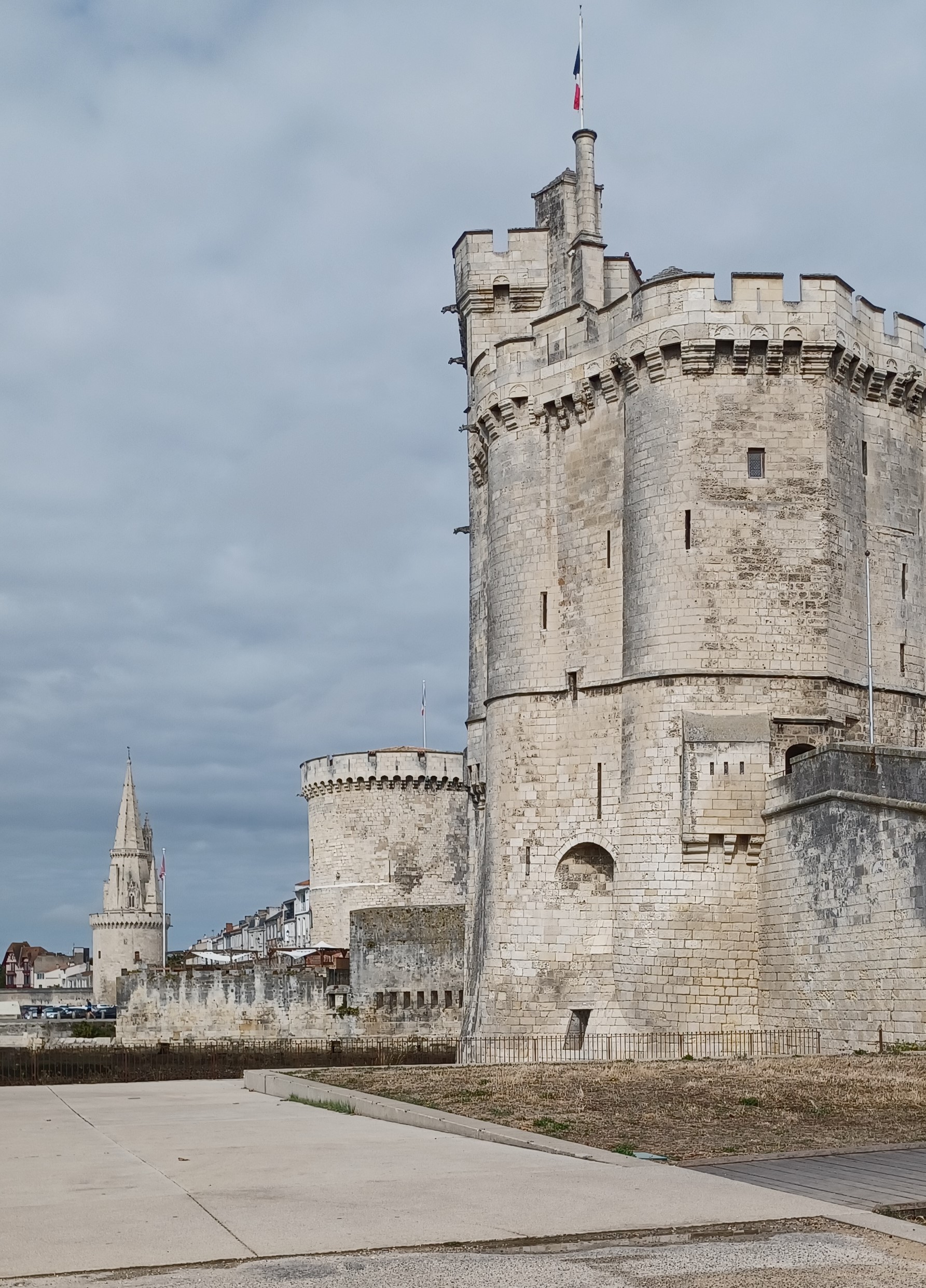

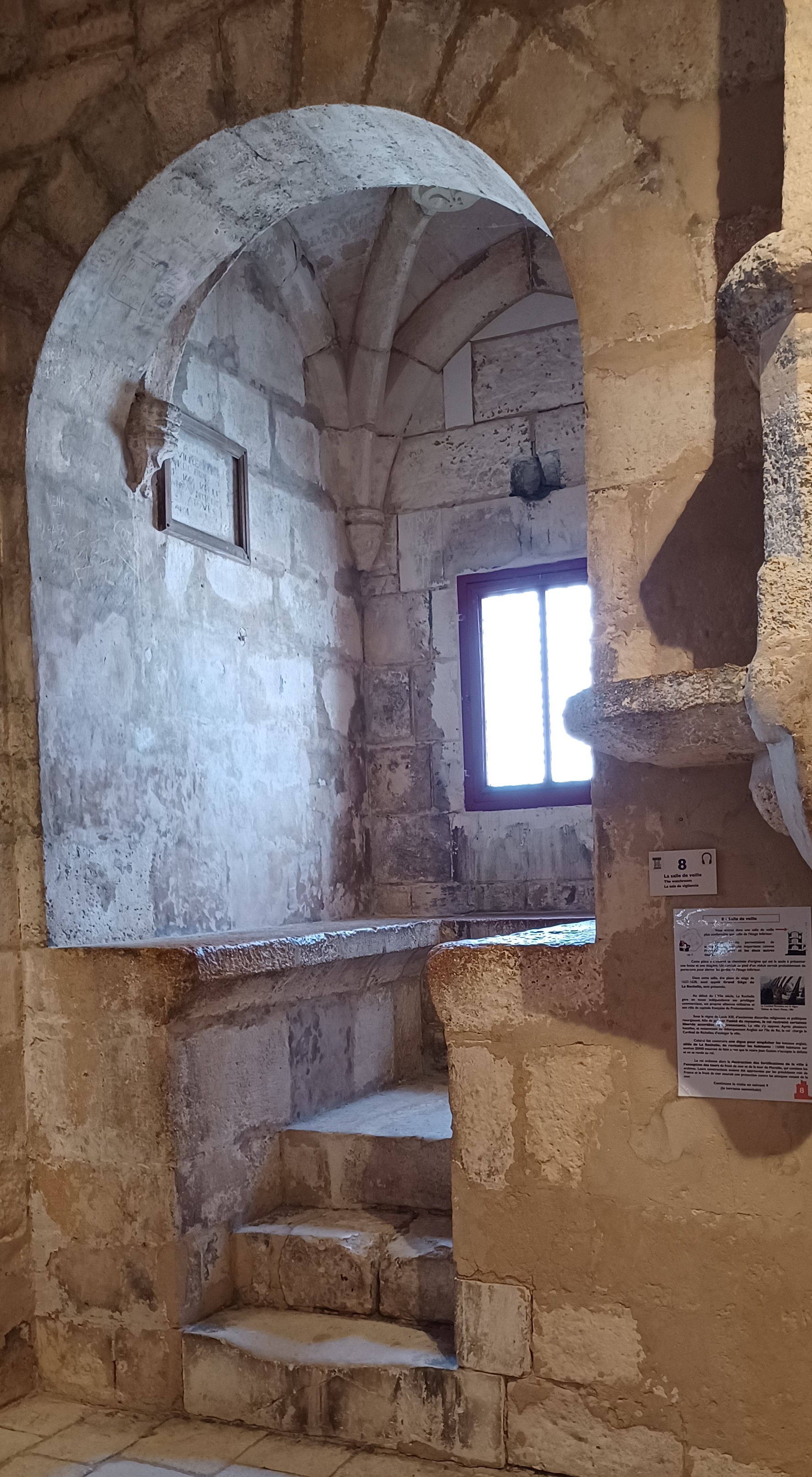
The main living area appeared to be this room. The fireplace was pretty spectacular.
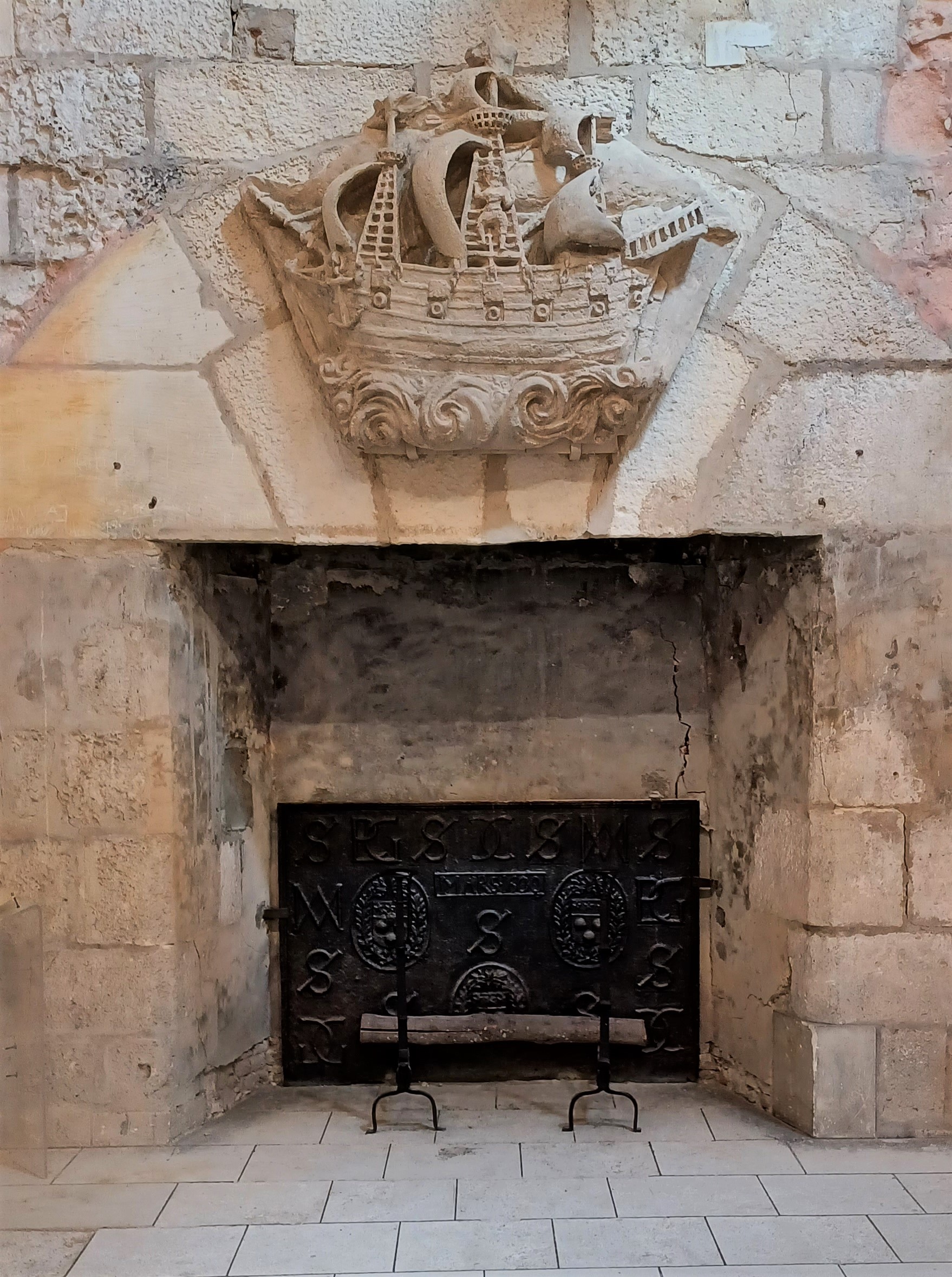

There were little sculptures under the rafters at the top of this room.


The most interesting aspect to me was the accommodation for the blind. These sculptures were reproduced and placed on waist-level pedestals, with descriptions in braille. Non-sighted people could feel the sculptures and understand their details and significance.

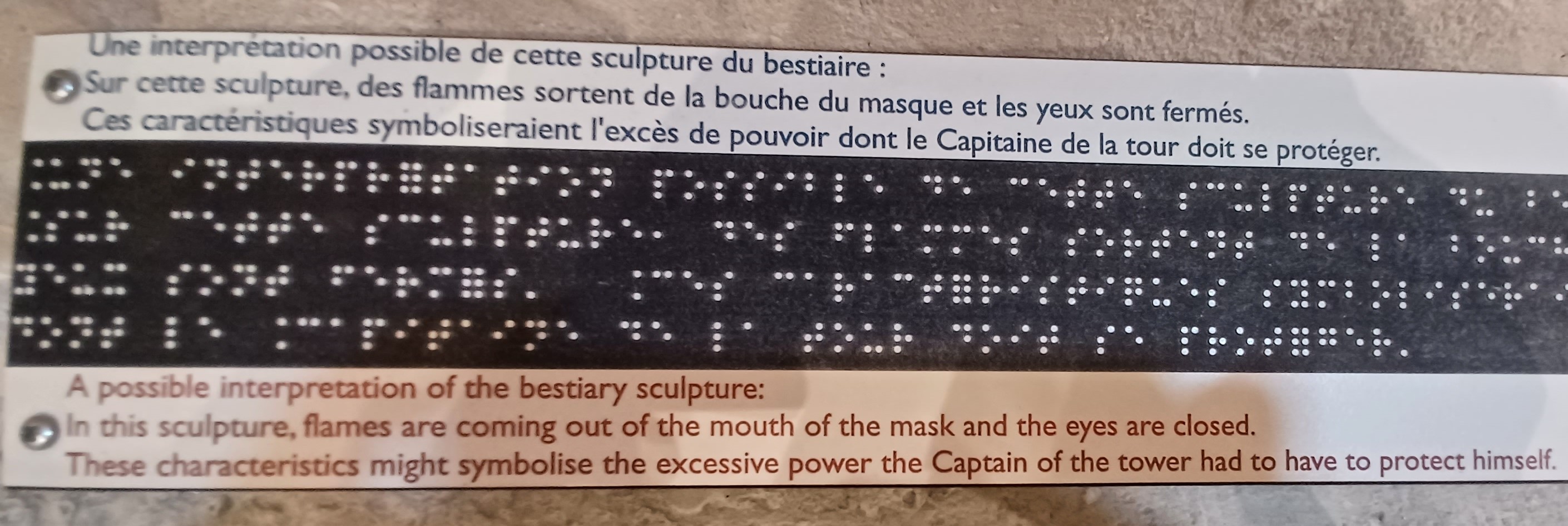
Here are some architectural and sculptural details from the other rooms:
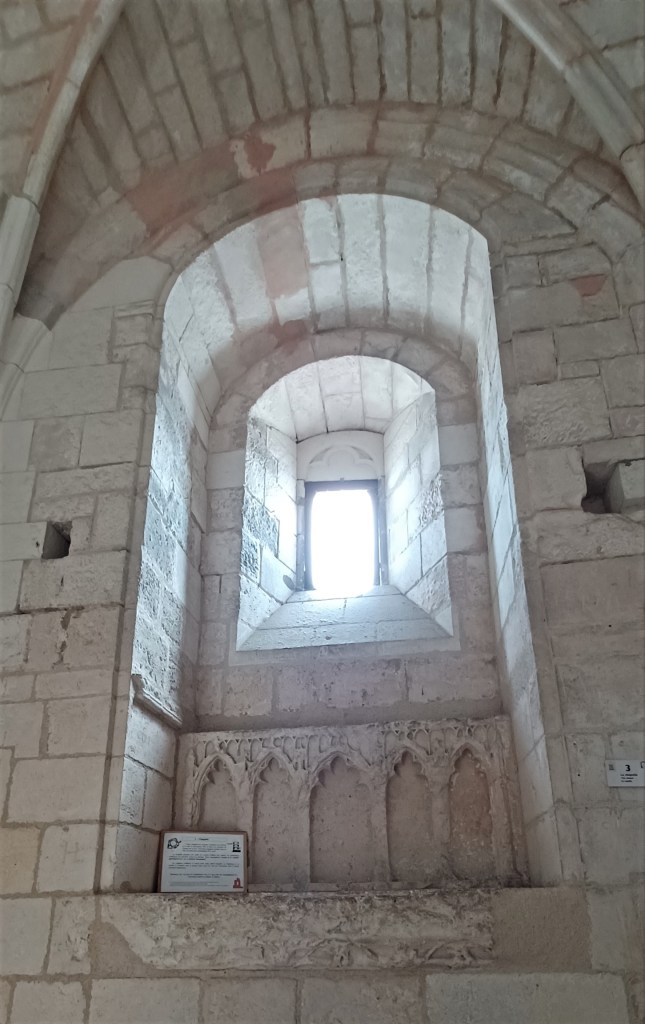


The 14th century saw the development of the “double helix” staircase, which made for a dazzlingly tight descent. I am thankful for the handrails, but can’t fathom how you would navigate these stairs in 14th armor…


Tour de la Chaine was built (or possibly rebuilt) between 1382-90. It’s inner core was constructed from the rocks used as ballast in medieval ships, which they dumped when they loaded salt and wine. It held the other end of the chain that the harbormaster hoisted between these two towers so he could control harbor traffic. It also served as the harbormaster’s residence until 1472, when it became the governor’s residence. During a rebellion in 1651, an explosion in the powder stores destroyed the top of the tower. It was not restored for the next 300 years.
It was declared a historic monument in 1879, although restoration continued until 1998. The Tour now hosts art installations. Shown here is the Chaine, as well as views of the St. Nicolas Tower from the ramparts of the Chaine, and the Lanterna from the walkway that connects with the Chaine.


Tour de la Lanterne (circa late 12th century) is the pointy ornate sister. It functioned as a residence for the harbor captain and as a lighthouse. It too, became a prison in the 16th century, housing 100 English, French and Dutch prisoners. Thirteen priests were murdered here in 1568 during the Wars of Religion; in recognition the tour was known for a short time afterwards as “Tour des Pretres.” In 1822 it was thought that the four young sergeants accused of overthrowing the monarchy during the Restoration were imprisoned here as well, before being executed in Paris for crimes against the state (the historic episode is known as the Conspiracy, the accused are known as the Four Sergeants of La Rochelle).
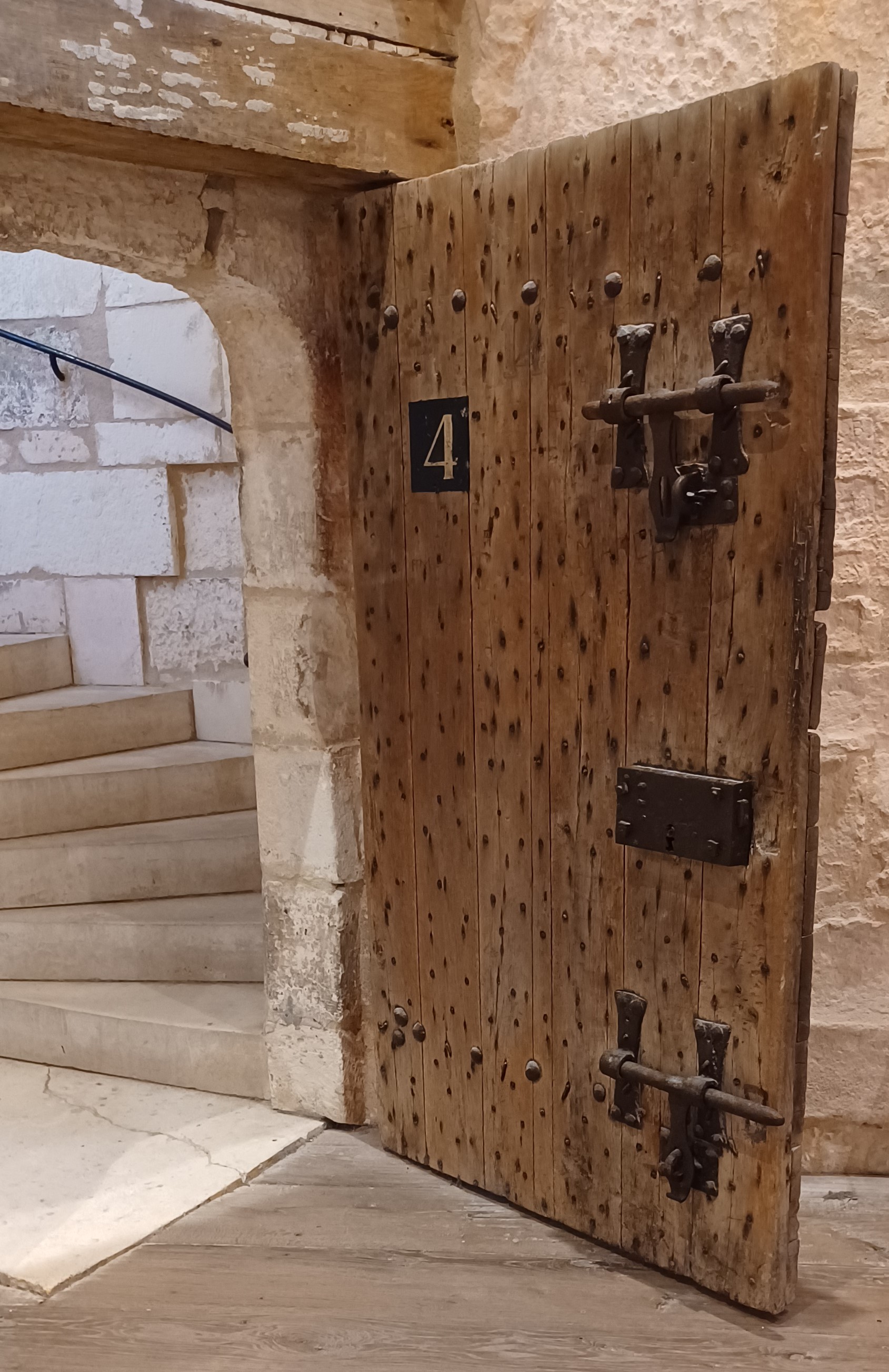
One hundred prisoners would have slept in this room, on the floor. When the Lanterne became a military prison in the 19th century, a large wooden sleeping platform was added, the fastenings are still visible on the walls. The wooden door is thought to date from the 19th century as well. Long pieces of forged iron reinforce the hinges, and their varied dimensions show how the doors were adapted to fit the irregular openings in medieval towers.

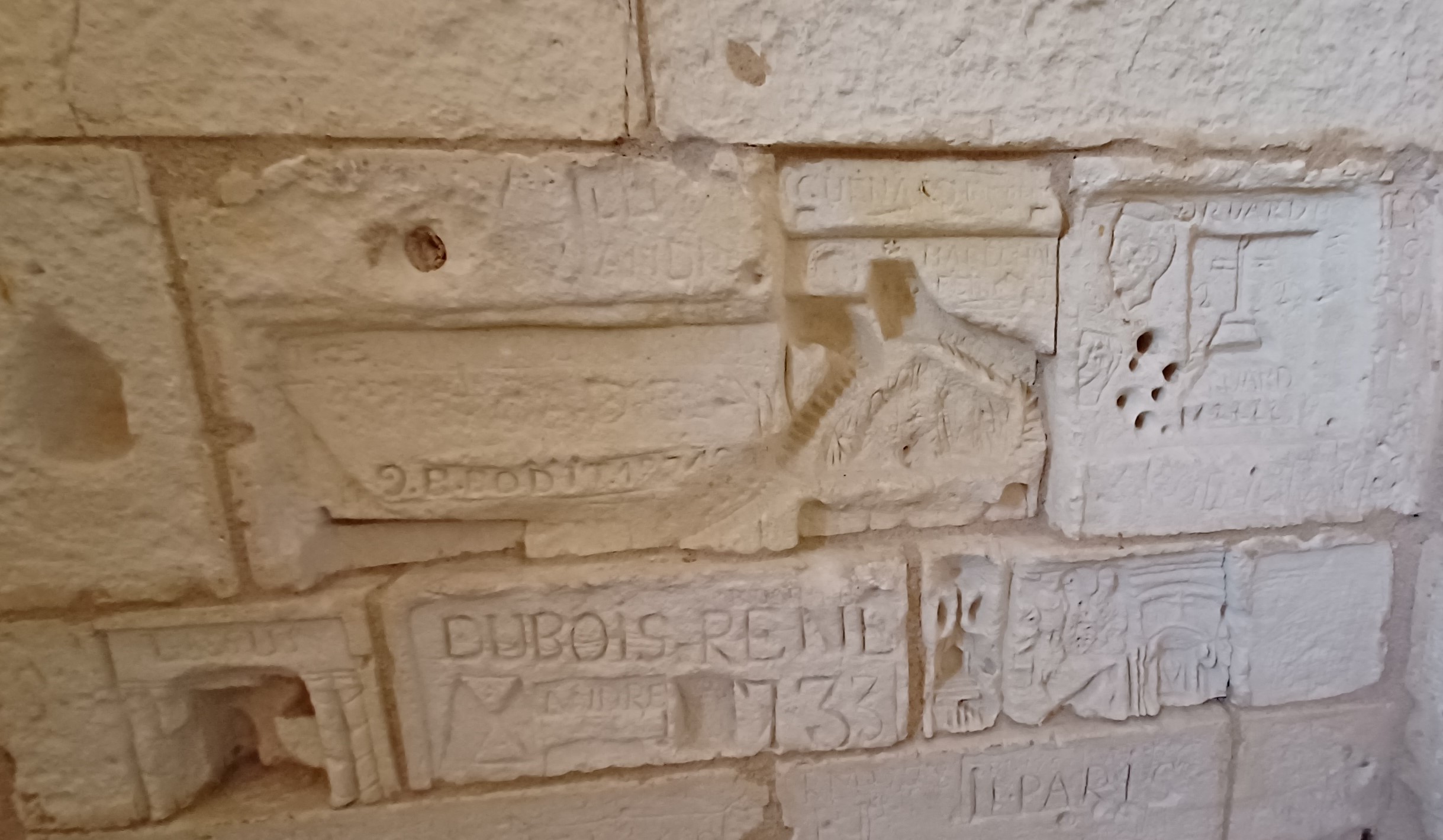
The interior walls are covered with over 600 pieces of carved graffiti, poetry, and images carved by prisoners using their belt buckles, shoe studs and spoon handles. I was impressed that there were signs in both Braille and English for some of the carvings that had been identified as having specific significance.


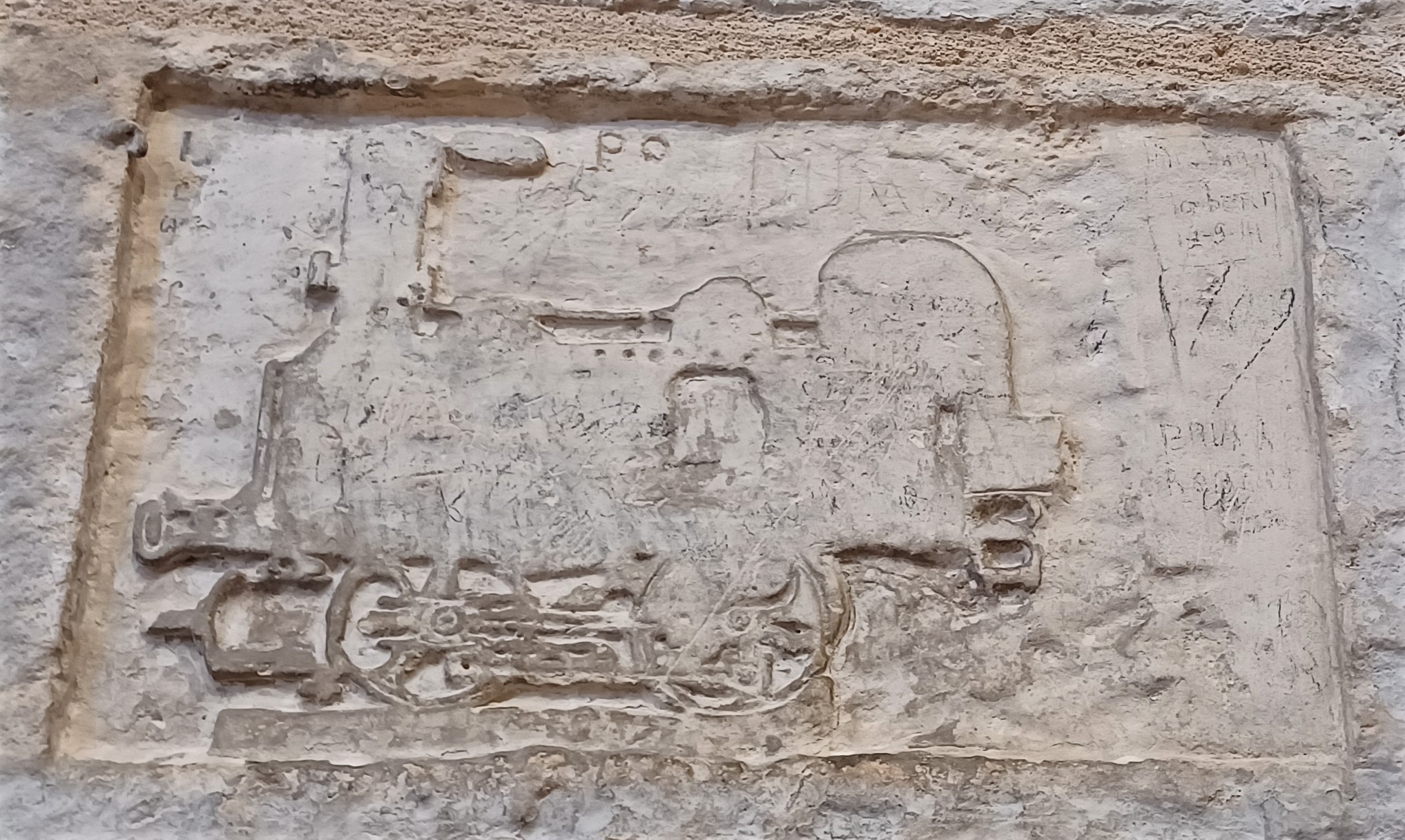


In the last room, visitors were invited to use a piece of metal chain to carve into a slab of stone. Although I was able to make a line, it filled in as soon as I tried to brush the carving dust away. It gave me an added appreciation for the detail that some of the prisoners were able to create in their carvings.
The airiest room here is the Jehan Merichon room, named after the mayor who funded the completion of the tower in 1468. The floor is an art installation installed by Jean-Pierre Pincemin in 1985, its repetitive ‘broken link’ design a nod to the tower’s former use as a prison. The windows in the tower face the four cardinal points and provided light for the room below until 1841, when additional rooms were added above this one to make room for more prisoners.


I made it as far as the lantern, a six-sided glass chamber that was added in 1468 as a beacon, destroyed in 1632 and replaced in 1914. The tower was proclaimed a historic monument in 1879.
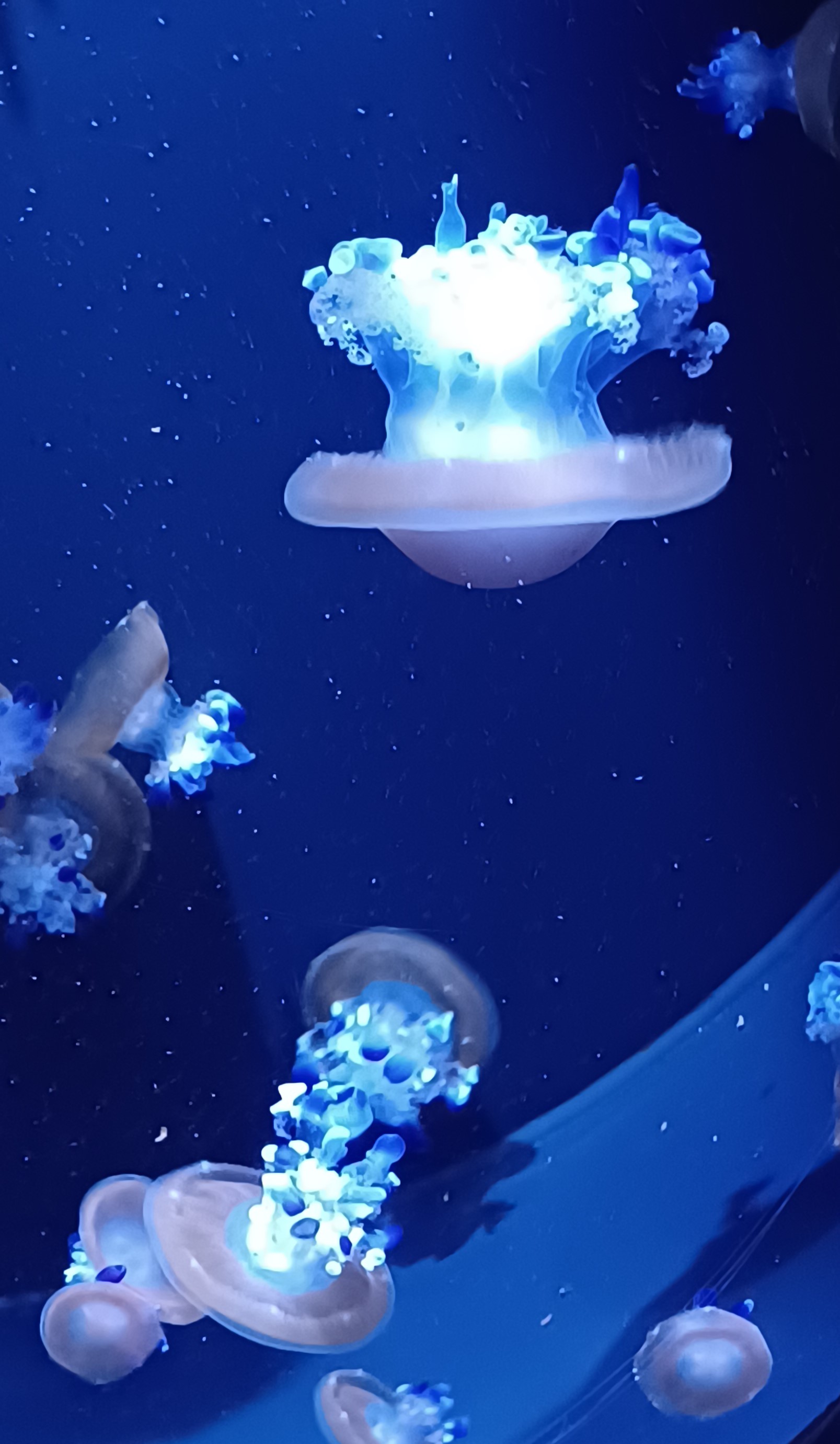
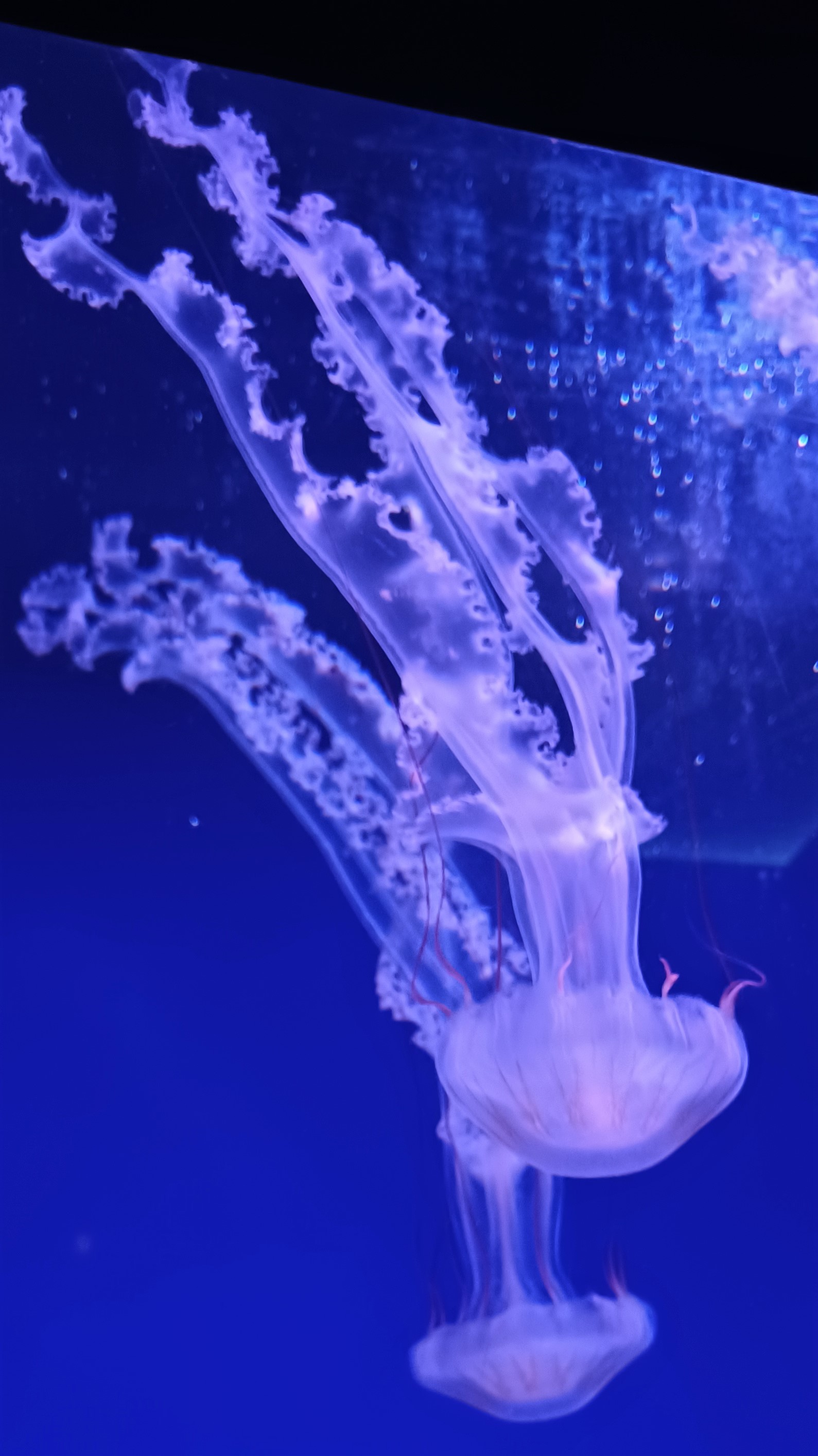
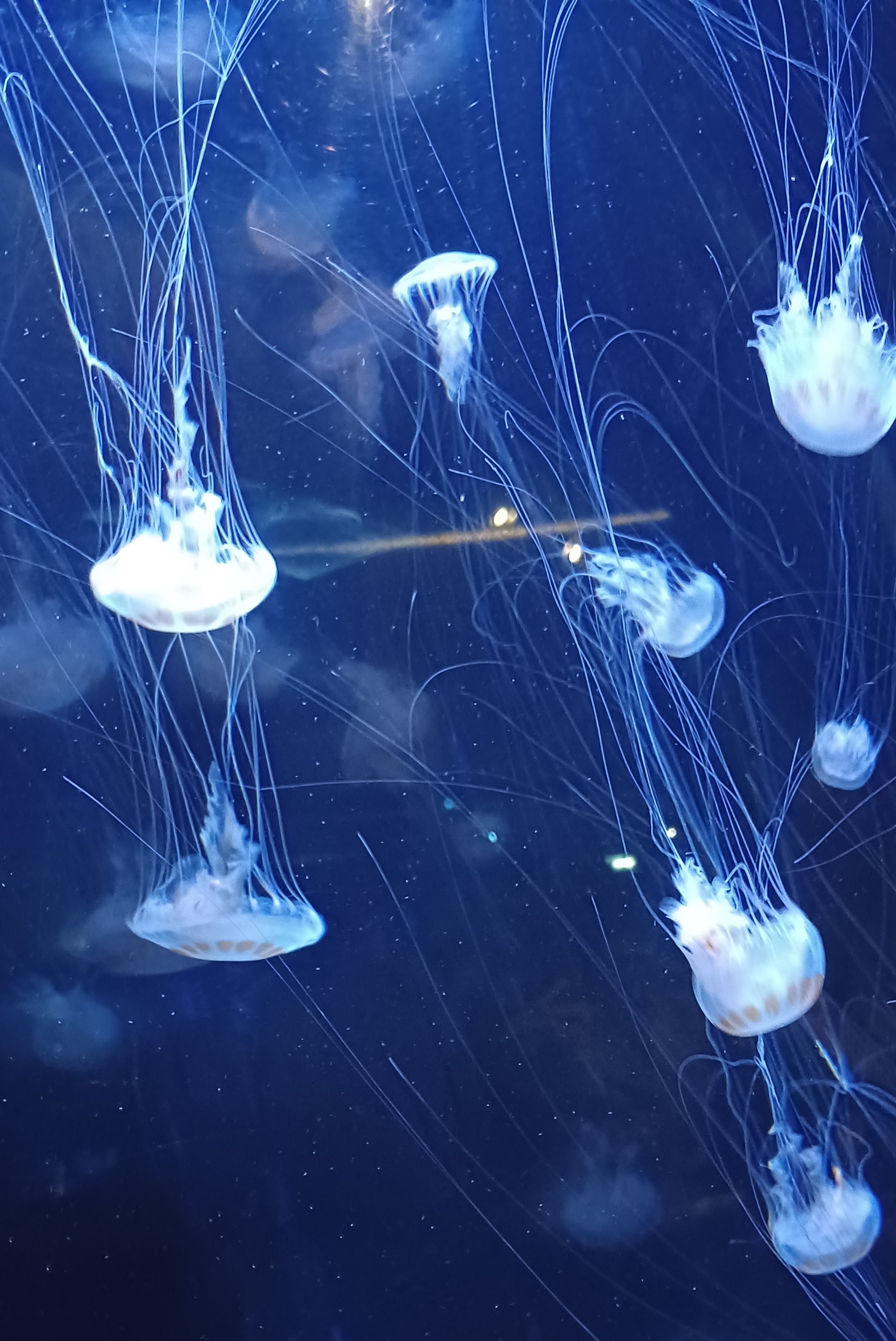
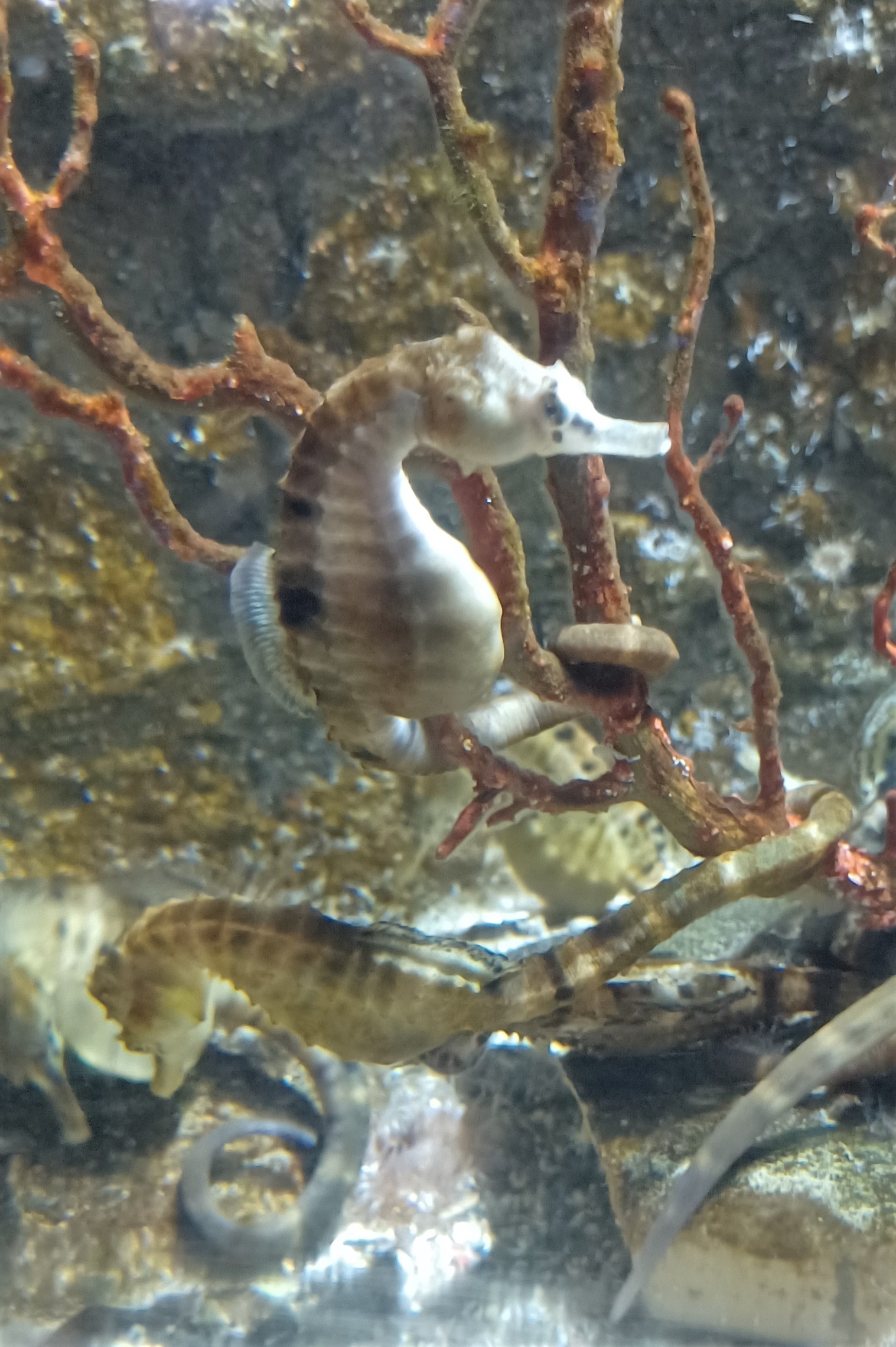
The heat has become oppressive, so I cool off at the Aquarium. They had fun jellyfish chandeliers in the lobby made from what looked like recycled paper. The passage between the lobby and the tanks looks and sounds like you are in a submersible. It opens into a hallway that has a tank overhead. Towards the end, there’s a floor that seems to be motion activated and scatters fish away from you when you walk on it.


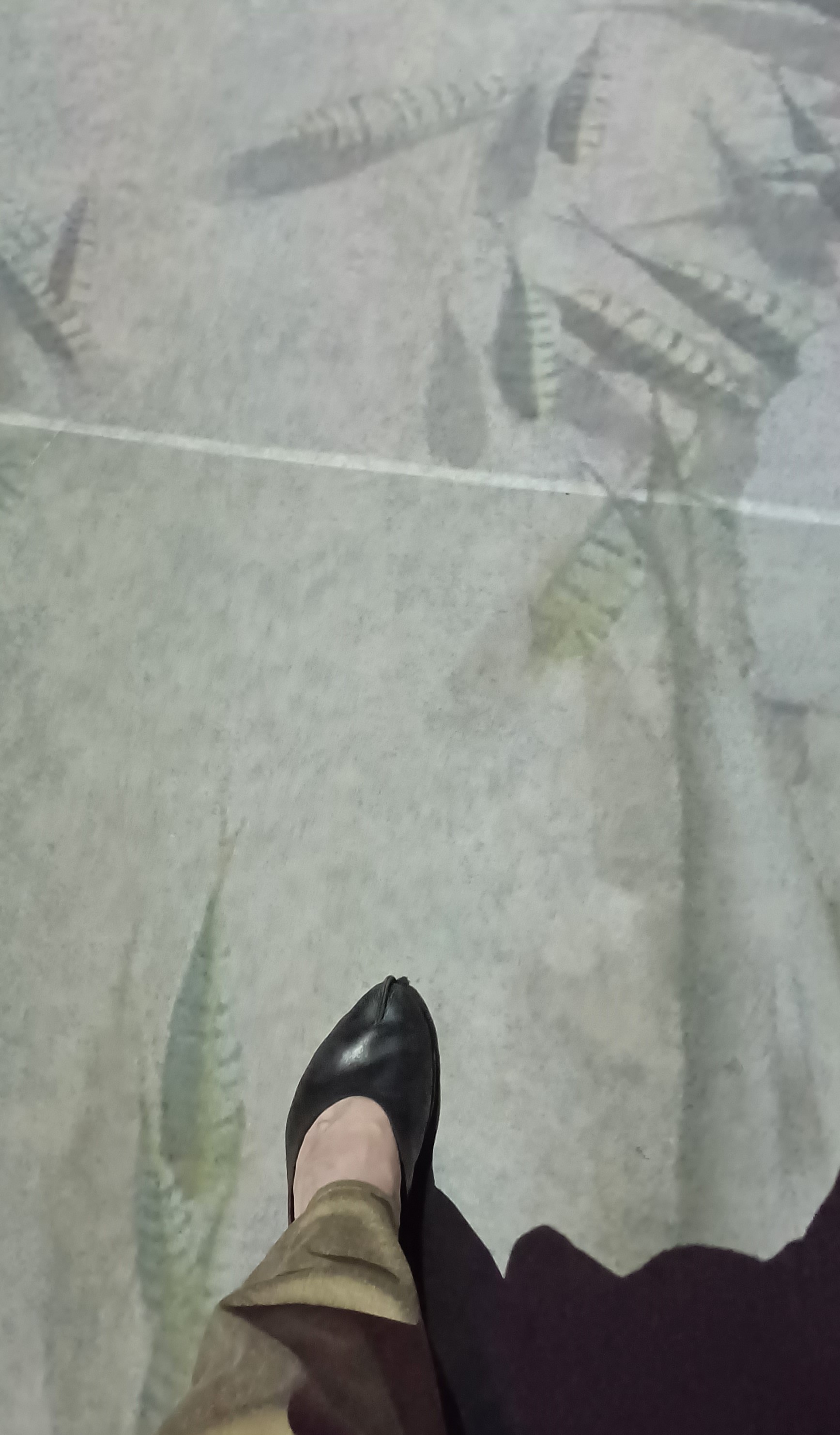
Between those features are all the things you expect to see in an aquarium. My favorites were the seahorses and several varieties of jellyfish, which the French call Les Meduses (my video on YouTube). And of course, an obliging fish that came right up to the glass.


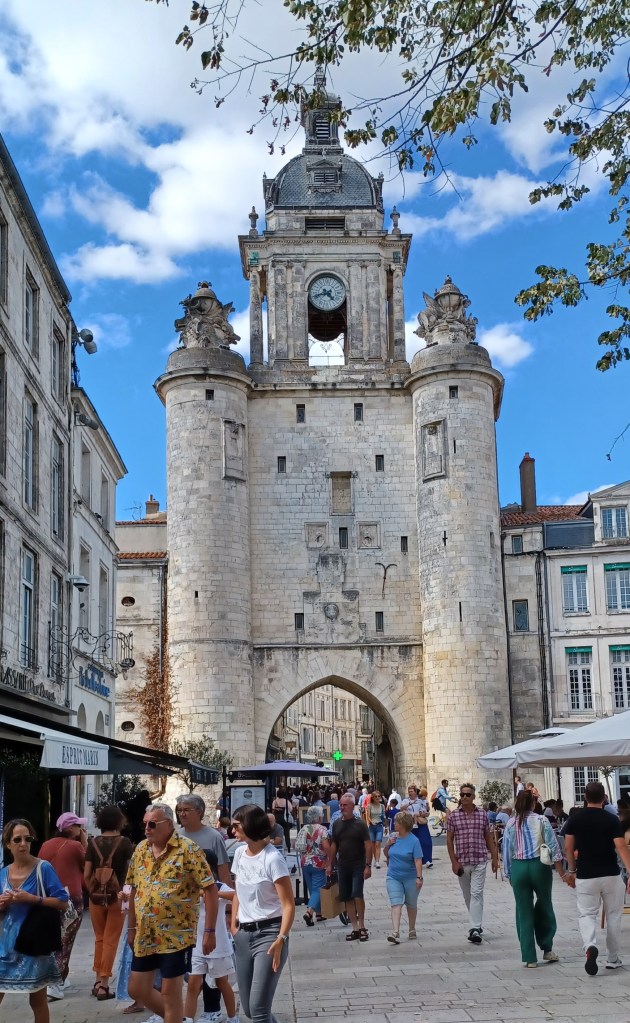
I returned to the city center through the Porte de la Grosse Horloge, a 12th century clock tower that served as one of the town gates.
In today’s tech news, I was able to abandon GoogleMaps this afternoon and found my way around via landmarks, and I didn’t even get lost.
Medieval maritime and old school navigation win the day!
 Daveno Travels
More medieval to come!
LikeLike
Such Fabulous Medieval stuff, like ACTUALLY Medieval! The ship replica is outstanding! I love the architectural details; the carvings, the ceilings, etc. Thanks for taking us along!
LikeLike