
I have ridden the Grand Elephant and watched the Heron fly at Les Machines. I stop for lunch on the campus and order a vegetarian sandwich whose contents spill out into a diverse salad with at least a dozen different ingredients – peas, edamame, cabbage, mozzarella balls, chickpeas – and the sandwich came with a side of bread!
I check out a small single level carousel that is on the Les Machines campus. I don’t know if it is operational but it is very much in character with the rest of the mechanicals I have seen here:


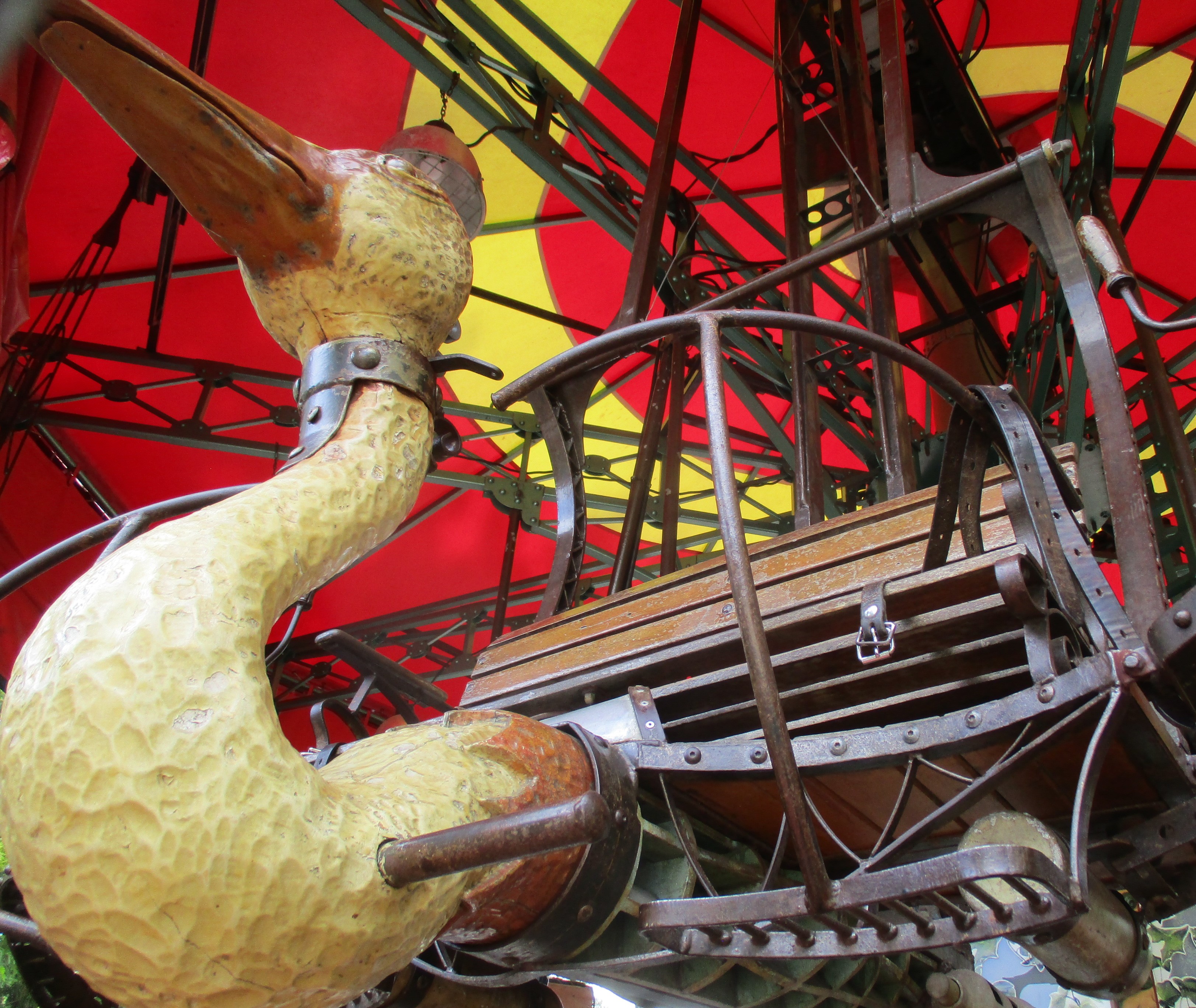
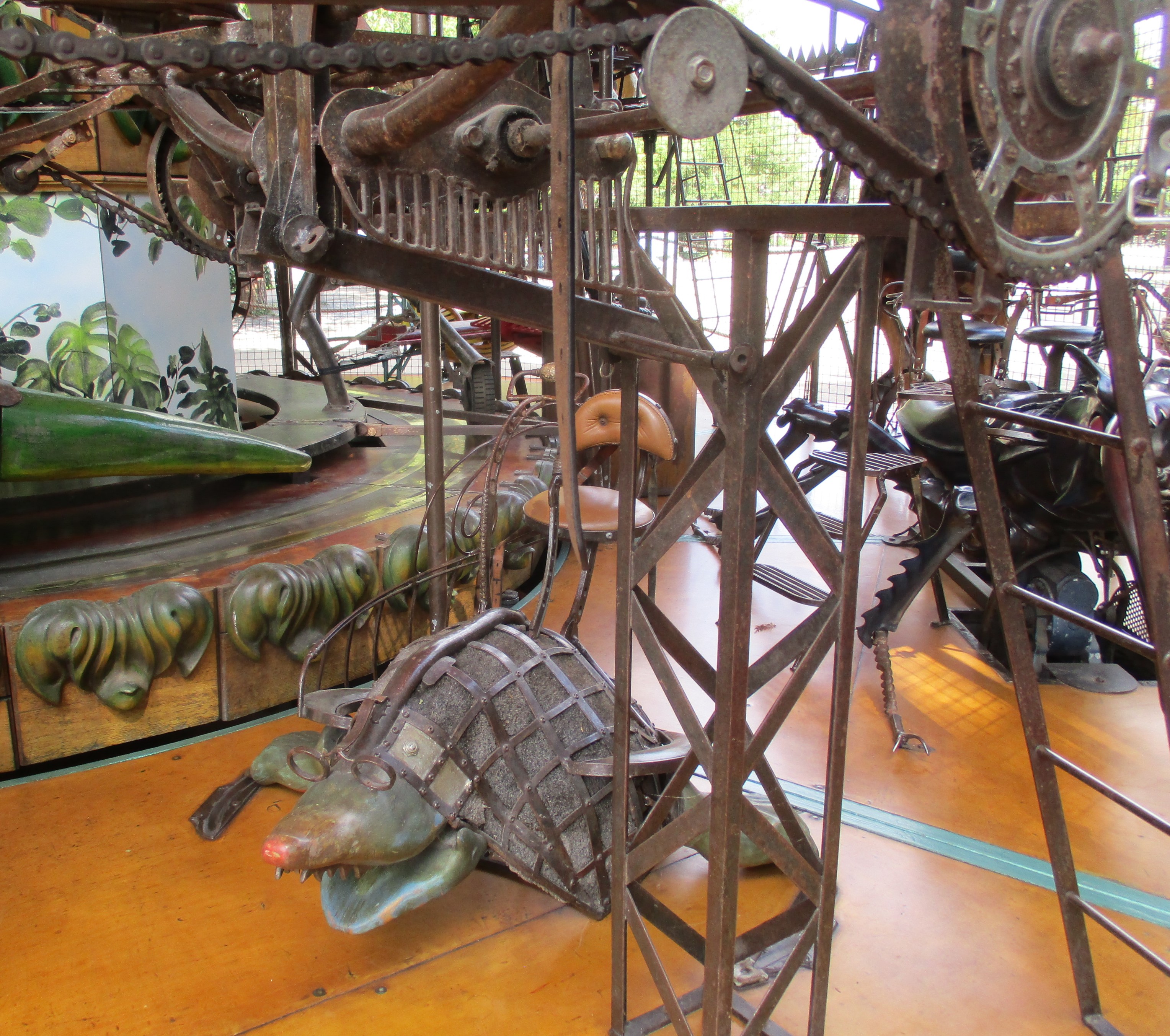
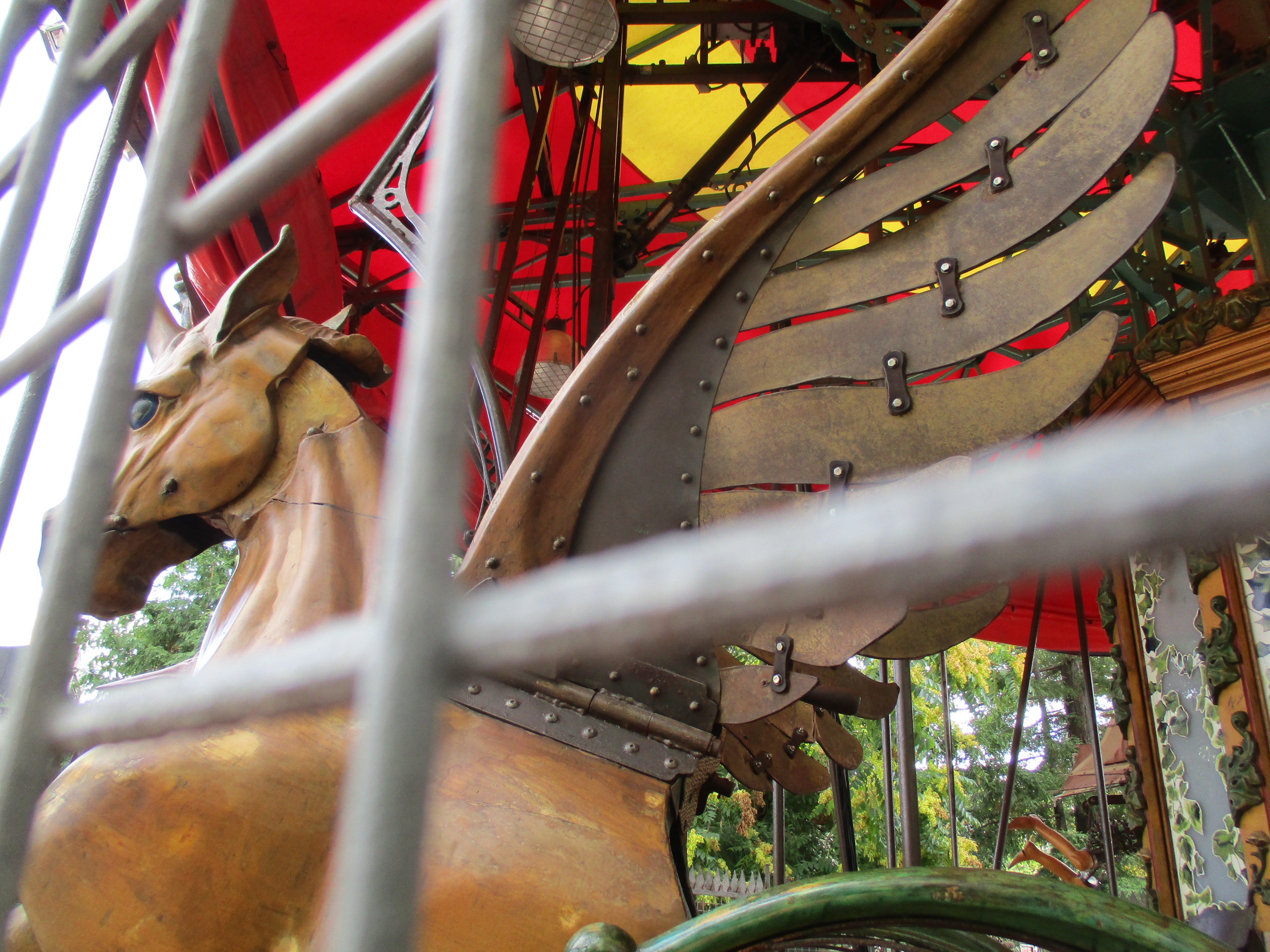
The Ile de Nantes is heavily inspired by one of its native sons – Jules Verne, who was born in the Feydeau district, not far from where I am eating lunch. He was the first science fiction author I ever read, so his museum is my next destination.
I didn’t know which tram stop to get off at, so I took a long walk along the Loire River. There are arbors here that go on for blocks, with benches, and gates that lock at night. I walk up a fairly steep and cobblestone hill in the Chantenay district, which was home to the working-class of Nantes at the turn of the 19th century. The view is worth the walk.
Jules never lived in the home that now houses his work, though he visited regularly. Again, my QR code reader and translater app aren’t working, so I absorb what I can. The museum is well designed and takes you through his life as a Traveler, a Writer, his “Verniverse” and Playwright.
Jules was born February 8, 1828 and grew up during France’s Industrial Revolution (1848-75). He was an avid reader and started writing at age 18. He moved to Paris when he was 20 to study law but chose writing instead. His travels, which began when he was 30, inspired many of his stories. He wrote parts of Twenty Thousand Leagues Under The Sea while sailing one of his three boats, the Saint-Michel I. He wrote over 30 plays, which I was not aware of. He also kept himself updated on the latest sciences, studied travelogs and geography, and met with scientists and explorers. He was fascinated by technical innovation while at the same time being wary of its impact on society.
This is the first known letter written by Jules to his aunt on March 30, 1885. The placard stated that the letter notes the diligence that Jules put into writing his books, and a nascent interest in technical progress by his mention of the telegraph.

This is an Art Game from Paris in 1885. “Games are products of popular culture, providing information on social, cultural and political achievements of an era. They also play a role in educating young people through their wide distribution among the population.”
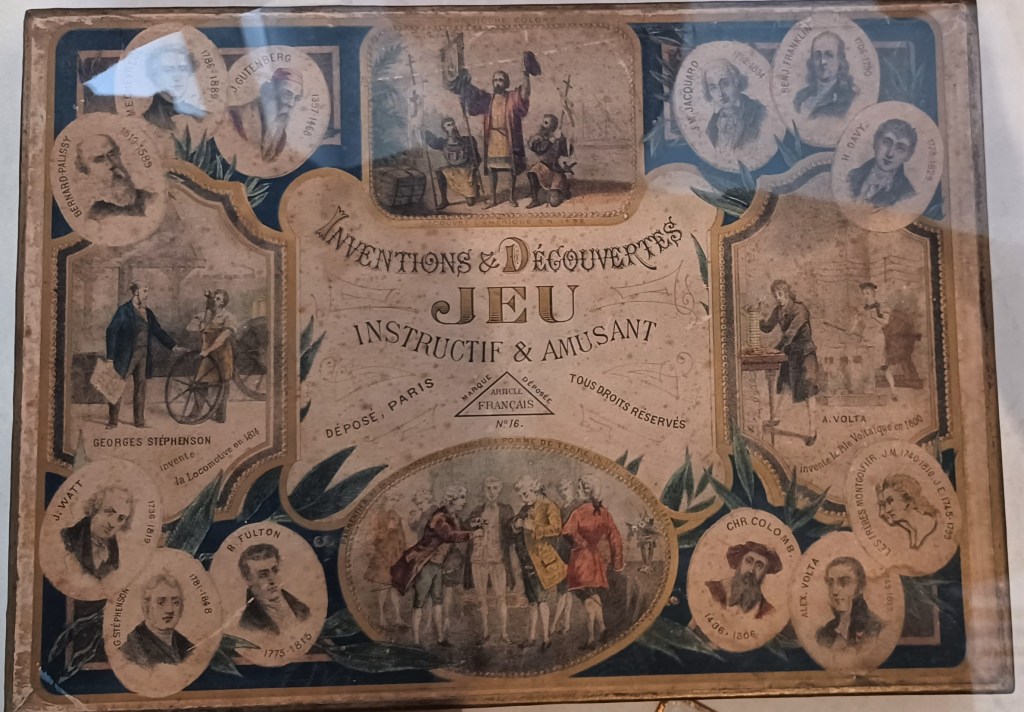
A puzzle, echoing Jules love of geography. He was a member of the Geographic Society of Paris for 30 years.

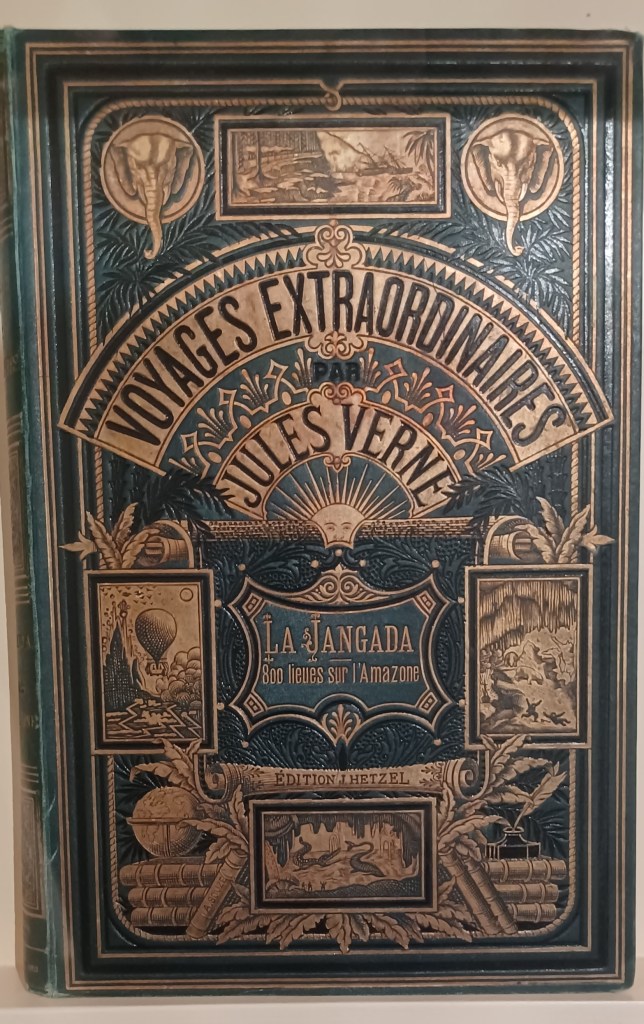
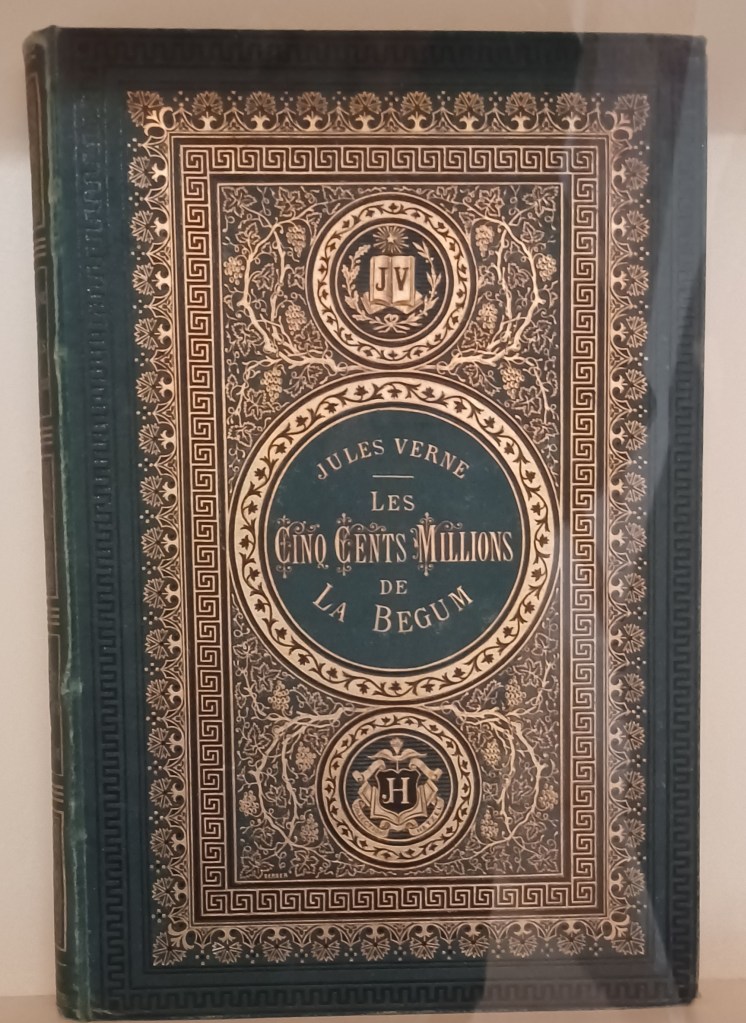
A Trip To The Moon – the 1902 film by Georges Melies – was based on the Jules Verne novels From the Earth to the Moon and Around the Moon, as well as The First Men on the Moon by H.G. Wells. I did not capture those exact titles, but these are examples of the beautiful bindings in the extensive collection of books here. This model from the iconic scene in Melies’ film dates from 2000.

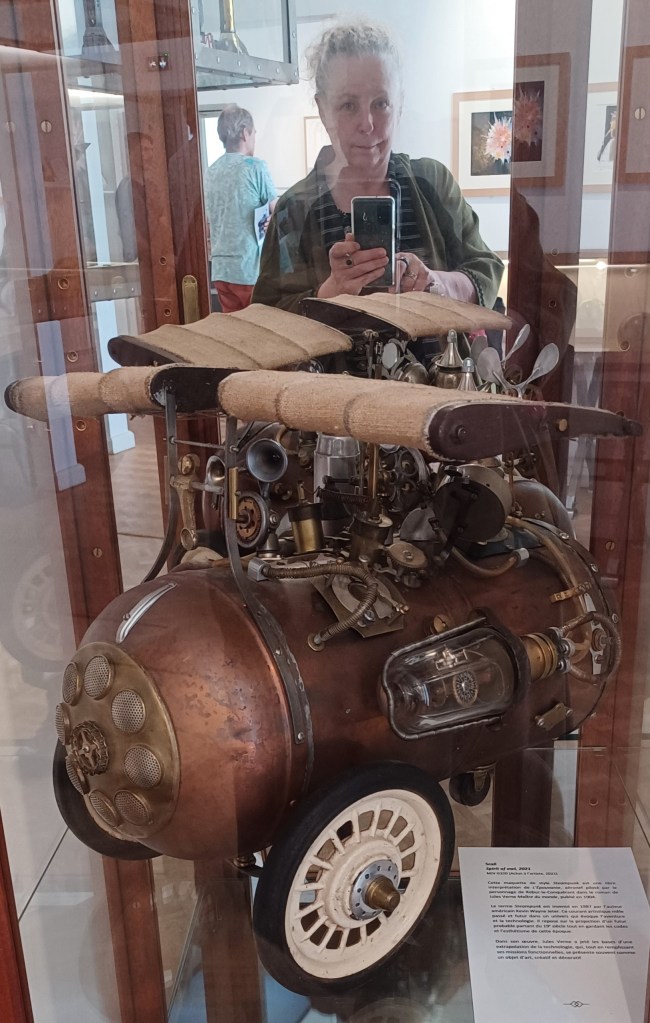
Jules Verne wrote of flying machines and submarines, and laid the foundation for future technologies based on projections from a 19th century aesthetic. In 1987, American author Kevin Jetter tapped into that aesthetic and coined the term “Steampunk” which became a worldwide cultural phenomenon. This is a Steampunk style model of “Spirit of Owl,” an aircraft from Jules Verne’s 1904 novel, Master of the World. The model dates to 2021. I actually thought briefly about going to Paris for the steampunk convention that was occurring, but could not get my bustle into my carry-on.
This is a reproduction of a paper theater from Michel Strogoff: The Courier of the Czar. Jules Verne wrote the novel in 1876 and adapted it for the stage in 1880. It was performed 2,432 times over the following decades. You can read more about the play on Wikipedia.
Because of the play’s popularity, the original cardboard theater was produced in 1883 by Alfred Jacobsen, a Danish lithographer. The facade is based on an Italian model, and the printed figures were glued to cardboard and operated by either cardboard or iron zippers.


This last piece is a nearly floor to ceiling poster advertising one of Jules Verne’s most famous works – Journey to the Center of the World.

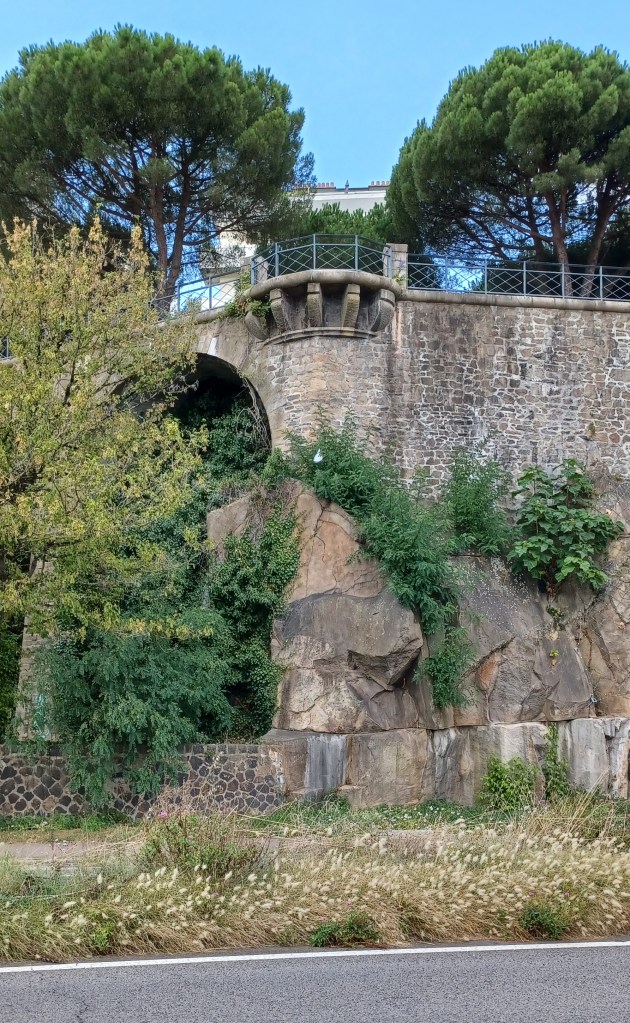
I exited the museum down a staircase that led through a lush terraced garden. I walked back through the arbors along the Loire River, noting the benches and tables with umbrellas, and how clean it was in spite of the absence of trash bins. Across the street there’s a little bit of medieval architectural eye candy:
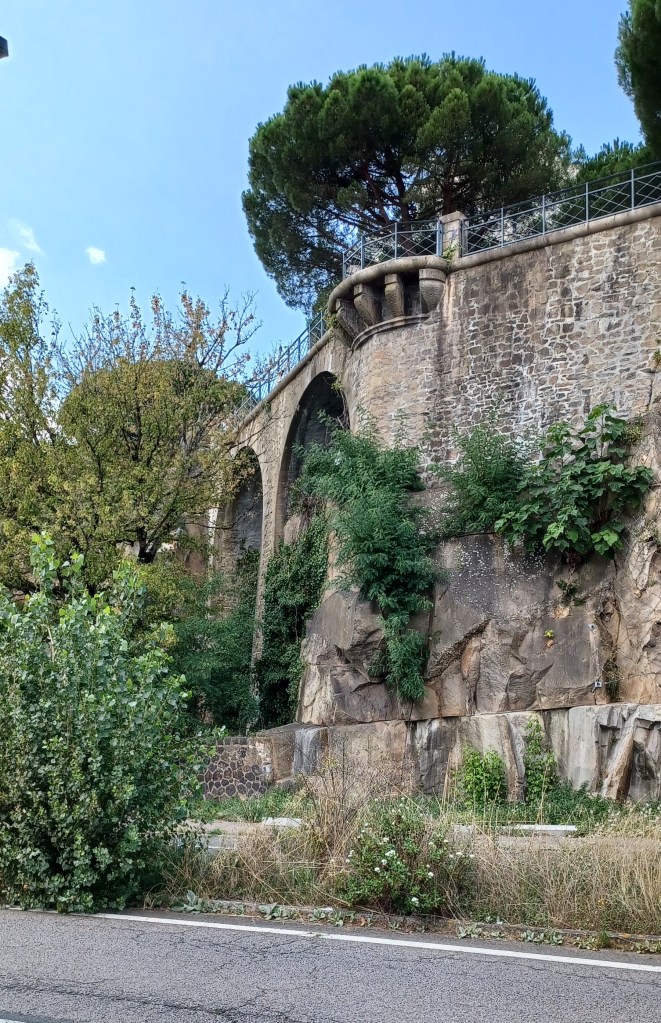
Back at the hotel, I took a rest before dinner, and then bagged dinner entirely, and swapped physical food for virtual culinary adventures via a French cooking show on TV. The chef was demonstrating to a pair of celebrities and 3 regular couples via Zoom, on how to prepare an eggplant tart. It was hysterical because he fried the eggplant rounds and put them in the tart pan, and then started over twice – once because he had meant to cut the rounds in half, and the second time because he forgot to oil the pan. It was a riot watching the other couples trying to keep up…
 Daveno Travels
Love the “Spirit of Owl” steam-punk object, the cardboard theatre and “A Trip to the Moon”! I did not know about the inspirations for that, but I did know that they landed their “spacecraft” in the eye of the moon, that was literally made of cream cheese!
LikeLike